‘Protect Medicaid Vigil’ Shows The Power of Grief in an Era of Cruelty

Late last month, a 60-hour “Protect Medicaid Vigil” took place on the National Mall across from the Capitol. Featuring live music, speakers and a collaborative art table, it was a space for collective grief, anger, joy and hope in response to steep Medicaid cuts in the recently enacted Republican spending package.

The event was organized by Caring Across Generations, a national organization of family caregivers, care workers, disabled people and aging adults advocating for social and political change. It spanned 60 hours to represent each year of the Medicaid program to-date. During the vigil, Caring Across Generations lit 8,000 candles as a visual representation of the nearly 80 million Americans who rely on Medicaid coverage for healthcare.

Feminist thought-leaders, including Audre Lorde and Judith Butler, have theorized that emotions (particularly grief and anger) are essential to any successful social movement. By holding a vigil followed by a joyful day of action, Caring Across Generations and its partners showed how emotion can fuel and sustain activism under Trump.

Dreams Deferred: The Oppression of Women Judges Under Taliban Rule

On a cold Sunday morning in January 2021, Qadria Yasini, a judge on the Supreme Court of Afghanistan in Kabul, set out for work with her colleague, Zakia Herawi. As they rode in the back seat of a government-provided car, they were gunned down in broad daylight by three assassins, who then fled on foot and by motorcycle. When Yasini’s possessions were returned to her family, a Mother’s Day greeting from her two teenage sons was found in her handbag, riddled by bullets.

This heartbreaking story opens British journalist Karen Bartlett’s deeply reported, troubling new book: Escape From Kabul: The Afghan Women Judges Who Fled the Taliban and Those They Left Behind.

But Bartlett’s narrative also provides an inspiring tale of resilience.

The SAVE Act Will Set Women Voters Back a Generation

Barely six months into the new administration, President Trump and his allies are advancing a bill that will fundamentally change our elections and make it harder for millions of women to register, vote and participate in our democracy.

The deceptively named SAVE Act represents the latest and most dangerous threat of election denialism to date.

Proponents of the SAVE Act would have us believe that anyone can walk into a polling station and cast a vote without being identified at all. This could not be further from the truth.

SAVE Act supporters allege mass fraud in our elections, votes under the names of dead people and party activists voting multiple times. This, too, is false.

Five Ways the GOP Is Quietly Paving the Road to a National Abortion Ban

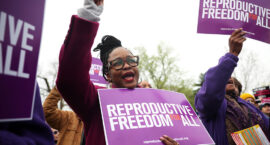
The vast majority of Americans support abortion and reproductive freedom, yet state lawmakers continue to introduce and pass laws stripping citizens of these rights. Providers face confusing, punitive rules that might lead them to delay or deny care. Planned Parenthood and other providers face budget cuts that threaten to restrict healthcare access for millions of Americans.

These are not isolated outcomes. Rather, they reveal a coordinated national strategy. Here are five myths we believe need to be dispelled to counter the challenges that lie ahead.

The Supreme Court’s Ruling on National Injunctions Will Hurt Us All—Immigrants First

In a 6-3 decision last Friday, the Supreme Court granted the Trump administration a partial, but crucial, victory in its efforts to stop federal courts from blocking Trump’s agenda.

The vehicle for this power grab, CASA v. Trump, is a case about the legality of denying citizenship to children born to parents who are in the U.S. unlawfully or temporarily. In the majority’s ruling that nationwide injunctions were probably outside the federal judiciary’s authority, and therefore, judges should limit their orders to the parties and plaintiffs before them, it has tipped the balance of power to the president. And that is going to make many people’s lives—immigrants and nonimmigrants alike—much more difficult.

‘This Will Delay Care’: N.C. Doctor Warns of Harm After Trump’s Rollback on Emergency Abortion Rule

Earlier this month, the Trump administration canceled a 2022 directive issued under the Biden administration that said hospitals had to provide abortion care if it was needed to save a patient’s life or prevent serious harm. The rule was based on a federal law called the Emergency Medical Treatment and Labor Act, known as EMTALA, which requires emergency rooms to treat and stabilize all patients regardless of their ability to pay.

While North Carolina law allows abortions in cases where a patient’s life or health is in danger, the previous federal guidance offered clearer protections. Without it, doctors may be less sure about what’s allowed, and hesitate to act quickly in emergencies.

As Antiabortion Violence Surges, Republicans Vote to Strip Federal Protections for Providers

Early Saturday morning, news broke of the assassination of Melissa Hortman, a Democratic Minnesota state legislator and former speaker, along with her husband Mark. State Senator John Hoffman and his wife Yvette were also shot multiple times; both survived and are fighting for their lives following emergency surgery. The suspect had a list of more than 50 additional “targets,” including other Democratic officials, some from outside Minnesota, as well as abortion facilities and leading abortion rights advocates in the state.

Although we don’t yet know if his extremist views on abortion were the driving cause in his murderous rampage, it is proof of the ongoing threats to abortion providers in this climate of escalating political violence.

Yet, just weeks after the suicide bombing of a Palm Springs fertility clinic, and despite rising rates of threats and violence against abortion clinics after the Dobbs decision, Republicans on the House Judiciary Committee unanimously voted to advance HR 589, the FACE Act Repeal Act of 2025. The bill would repeal the federal Freedom of Access to Clinic Entrances Act, a statute protecting clinicians’ and patients’ right to safely provide and access reproductive healthcare. All Democrats on the committee voted against the proposed bill.

The Best Birthday Gift for Trump? Voting in Every 2025 Election

Weekend Reading for Women’s Representation is a compilation of stories about women’s representation. 

This week:
—2025 is often considered an off-year for elections, but that couldn’t be further from the truth.
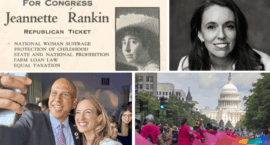
—Washington, D.C., is the site of dueling images: Pride and Trump’s alleged celebration of U.S. military might.
—Hannah Pingree has joined the crowded Democratic field for governor in Maine.
—U.S. Rep Mikie Sherrill (D-N.J.) will join Virginia’s Abigail Spanberger as Democratic nominees for governor in races leaning toward Democrats.
—San Antonio elects Gina Ortiz Jones as mayor.
—Ranked-choice voting is a women’s issue.

… and more!

From Reckoning to Backlash, Black Women Reflect on the Stakes of the Moment

In 2020, the killing of George Floyd shocked Americans into action and into the streets by the millions, protesting the unrelenting killing of Black people by police. 

The moment sparked a nascent reckoning in America around systemic racism and institutional inequality—in many cases, with Black women at the center. Already the backbone of our democracy, many were called on to also be a bridge to racial healing.

Five years later, many of these same Black women find themselves at the center of a backlash, confronted with attacks on the diversity, equity and inclusion efforts that were previously championed.