

What Boys Learn When Powerful Men Face No Consequences

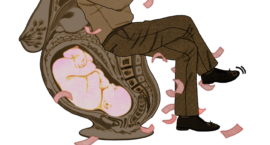
For decades, Donald Trump has modeled a version of masculinity rooted in entitlement, impunity and the casual degradation of women—and he has done so from one of the most visible platforms on Earth. That visibility matters. When the most powerful man in the country repeatedly evades consequences for misogynous acts, it sends a potent cultural message to boys and young men about what manhood looks like and what women’s lives are worth.

This is why the stakes of the Epstein files extend far beyond Trump’s personal exposure. His ability—or inability—to finally face accountability is inseparable from the broader crisis of male socialization and the normalization of men’s violence against women.

At the same time, focusing solely on Trump risks missing the larger system that made Jeffrey Epstein’s predation possible. As feminists have long argued, these abuses were not aberrations but expressions of a patriarchal network that exploited girls and women with impunity. The Epstein saga is not simply a story of individual bad actors; it is an indictment of the cultural, financial and political institutions that protected them. Whether the public and political leaders confront that reality—or once again look away—will reveal as much about our collective values as it does about the men at the center of this scandal.


The Trump Administration Is Paying Children $2,500 to Give Up Their Rights

The Trump administration’s latest immigration scheme offers unaccompanied children $2,500 to “voluntarily” give up their legal rights and return to the very countries they fled. Officials are calling it a resettlement stipend, but in reality, it’s a disingenuous and dangerous form of coercion. Children in federal custody—many without attorneys—are being asked to make life-altering decisions under duress, with money dangled as an incentive to abandon their claims. Far from empowering them with choice, this program undermines the legal protections Congress established to keep children safe.

It’s one more example of the administration’s incremental intimidation of children—this time, with a price tag attached.

Thank You, Cassie Ventura. Your Voice Broke the Silence for Millions of Survivors.

Dear Cassie Ventura,

Millions who do not have the celebrity, resources or platform to speak out are exceptionally grateful for your voice, and the voice of all the courageous women who literally take the stand. 

The millions of women who have experienced rape and sexual assault are grateful at a time when resources for them are in danger of elimination.

Trump’s History of Misogyny Was Obvious Long Before the Epstein Files Scandal

The Trump administration’s handling of the Epstein files has rattled his MAGA base unlike any other issue, and caused the president a major political headache. It remains to be seen whether he or the Republican Party he leads will suffer any lasting damage.

But for the many millions of Americans who are not fans of the current president, one of the truly astounding features of this scandal is how long he has been able to evade meaningful accountability for his history of misogyny—as well as serious scrutiny of his long friendship with the late sex trafficker Jeffrey Epstein. Trump’s close association with the disgraced pedophile has been a matter of public record for more than two decades.

What’s even more tragic is that despite all of this, Trump has managed to get elected president of the United States not once, but twice. He has then used the awesome power of the presidency to roll back feminist gains in a number of different ways. His administration’s regressive agenda has included, during the early months of his second term, a dramatic reversal of progress in federal support for sexual assault prevention initiatives.

The Myth of ‘Choice’ in Global South Sex Trafficking Discourse

“Sex work is work,” is an oft-repeated refrain.  But who is behind the megaphone? And who is paying the price? 

For most women and girls, especially from the Global South (and poor, racialized and displaced women everywhere), the notion that prostitution is freely chosen collapses under scrutiny. More often than not, entering the sex trade is not a choice, but an act of survival under patriarchal and capitalist constraints.

So, who is sex work legalization really for? And what would it mean, for all women, if buying sex were not legal, not normalized, but abolished?

No Room to Pump, No Room for Error: One Mother’s Fight to Feed Her Baby at Work

Could a system that was more responsive to parents’ needs improve their relationships, their children’s lives, even their sense of self? I began to report on that question and my book, Four Mothers: An Intimate Journey Through the First Year of Parenthood in Four Countries, is the result. It follows four women—from the U.S., Japan, Kenya and Finland, who all had babies around New Year 2022—through their first year of motherhood, to draw an intimate portrait of their lives and compare the support they received.

Read an excerpt from the book about one new mother’s experience in Kenya, where laws promise breastfeeding protections but workplaces often ignore them.

Immigrant Kids Trapped in U.S. Custody: The Hidden Crisis Inside the Office of Refugee Resettlement

A new form of family separation has been quietly engineered at the Office of Refugee Resettlement’s Unaccompanied Minors program, the HHS office responsible for the care and custody of immigrant children who enter the U.S. alone. Under President Trump’s border closures, the number of unaccompanied children entering the United States has dropped significantly, and yet, on average, each child is remaining in government custody weeks longer—even when a parent is available to reunite with their child.

Children are being detained for longer periods of time as the government increases the requirements for releasing them to parents or other family members, often with heartbreaking consequences.

Wombs for Hire: Inside Europe’s Underground Surrogacy Networks

The legal landscape of surrogacy remains a complex patchwork across nations, with some countries embracing it while others maintain strict prohibitions. This inconsistency in regulations has created gray areas.

Scientific research highlights the possibility of abuse arising from gaps in legal frameworks and disputes, whether surrogacy is legal or not. It points to unethical practices such as trafficking of women, coercion of both surrogates and prospective parents by agencies, lack of respect for bodily autonomy or informed consent, ‘sham’ procedures and multiple embryo exchanges.

Amid this contentious landscape, the European Parliament Council took decisive action on Jan. 23, 2024, reaching a provisional agreement to classify exploitative surrogacy practices as human trafficking. The measure was formally adopted on May 27, 2024. The new framework imposes strict penalties on those who exploit women through forced surrogacy or deceptive practices, while establishing comprehensive support systems for victims. E.U. member states must implement these protections into their national legislation within two years.

Elon Musk and the Phony Far-Right Narrative of ‘Protecting’ Women

Across the 2000s, a series of child sex exploitation cases affected British towns, including Telford, Rochdale, Oxford and Rotherham, scarring the lives of hundreds of children. In 2011, Times journalist Andrew Norfolk reported that networks—so-called “grooming gangs”—of largely British Asian men of Pakistani heritage had trafficked and raped hundreds of mainly girls and young women. Elon Musk—the billionaire owner of social media platform X and incoming lead on US government efficiency—has, it seems, just found out about this devastating national scandal.

Musk has aligned himself with a gendered narrative: It is men’s duty to protect women—even when it means breaking rules or using force. This gender binary—strong men must be ready to use force to protect weak women, especially from hostile alien men—is the core narrative of patriarchal, nationalist, ultra nationalist and also Nazi groups.

What We’re Up Against: The Challenge of Fighting for Women’s Rights in 2025

As we enter 2025 at what seems to be a heyday of impunity for human rights abuses worldwide, autocratic leaders worldwide are taking note. In countries rich and poor, these leaders are flexing their muscles by curtailing our rights—to speak our minds, control our bodies, vote our consciences and have access to fundamental things as safe shelter, clean water and affordable nutrition, education and healthcare.

At WomenStrong International, our partners across the globe are seeing this ramp-up of restrictions up close.