A’Lelia Bundles Claims Family History and Black Cultural Legacies With New Book ‘Joy Goddess’

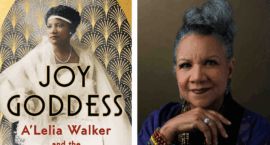
“Langston Hughes called [A’Lelia Walker] the ‘Joy Goddess’ of Harlem’s 1920s,” said A’Lelia Bundles, great-great-granddaughter of Madam C.J. Walker and author of Joy Goddess: A’Lelia Walker and the Harlem Renaissance, out June 11.

“Now, her life was not always happy. But I think his idea was that she used her wealth, her influence and her homes to create a joyful space and a welcoming space for a wide range of people.”

The Feminist Leadership Syllabus: Where History, Politics and Pedagogy Meet

When women assume a position of power, does she represent feminist leadership? Can she govern according to feminist principles? What is the difference between women’s leadership and feminist leadership?

This public syllabus on feminist leadership, assembled by Ms. contributing editor Janell Hobson and students in her graduate research seminar at the University at Albany, is an attempt to respond to these questions by exploring different examples of feminist leaders and feminist movements—both globally and historically.

We hope this syllabus can educate us on the kind of feminist leadership that will move us forward toward an inclusive democracy.

(This is Part 2 of a two-part series on women leaders and feminist leadership. Part 1—out last week—breaks down Angela Bassett’s role as U.S. president in the latest and final installment of Mission: Impossible, and how her representation on screen blurs the line between the impossible fictions and possible realities of women’s power in American politics.)

Documenting Harriet Tubman’s Leadership: Pulitzer Prize-Winning Edda L. Fields-Black on the Combahee River Raid

The Combahee River Raid was a military operation during the American Civil War led by Harriet Tubman on June 1-2, 1863. Historian Edda L. Fields-Black—this year’s winner of the Pulitzer Prize in History—reflects on Tubman’s revolutionary Civil War raid and the power of preserving Black history in the face of political pushback.

“What I speculate is that the Union told the enslaved people who she was. And her presence facilitated the enslaved people in trusting the Union. We know, from some of the sources I’ve brought together in [my latest book] Combee that Harriet Tubman was on the ground in the raid, that she participated in the burning of buildings, and that she went to the slave cabins and coaxed the people there to come onto the boats and come to freedom. So how she convinced them to do that, we don’t know, but they did trust her, even if they didn’t know her entire backstory.”

Could Hollywood’s Vision of a Black Woman President Help Make It Possible?

Mission: Impossible—The Final Reckoning featured Tom Cruise’s action hero Ethan Hunt deep-sea diving through a submarine 500 feet under the sea, swimming naked in sub-zero temperatures, and sky diving in the middle of a plane duel. And yet, perhaps the most implausible fiction was… a Black woman president of the United States?!

Black male presidents in film and TV set the stage for Barrack Obama’s election. Could more depictions of Black female leaders pave the way for a Black woman president?

(This is Part 1 of a two-part series on women leaders and feminist leadership. Part 2—out Monday, June 2—continues with a public syllabus.)

Blood Money, Blues Women, and the Power of Price: How ‘Sinners’ Rewrites the Gothic South

Sinners is rightly recognized as a Black Southern gothic tale, with a plot driven by its male characters. Indeed, the film highlights the camaraderie and community of these men as sharecroppers working alongside their pregnant wives, or as wizened blues musicians who experienced and witnessed enough real-world evil to rival any vampirism.

However, if this “conjuring” is visceral and emotive through the blues music, it is the blues woman and conjure woman who provides its intellectual heft.

This film is a triumph and righteous rebuke of our present era of anti-DEI policies and ideologies. May this way of thinking survive and thrive beyond the vampiric impulse to erase and dominate. 

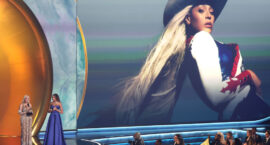
An American Requiem: Beyoncé’s Country Statement at the Grammys

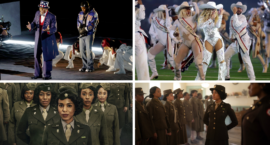
With all the upheaval, just two weeks in, that has accompanied the second term of the current presidential administration, the 67th annual Grammy Awards show came and went Sunday night like a welcome distraction. Even calling the event a “distraction” misses the serious work of art and its purpose in troubled times: to mobilize the masses, reaffirm our values and spread joy and light amid the darkness.

The big night, however, went to pop star Beyoncé, who not only made history as the first Black woman to win Best Country Album, but finally earned Album of the Year for her politically salient album Cowboy Carter, after previously losing in the category. The album, which opened with a “requiem” for America and closed on a prayer that “we’ll be the ones to purify our fathers’ sins,” calls on all of us to witness this nation’s history and its present, to reckon with its “sins” of exclusion and discrimination and demand that we purify it toward the democratic promise it has always held out for all of us and not just a select few determined to set us back on a backward course.


2024’s Top Feminist Moments in Pop Culture

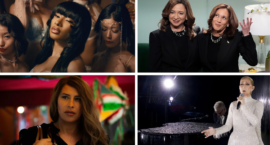
The year 2024 had promised an era of women rising to the top. This was spectacularly highlighted by the historic presidential run of Vice President Kamala Harris, who had mounted an unprecedented campaign in just over 100 days. Sadly, Harris fell short of the necessary votes.

2024 nonetheless demonstrated that women still hold powerful sway across our popular culture, even as they struggle for the highest political position. We continue to hold onto hope for a feminist future with more opportunities for gender and racial breakthroughs, which are still possible because they have been imagined and envisioned in our pop culture. Here are our picks for the year’s top 10 feminist moments.

Flying Free: Wicked’s Feminist Message

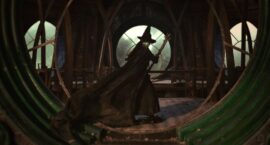
In Wicked, there are many parallels to our own universe: the rise of fascism in Oz; the vilification of a powerful woman (whose laugh some incidentally described as a “cackle”) concerned about the well-being of the most marginalized among us; a media enabling propaganda to villainize said powerful woman and prop up an empty shell of a man specializing in elaborate cons; and the failure of solidarity between women.

Part 1 ends with Elphaba’s ostracism from Oz, but the cinematic pan of her ascension in the sky looks less like tragedy and more like triumph. In times that require moral clarity, a perpetual outsider coming to self-actualization, freed from systems of power because she’s found her own, highlights that we have to look to different skies and different lenses to find a new kind of heroism.