Keeping Score: 137 Women Are Killed by Partners or Family Per Day; Bipartisan Push for Epstein Files; Trans Day of Remembrance and Native Women’s Equal Pay Day

In every issue of Ms., we track research on our progress in the fight for equality, catalogue can’t-miss quotes from feminist voices and keep tabs on the feminist movement’s many milestones. We’re Keeping Score online, too—in this biweekly roundup.

This week:
—137 women and girls are killed by intimate partners or family members every day.
—Congress votes overhwlemingly to force the Justice Department to release their Epstein files.
—Donald Trump snaps at women journalists: “Quiet, piggy” and “you are an obnoxious—a terrible, actually a terrible reporter.”
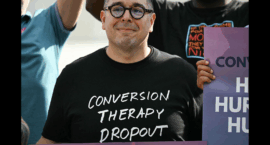
—Violence against trans women remains high.
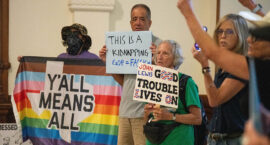
—DACA recipients are being targeted and detained under the Trump administration.
—Higher-income college students often receive more financial support than they need, while low-income students struggle.
—Tierra Walker died from preeclampsia in Texas after being repeatedly denied an abortion.
—Viola Ford Fletcher died at age 111. She was the oldest living survivor of the 1921 Tulsa Race Massacre. 
—North Dakota’s total abortion ban was reinstated after the state’s Supreme Court reversed a temporary injunction from a lower court. There are now 13 states with total bans.

… and more.
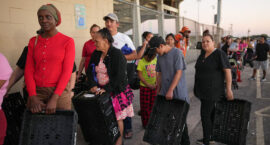
‘The Rent Eats First’: Rationing Expired Food in the Wealthiest Country in the World

Throughout the United States, the millions of families that rely on Supplemental Nutrition Assistance Program (SNAP) benefits—which make up 12.3 percent of Americans—have spent at least 10 days without them. The uncertainties about whether they will return, and when, has left families desperate. For many, the crisis has reinforced what they’ve long felt: The nation’s social safety programs are failing to meet real, everyday needs—and across Iowa, Michigan and Pennsylvania, Americans are growing disillusioned with politicians who can’t protect their most basic ones.

For many disabled Americans, losing SNAP also means losing the nutritional needs that help keep them out of the floundering U.S. healthcare system. They shared with Ms. a glimpse into what the past 10 days without SNAP have looked like, and what millions of Americans who rely on these programs actually need.

“If I lose benefits, am I going to be able to remain going to school?”

“They’re thinking about next week. Will they have food? Will they be hungry?”

“The problem is, the rent always eats first, or the house payment is going to eat first. After that? Are you going to [get your] medicine? No, we [have to pay] our utilities…. then you [think], ‘Okay, I’ve only got enough for either food or my medicine.’”

From Veterans to Caregivers—The Importance of Expanding Remote Education for Women Worldwide

We need to continue normalizing and destigmatizing nontraditional remote learning opportunities as valid, accessible pathways toward women’s realization of their right to an education. 

This means expanding the number of hybrid and remote learning options available through well-established colleges and universities.

It means rethinking the types of technological adaptations deemed as “undue hardships” in the context of student disability.

It means investing in longitudinal research regarding best pedagogical practices—the impacts of evidence-based instructional interventions in the remote learning milieu—and in the professional development of online instructors in synchronous and asynchronous online programs to ensure impact. 

To do so is to ensure that those who fight to pursue their education in nontraditional ways are not shortchanged, but rather equipped with the social and intellectual capital needed to work against the existential threats of our time.

Keeping Score: Democrats Fight Republican Redistricting; Periods Make College Students Miss Class; Costco Refuses to Sell (Safe, Legal) Abortion Pills to Appease Antiabortion Politics

In every issue of Ms., we track research on our progress in the fight for equality, catalogue can’t-miss quotes from feminist voices and keep tabs on the feminist movement’s many milestones. We’re Keeping Score online, too—in this biweekly roundup.

This week:
—“I am deeply alarmed by news reports that Costco is refusing to sell safe, effective, and legal medication for no other reason than to appease the politics of antiabortion fanatics,” said Sen. Patty Murray (D-Wash.).
—The Democratic Legislative Campaign Committee called for Democrat-led state legislatures to pursue redistricting: “The DLCC refuses to allow Republicans to rig the maps to keep themselves in power.”
—“A troubling shift is underway: Women are leaving the U.S. workforce in unprecedented numbers. But this isn’t a choice; it’s a consequence,” warned Catalyst president and CEO Jennifer McCollum after a report showed 212,000 women have left the workforce since January.
—A third of college students have missed class because of their period.
—The Trump administration is planning to restrict coverage of abortion care for veterans in almost all circumstances.
—RFK Jr. takes aim at antidepressant use during pregnancy, despite American College of Obstetricians and Gynecologists’ approving of their usage.
—Texas’ abortion ban has made miscarriages more dangerous.
—A federal court blocked the Trump administration’s restrictions on grants from the Office on Violence Against Women. Seventeen states had challenged the restrictions, and the order is a temporary win for organizations supporting survivors of domestic and sexual violence. 

… and more.

What Happens When Doulas Write the Law? New Mexico’s Medicaid Win Shows How to Fight Back 

As abortion bans sweep the U.S., clinics shutter and gender-affirming care is criminalized, New Mexico accomplished something radical: It passed a law to pay doulas—because doulas save lives.

In 2025, the state unanimously enacted HB 214, the Doula Credentialing and Access Act, creating the nation’s most comprehensive Medicaid coverage for full-spectrum doula care, including for abortion, miscarriage, pregnancy, birth, postpartum and loss.

This victory was decades in the making, a fight led by Black, Indigenous, Latinx, LGBTQ+, immigrant, disabled and community-based doulas. These care workers have long provided essential, unpaid labor in a healthcare system that overlooked them. Now, for the first time, their labor is recognized as essential health infrastructure.

Still, as this vision takes root under HB 214, federal funding threats loom, including cuts to Medicaid, SNAP and reproductive health access—all part of a national strategy to defund care and increase control. Believe in this future? Help protect it. Urge your state to follow New Mexico’s lead. Support local doula collectives. Push for policies that center care over control. The path forward is here—let’s walk it together.

(This essay is part of a collection presented by Ms. and the Groundswell Fund highlighting the work of Groundswell partners advancing inclusive democracy.)

Who Gets Hurt When Congress Cuts Healthcare and Food Aid? Everyone But the Rich.

House Republicans just passed a “big, beautiful” budget bill that would devastate basic needs programs for the most vulnerable Americans in order to pay for tax breaks for the rich. It now heads to the Senate, where Republicans aim to pass a final version by July 4.

Who gets hurt when Congress cuts healthcare and food aid?

Children with disabilities who lose access to therapy. Seniors who can no longer afford their medications. Single mothers choosing between rent and food. Adults with disabilities forced from their homes into institutions. Rural families left without doctors or groceries. Over 10 million people who could lose Medicaid. More than 42 million who rely on SNAP. And every American who believes that basic dignity shouldn’t depend on your ZIP code, income or party in power.

People with Albinism Face a Double Threat: Climate Change and Discrimination

The impact of climate change exacerbates health risks and discrimination for people with albinism, particularly women, who face unique challenges in healthcare and education.

“This larger fight is really a global fight and continental fight against the dominance of ableism,” said Sarah Bosha, lawyer and co-author of a new study, “The Forgotten Ones: The Impact of Climate Change on the Health and Well-being of Persons with Albinism.”