Twenty Thousand Stillbirths a Year, and No Federal Plan to Prevent Them

The U.S. loses over 20,000 babies to stillbirth each year, with many preventable. Across the country, pregnant women say their concerns are dismissed, with devastating consequences for maternal and fetal health. Yet stillbirth remains largely invisible in policy and public discourse, and families are left to deal with these tragic and costly losses with little support.

A new documentary from ProPublica, Before a Breath—based on the outlet’s Pulitzer Prize finalist reporting—follows three mothers who turn their grief from stillbirth into advocacy for safer pregnancies and better outcomes for expecting parents.

Keeping Score: No Kings Protest Turnout Makes History; SCOTUS Threatens Voting Rights; Gen Z Women Are Most Liberal in U.S.

In every issue of Ms., we track research on our progress in the fight for equality, catalogue can’t-miss quotes from feminist voices and keep tabs on the feminist movement’s many milestones. We’re Keeping Score online, too—in this biweekly roundup.

This week:
—No Kings Day marks the largest single-day protest in American history.
—The ongoing government shutdown could soon disrupt SNAP benefits, another unprecedented moment in U.S. history. “We have never seen our government turn on its people this way,” said Abby Leibman, president and CEO of MAZON.
—House Democrats rebuke Pete Hegseth’s hostility towards women in the military.
—Speaker Mike Johnson refuses to swear in newly elected Democrat, Rep. Adelita Grijalva.
—Return-to-office policies are pushing women out of the workforce.
—Remembering legendary trans activist Miss Major Griffin-Gracy.
—The Supreme Court heard arguments challenging the Voting Rights Act.

… and more.

After the War: Author and Aid Worker Claudia Krich Challenges the Myths of Vietnam

American humanitarian worker Claudia Krich—co-director of the American Friends Service Committee medical relief program from 1973 to 1975—was one of only a handful of Americans who stayed in Vietnam past April, 30, 1975, after the war ended. (She and her husband finally left in July 1975.)

Fifty years later, in April, Krich published her full journal from those months in Vietnam. Those Who Stayed: A Vietnam Diary, now available from the University of Virginia Press, combines Krich’s 1975 diary—including sections originally published in Ms.‘ July 1976 print issue—with extra historical content and some first-person accounts by people mentioned in or relevant to the book.

To celebrate the book’s release earlier this year, Claudia Krich communicated with Ms. about her book and her experiences as an American woman living and working in Vietnam during this historic moment.

“People think the war was North versus South, but that’s not true. … I hope my book motivates more people to travel, to take risks, to be outspoken, to record what they experience.”

‘Worse Than War’: A Texas Couple Was Forced to Flee the State for Essential Care—Twice

Hollie Cunningham’s family suffered incredible loss during two pregnancies. The mother of two was forced to flee Texas to get the care she needed, as she explains below in an interview with Courier Texas writer Bonnie Fuller.

“I didn’t really know about Texas’ abortion bans. I had always figured that if something were to go wrong with my pregnancy, my doctor would be able to do what she needed to take care of me.

Americans Oppose Criminalizing Abortion. Too Many Policymakers Aren’t Listening.

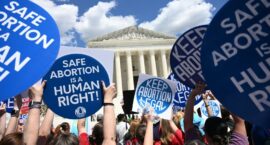
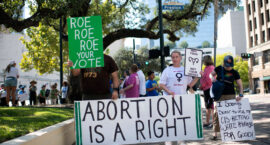
Since the Supreme Court decided on Dobbs v. Jackson and overturned Roe v. Wade in 2022, more than half of U.S. states have passed laws that dramatically restrict and criminalize abortion. These laws assign criminal penalties—including fines and prison time—not only to healthcare providers who provide abortions or write prescriptions for abortion pills, but in some cases, also to people who assist abortion seekers. Yet, a growing body of research suggests these punitive measures do not reflect the views of most Americans.

Trump and RFK’s Pseudoscience Is Another Tool to Control Women

We have reached the point in American politics at which a sitting U.S. president sees fit to decree pregnant women must “tough it out.”

We all would be wise to strenuously push back on junk science—not just for our safety here and now, but in service of a future that doesn’t create new inroads for punishment of pregnancy.

The War on Drugs Was a War on Black Mothers

In the late 20th century, the so-called “crack baby epidemic” became a media obsession. Politicians, prosecutors and even physicians bought into a false narrative: that poor Black women who used cocaine during pregnancy were dooming their children to lives of permanent brain damage, misery and crime. The stories were sensational—and wrong. What these accounts ignored were the actual conditions of women’s lives: poverty, lack of healthcare, untreated trauma and mental illness. Instead of compassion, women like Regina McKnight—raped, grieving, depressed and self-medicating—were met with prosecution, prison sentences and public shaming.

The truth is, there was no epidemic of “biologically inferior” babies. Rigorous scientific research—largely disregarded by mainstream media—showed that cocaine exposure did not cause the catastrophic outcomes predicted by pundits. Yet the racialized panic over “crack babies” justified criminalizing pregnancy, targeting Black mothers, and fueling the broader war on drugs. These myths, and the policies they spawned, continue to shape how our legal and healthcare systems treat women—especially women of color—today.

[An excerpt from Michele Goodwin’s book Policing the Womb: Invisible Women and the Criminalization of Motherhood, published by Cambridge University Press in 2020.]

***

The road to recovery—and the right to recovery—is essential to a free and fair democracy. This essay is part of a new multimedia collection exploring the intersections of addiction, recovery and gender justice. The Right to Recovery Is Essential to Democracy is a collaboration between Ms. and the O’Neill Institute for National and Global Health at Georgetown Law, in honor of National Recovery Month.

Your Future on Ice: Why Younger Women Are Freezing Eggs—and What They Often Don’t Know

Egg freezing allows fertility preservation even if you are not ready to be pregnant now, allowing you to take matters into your own hands. It enables you to preserve your ability to have genetically-related children later in life, while freeing you for other pursuits such as careers, seeking increased financial stability or simply finding the right partner without the pressure of the biological clock. It may permit women who partnered later in life to have a second or third child, even if conceiving the first child is uncomplicated.

Ideally, it is best to consider egg-freezing when you are under 35 to maximize both egg quality and quantity. The challenge for younger patients is freezing eggs at a point where you get maximum success without overkill. If there is still a high probability that a woman will conceive naturally, the time and money dedicated to egg freezing may be best spent elsewhere. The goal of freezing eggs is to ensure a high probability of success in the future, but not to freeze so early as to render the time, effort and expense unnecessary. In our estimation, between ages 31 and 34 is a sweet spot to freeze: early enough to avoid a decline in quality, but late enough to be potentially useful. We can freeze eggs earlier, but there is a reasonable chance you aren’t going to need them after all.

Texas’ Newest Abortion Law Allows $100,000 Rewards for Snitching on Pregnant Women

Texas Republicans recently passed another law to prevent abortions—one that rewards family members with at least $100,000 for snitching.

House Bill 7 passed the Texas Legislature and Gov. Greg Abbott is expected to sign it by Sept. 24, which is the deadline for him to take action on it. 

It would allow private citizens to file lawsuits against any person intending to help obtain abortion pills in the state, anyone distributing abortion pills or any company shipping abortion pills into Texas. If the lawsuit is successful, they’d receive at least $100,000 for their efforts.

There’s a caveat: If the private citizen is not related to a pregnant woman seeking abortion pills, they would only receive $10,000, with $90,000 going to the charity of their choice, if they win their lawsuit. If the private citizen is related to a pregnant woman seeking abortion pills, however, they’d get to keep the full $100,000.

Plus, in a dangerous twist for medical providers across the country, a woman who was pregnant and used abortion medications to end her pregnancy can actually turn around and sue her own provider in an attempt to get $100,000.   

How Texas Abortion Restrictions Are Driving Doctors Away: ‘By Following the Law, I Was Doing the Wrong Thing Medically’

Texas’ abortion bans have driven hundreds of physicians to leave the state, retire early, or avoid practicing and training there altogether. Dr. Lou Rubino is one of many doctors forced out, unable to provide not only abortion care but also life-saving emergency treatment.

“I remember very clearly the moment I knew I was done. I could no longer practice as a women’s healthcare doctor in Texas.

“I had a patient, probably 18 or 19 years old. I was doing an ultrasound, and she told me she needed an abortion for her safety. She said, ‘I’m too young. I don’t feel safe with my partner. I’m scared. I need an abortion.’

“When a patient tells me they feel unsafe with a partner, I take that very seriously. Pregnant people are at high risk of harm from abusive partners. It’s a dangerous time. She knew what she needed, and I knew it was wrong for me to say no. … I asked myself: Am I the kind of doctor who does the wrong thing? I’m not. And Texas couldn’t force me to be.

“Not long after, my husband and I moved to Virginia, where I now practice.”