Keeping Score: No Kings Protest Turnout Makes History; SCOTUS Threatens Voting Rights; Gen Z Women Are Most Liberal in U.S.

In every issue of Ms., we track research on our progress in the fight for equality, catalogue can’t-miss quotes from feminist voices and keep tabs on the feminist movement’s many milestones. We’re Keeping Score online, too—in this biweekly roundup.

This week:
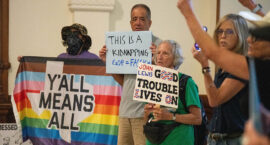
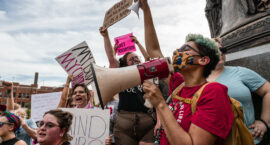
—No Kings Day marks the largest single-day protest in American history.
—The ongoing government shutdown could soon disrupt SNAP benefits, another unprecedented moment in U.S. history. “We have never seen our government turn on its people this way,” said Abby Leibman, president and CEO of MAZON.
—House Democrats rebuke Pete Hegseth’s hostility towards women in the military.
—Speaker Mike Johnson refuses to swear in newly elected Democrat, Rep. Adelita Grijalva.
—Return-to-office policies are pushing women out of the workforce.
—Remembering legendary trans activist Miss Major Griffin-Gracy.
—The Supreme Court heard arguments challenging the Voting Rights Act.

… and more.
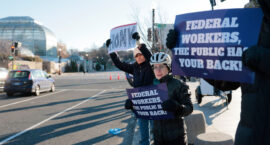
Complying With Trump Administration’s Attack on DEI Could Get Employers Into Legal Trouble

Since the Trump administration made diversity, equality and inclusion “immoral” and “illegal,” a large part of workplace discrimination in the country still remains to be experienced by women and members of racial minority groups. Now, these groups have less of a platform to make complaints about such discrimination.

Keeping Score: Democrats Fight Republican Redistricting; Periods Make College Students Miss Class; Costco Refuses to Sell (Safe, Legal) Abortion Pills to Appease Antiabortion Politics

In every issue of Ms., we track research on our progress in the fight for equality, catalogue can’t-miss quotes from feminist voices and keep tabs on the feminist movement’s many milestones. We’re Keeping Score online, too—in this biweekly roundup.

This week:
—“I am deeply alarmed by news reports that Costco is refusing to sell safe, effective, and legal medication for no other reason than to appease the politics of antiabortion fanatics,” said Sen. Patty Murray (D-Wash.).
—The Democratic Legislative Campaign Committee called for Democrat-led state legislatures to pursue redistricting: “The DLCC refuses to allow Republicans to rig the maps to keep themselves in power.”
—“A troubling shift is underway: Women are leaving the U.S. workforce in unprecedented numbers. But this isn’t a choice; it’s a consequence,” warned Catalyst president and CEO Jennifer McCollum after a report showed 212,000 women have left the workforce since January.
—A third of college students have missed class because of their period.
—The Trump administration is planning to restrict coverage of abortion care for veterans in almost all circumstances.
—RFK Jr. takes aim at antidepressant use during pregnancy, despite American College of Obstetricians and Gynecologists’ approving of their usage.
—Texas’ abortion ban has made miscarriages more dangerous.
—A federal court blocked the Trump administration’s restrictions on grants from the Office on Violence Against Women. Seventeen states had challenged the restrictions, and the order is a temporary win for organizations supporting survivors of domestic and sexual violence. 

… and more.

Keeping Score: Diddy’s Incomplete Conviction ‘Failed to Protect Survivors’; Inhumane Conditions in Alligator Alcatraz; What’s in the ‘Big Beautiful Bill’?

In every issue of Ms., we track research on our progress in the fight for equality, catalogue can’t-miss quotes from feminist voices and keep tabs on the feminist movement’s many milestones. We’re Keeping Score online, too—in this biweekly roundup.

This week:
—Trump’s reconciliation bill will prevent millions from accessing healthcare and food assistance.
—IWMF announced this year’s Courage in Journalism Awards.
—Many prison systems lack accommodations for pregnant inmates.
—Sean “Diddy” Combs found not guilty of sex trafficking.
—The Supreme Court’s decision on LGBTQ books in public schools lays the foundation for new assault on books of all kinds in schools.
—Rep. Maxwell Frost (D-Fla.) called out the hypocrisy of “pro-choice” members of Congress in a House Rules committee meeting: “They say they’re pro-life because they want the baby to be born, go to school and get shot in the school.”
—A group of actors including Jane Fonda and Rosario Dawson wrote a letter to Amazon, after allegations that the company has frequently refused to accommodate pregnant workers. 
—Mahmoud Khalil is suing the Trump administration for $20 million.
—July 10 was Black Women’s Equal Pay Day, marking when Black women’s earnings catch up to what white men earned in 2024.

… and more.

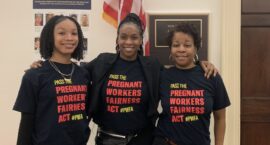
From Pregnancy Discrimination to Advocacy: My Journey to Capitol Hill

Denied accommodations during my pregnancy, I fought back. Now, thanks to the Pregnant Workers Fairness Act, fewer women will have to face the same struggle.

(This essay is a part of Ms. and A Better Balance’s Women & Democracy installment, all about the Pregnant Workers Fairness Act—a groundbreaking civil rights law ensuring pregnant and postpartum workers have the right to reasonable workplace accommodations. Bipartisan, pro-family and boldly feminist, the PWFA is both a lesson in democracy and a battleground for its defense against antidemocratic attacks.)

In the Fight to Defend Pregnant Workers, Focus on the South

The 2022 passage of the Pregnant Workers Fairness Act (PWFA) did not happen in a vacuum. It was a culmination of a decade of direct advocacy in Congress paired with great momentum at the state level, especially in the South. Now as we look ahead to defending and enforcing the law, the South’s crucial role cannot be understated.

Progress in the South, whether legislative or in the courts, is a long road—one that takes an army of on-the-ground advocates, elbow grease and patience. But we know that the need for the PWFA and its robust enforcement is vital for women and their families in the South because, despite progress, many Southern states still do not have state-level protections and must rely only on federal protections. And too many corporations that put profits above people have made their home in the South in order to escape government regulations in a race to the bottom—a troublesome environment for workers seeking to vindicate their rights.

(This essay is a part of Ms. and A Better Balance’s Women & Democracy installment, all about the Pregnant Workers Fairness Act—a groundbreaking civil rights law ensuring pregnant and postpartum workers have the right to reasonable workplace accommodations. Bipartisan, pro-family and boldly feminist, the PWFA is both a lesson in democracy and a battleground for its defense against antidemocratic attacks.)

A Challenge to the Health of Pregnant Workers—and the Health of Our Constitutional Democracy

The Pregnant Workers Fairness Act enjoyed broad bipartisan support, easily passed the House, and was favorably reported out of committee in the Senate.

It did not take long, however, for attacks to ensue. The state of Texas, represented by Texas Attorney General Ken Paxton, filed a lawsuit challenging the validity of PWFA because the House of Representatives had allowed members to vote for the omnibus bill by proxy.

A federal trial judge in Texas, however, held that PWFA was unconstitutional because he believed only “in person” votes could count for determining a quorum. The case is now pending before the federal appeals court for the 5th Circuit.

(This essay is a part of Ms. and A Better Balance’s Women & Democracy installment, all about the Pregnant Workers Fairness Act—a groundbreaking civil rights law ensuring pregnant and postpartum workers have the right to reasonable workplace accommodations. Bipartisan, pro-family and boldly feminist, the PWFA is both a lesson in democracy and a battleground for its defense against antidemocratic attacks.)

Defending the Pregnant Workers Fairness Act in the Courts

In February 2024, a federal judge in Texas erased the rights of thousands of Texas state employees, blocking them from pursuing claims under the PWFA. The ruling, which came only eight months after Texas workers, and all workers had finally won long-awaited rights under the Pregnant Workers Fairness Act, devastated workers and their allies. It also threatened the democratic values that our organizations work to defend.

The 5th Circuit heard oral arguments in the appeal at the end of February. Regardless of the outcome, we will continue to fight in the courts to hold governments to account and to defend the rights of pregnant and postpartum workers, wherever that fight takes us next.

(This essay is a part of Ms. and A Better Balance’s Women & Democracy installment, all about the Pregnant Workers Fairness Act—a groundbreaking civil rights law ensuring pregnant and postpartum workers have the right to reasonable workplace accommodations. Bipartisan, pro-family and boldly feminist, the PWFA is both a lesson in democracy and a battleground for its defense against antidemocratic attacks.)

The Pregnant Workers Fairness Act Is Key to Improving Black Maternal Health and Families’ Economic Security

The enactment of the Pregnant Workers Fairness Act (PWFA) marked a pivotal advance in safeguarding the health and economic security of Black mothers and their families. Black women are disproportionately represented in low-wage, physically demanding jobs where workplace accommodations are often necessary but frequently unavailable.

The PWFA is crucial in combating the maternal morbidity and mortality crisis in the U.S., where pregnancy-related mortality rates among Black women are over three times higher than those for white women.

(This essay is a part of Ms. and A Better Balance’s Women & Democracy installment, all about the Pregnant Workers Fairness Act—a groundbreaking civil rights law ensuring pregnant and postpartum workers have the right to reasonable workplace accommodations. Bipartisan, pro-family and boldly feminist, the PWFA is both a lesson in democracy and a battleground for its defense against antidemocratic attacks.)