What 200 Gen Z Women Told Me About Birth Control Should Alarm Every Woman in America

Birth control is the single most powerful tool for women’s economic mobility and autonomy in modern history. It changed everything: When women could plan if, when and with whom they wanted to have children, college enrollment soared, dropout rates fell and poverty rates declined. The ability to access contraception has been directly tied to women’s ability to stay in school, build careers and make decisions about their own futures.

So why, in 2025, are we finding ourselves in a messaging war on birth control?

Octavia Butler Saw This Coming

The Huntington Library, located in San Marino, Calif., launches a new exhibit, Stories from the Library: From Brontë to Butler, on Dec. 13, 2025. This collection is especially renowned for its extensive archive on the personal writings and stories pertaining to science fiction author Octavia Butler, who died too soon at age 58 in 2006 due to a fall outside her home. The prolific writer and MacArthur Grant recipient leaves behind several series of novels and other works of fiction.

Janell Hobson spoke with Black feminist scholar and Butler biographer Susana M. Morris, who relied on the vast archive available at Huntington for her latest book, Positive Obsession: The Life and Times of Octavia E. Butler, which came out earlier this year.

“With Octavia Butler, we get cautionary tales. We could have just listened to her.”

International Telehealth Provider ‘Women on Web’ Vows to Keep Abortion Pills Flowing to the U.S., No Matter What

As Republicans push the FDA to restrict mifepristone, the international online abortion service Women on Web is reassuring Americans that they will continue to support access to abortion pills in all 50 states, no matter what. Women on Web has served over 130,000 people worldwide since 2005 and began serving the U.S. in July 2024.

Venny Ala-Siurua, executive director of Women on Web, was recently named to the Top 100 Canada’s Most Powerful Women by the Women’s Executive Network Academe. Ms. spoke with Ala-Siurua about how their service connects people with pills, how they’re removing medical gatekeeping, and how they’re defending abortion access against digital censorship.

“We’ve always focused on countries where there are high restrictions on abortion. Unfortunately, the situation in some of the states in the U.S. qualifies now. … Many pharmacies and providers have stepped up internationally to support the U.S. and found ways of dispensing and shipping medicines really, really fast. …

“We are receiving around 30 requests per day from people in the U.S., though that number can rise during major political moments—for example, when Trump was elected or took office. Our U.S. care seekers live primarily in states with abortion bans. Globally, we currently handle approximately 4,000 requests each month.”


How Reshma Saujani Makes the Invisible Work of Motherhood Impossible to Ignore

Most women are taught to make motherhood look effortless. Reshma Saujani wants you to see that we were never supposed to do it alone.

In a country that still treats caregiving as a personal responsibility rather than a public good, Saujani is changing the script. Not by asking for sympathy, but by exposing the architecture of the lie—and building something better in its place.

“I come from a long line of rule-breakers,” she told me. “My parents fled a dictator. They landed in Chicago with nothing. I grew up surrounded by refugees who were just trying to make it work. That kind of survival teaches you two things: one, that struggle is constant—and two, that silence is dangerous.”

She was a rule-breaker long before she was a movement-builder—always challenging authority, always in detention. “I’ve never been good at following the script,” she said. And that’s exactly what makes her effective.

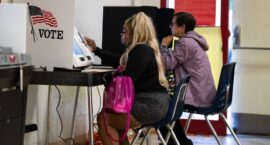
I Asked Top Election Experts About 2024 Tampering Claims. Here’s What They Said.

In recent weeks, a wave of rumors has surfaced online suggesting the 2024 election may have been “stolen” or, more specifically, tampered with due to faulty machines. While many of these claims remain vague or speculative, some are beginning to gain traction across social media platforms and alternative news sites. 

In the interest of democracy, transparency and election security, I reached out to a group of leading experts—many of whom work at the intersection of voting rights, cybersecurity and public trust—to share two examples of the kinds of articles I’ve seen on this topic, and ask for their take.

What follows are responses from some of the country’s most experienced voices on election integrity. Their insights are a valuable reminder that while election systems are not perfect, there is currently no credible evidence supporting claims of widespread vote manipulation in 2024. Instead, these experts highlight what’s real, what’s theoretical and where our attention should actually be focused as we work to protect democracy.

From Biden’s Cabinet to the Crisis Council: Isabel Guzman on AI, DEI, Elon Musk—and What Real Leadership Looks Like

Isabel Guzman previously served as the 27th administrator of the Small Business Administration under President Biden and was the fifth Latina woman to serve in the Cabinet. She cites serving in Biden’s Cabinet, which was majority-women and the most diverse Cabinet in U.S. history, as ‘humbling’ and an “honor.”

Since leaving the Biden administration, Guzman is now on the frontlines of corporate leadership, helping CEOs confront the reputational dangers of AI, DEI and disinformation. Guzman recently sat down with RepresentWomen’s digital media manager Ria Deshmukh to speak about her transformative journey through the public and private sectors. This is her first in-depth interview since finishing her tenure as the SBA administrator, providing a multifaceted perspective of life as a woman leader in public service and business development.

“The most critical moments in my career have been when I’ve taken myself out of my comfort zone.”

“Women need to continue to be bold about their worth and their value for inclusion.”

The Trump Administration’s Artificial Intelligence Rollback Is a Chance to Rethink AI Policy

With federal AI governance on hold, we have a unique opportunity to reassess our approach and address the growing AI divide. Rather than blindly pushing forward with inequitable systems, we can focus on building AI policies that prioritize fairness, access and inclusion. This moment offers a chance to shape AI’s future in a way that truly serves all communities, not just the privileged few.