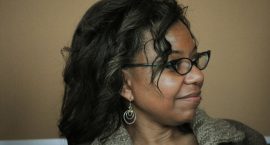
As the month of June, also known as “Black Music Appreciation Month,” comes to an end, the Black Feminist in Public series will highlight the significant intellectual work of Daphne A. Brooks.


More Than A Magazine, A Movement

As the month of June, also known as “Black Music Appreciation Month,” comes to an end, the Black Feminist in Public series will highlight the significant intellectual work of Daphne A. Brooks.
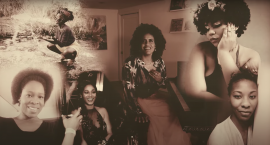
Los Angeles based singer, activist and spiritual coach Monique DeBose has a new song dedicated to all women of color.
“My intention with this song was to put it out at this point in time as just a celebration. I feel like for so long, we have not had the spaces and the public squares to just celebrate and acknowledge ourselves. If we’ve done it, it’s had to be in enclosed circles, and at this point, I’m ready now to just have it be out in public in a way that like has no shame has no trepidation, no insecurity.”
This week leads into the weekend celebration of Juneteenth, honoring the emancipation in 1865 of those who were enslaved in this country. The Black Feminist in Public series will highlight three scholars of slavery studies and Black women’s histories.
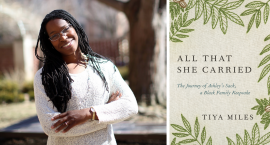
Our third and final focus is Tiya Miles, professor of history at Harvard University and author of All That She Carried: The Journey of Ashley’s Sack, a Black Family Keepsake.
This week leads into the weekend celebration of Juneteenth, honoring the emancipation in 1865 of those who were enslaved in this country. The Black Feminist in Public series will highlight three scholars of slavery studies and Black women’s histories.
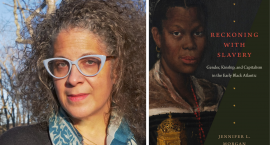
Next up, Jennifer L. Morgan, author of Reckoning with Slavery: Gender, Kinship, and Capitalism in the Early Black Atlantic.
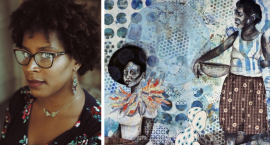
This week leads into the weekend celebration of Juneteenth, honoring the emancipation in 1865 of those who were enslaved in this country. The Black Feminist in Public series will highlight three scholars of slavery studies and Black women’s histories.
First up: Jessica Marie Johnson, associate professor of history at John Hopkins University and author of Wicked Flesh: Black Women, Intimacy, and Freedom in the Atlantic World.
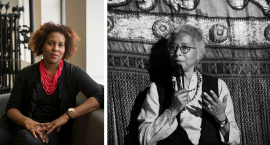
Through archival research and interviews, academic and activist Salamishah Tillet studies Alice Walker’s life and how themes of violence emerged in her earlier work.
“It was important for me to recognize Alice’s own journey to Zora as part of my own journey to Alice. That’s one thing. The other part is that you have a generation of Black writers and scholars who self-identify as Black feminists who remember the moment or the time or the text that helped them find the language of Black feminism. This is both a recovery and an origin story.”
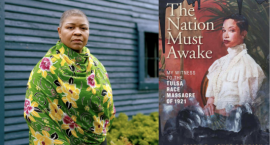
Just ahead of the 1921 Tulsa Race Massacre Centennial, an eyewitness account of the tragedy by Tulsa resident, Mary E. Jones Parrish (1892-1972), has been reissued: “The Nation Must Awake: My Witness to the Tulsa Race Massacre of 1921.”
“Yes, it is painful, but human history is ugly. … There is some level of responsibility that creative people have to be as truthful and as accurate as possible to the histories they tell,” says Parrish’s great-granddaughter, writer and editor Anneliese M. Bruner.
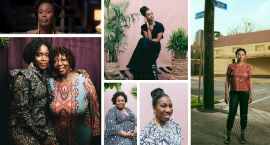
“In Our Mothers’ Gardens”—the new documentary by debut filmmaker Shantrelle P. Lewis, from Ava DuVernay’s ARRAY films—is a deeply personal film exploring the relationships between Black mothers and daughters.
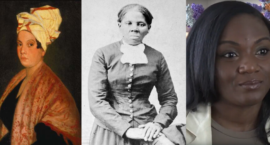
Will African American women like Kizzmekia Corbett—lead scientist at the National Institute of Allergy and Infectious Diseases working on a vaccine for the virus— be able to follow in the trajectories of black women healers, like Marie Laveau, Harriet Tubman or the “signares” in West Africa?

“I think the future of black feminism will either help to change the world or how we deal with the end of the world as we know it. And maybe these two things aren’t antithetical.”