Immigrant and First-Generation Women Are Changing What Leadership Looks Like in America

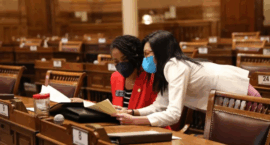
Running for office in the United States has never been an even playing field. Women face steep hurdles including misogyny, difficulties raising money and building political networks, and shouldering the demands of family and work. On top of that, immigrant women often face increased barriers, contending with racism, xenophobia and constant doubts about whether they “fit the image” of a politician.

Men are usually assumed to be qualified. Women have to prove it—over and over again.

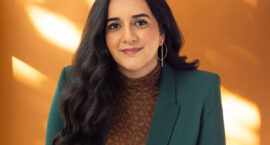
At New American Leaders, we prepare women to anticipate these double standards and to campaign with confidence and authenticity. NAL is women-led and stands as the only nonprofit, nonpartisan organization in the United States that trains and supports immigrants, children of immigrants and refugees for civic leadership or running for office.

(This essay is part of a collection presented by Ms. and the Groundswell Fund highlighting the work of Groundswell partners advancing inclusive democracy.)

From Iceland’s ‘Women’s Day Off’ to No Kings, Progress Begins When Women Stand Together

Weekend Reading for Women’s Representation is a compilation of stories about women’s representation in politics, sports and entertainment, judicial offices and the private sector—with a little gardening mixed in!

This week:
—Fifty years ago, the women of Iceland changed the course of their nation … not through an election or a revolution, but through one simple, collective act: They stopped. On Oct. 24, 1975, 90 percent of Icelandic women refused to work, cook or care for children for a single day. That strike, known as the Women’s Day Off, became a watershed moment for equality, but it didn’t emerge overnight.
—Women hold the majority in the Bolivia legislature.
—Japan confirms Sanae Takaichi as its first woman prime minister.

… and more.

Russia Was Once a Revolutionary Feminist Motherland

Russia’s hostility to feminism today stems not from its foreignness, but from memory. A century ago, it was Russian women who lit the first sparks of revolution. On International Women’s Day in 1917, factory workers filled the streets of Petrograd demanding bread, peace and equality—an uprising that toppled the Romanovs and pulled the world into modernity. Under the Bolsheviks, women won the right to vote, divorce became accessible and abortion was legalized. For a brief, radical moment, the Soviet experiment made women’s liberation a pillar of the state.

Julia Ioffe’s book, Motherland: A Feminist History of Modern Russia, from Revolution to Autocracy, reminds us that today’s Russia rejects feminism precisely because it once knew what it could do: ignite revolutions, upend hierarchies and reimagine power itself.

Our Favorite Protest Signs From No Kings 2.0

On Saturday, Oct. 18, 2025, millions of Americans poured into the streets for the second No Kings protest this year. Organizers from hundreds of national and local progressive groups say nearly 7 million people participated in about 2,700 different No Kings events. In every state, in cities big and small, protesters used signs, costumes and chants to double down on democracy and accuse President Donald Trump of behaving more like a monarch than an elected official during his first 10 months back in office.

Marchers carried “We the People” signs and references to the U.S. Constitution, including: “The Constitution is not optional,” “Democracy not monarchy” and “No kings since 1776.” Signs and chants varied by region: In New York City, protesters dressed up as the Statue of Liberty; in Florida, signs said the Florida heat would melt ICE; in Texas, marchers called for Gov. Abbott and Sen. Cruz to stand up to the Trump administration’s abuses of power.

Here are some of our favorite signs from Saturday’s No Kings protests.

Meet Dr. Lincoln, the Internet’s Favorite OB-GYN

You may know—and love—Dr. Jennifer Lincoln already. If you are unfamiliar, she’s a board-certified OB-GYN and a famous content creator with 2.8 million followers on TikTok and large platforms on Instagram and YouTube. Dr. Lincoln is also a practicing OB-hospitalist who works in labor and delivery, night and day.

She makes content to dispel medical misinformation, a frequent tool of the patriarchy. As ‘MAHA’ influencers decry everything from birth control to Tylenol, at the expense of women, she’s pushing back with evidence-based information.

Like most Americans, I felt uninformed about sexual reproductive health, even after my in-school health classes. In high school, I searched YouTube for information about reproductive health, where I found my way to Dr. Lincoln, who not only provided the health class I never had, but also ignited my interest in reproductive justice. Without her influence, I likely would not have become a feminist writer at Ms.

Over Zoom, I had the privilege of chatting with Dr. Lincoln about her journey from OB-GYN to viral educator, how the post-Dobbs landscape has reshaped her work, and why she believes accurate, inclusive sex education is one of the most powerful tools we have for liberation. Our conversation spanned everything from social media strategy to Christian nationalism—and what it really means to fight misinformation with empathy.

Who Gets to Procreate and Parent? A Black Feminist Critique of the Pronatalist Agenda

Pronatalism is not simply about encouraging births—it is a political project rooted in racism and control. Its goal is to engineer a future that permits only certain people to bear and raise children while coercing or punishing others for reproducing or parenting.

Adriana Smith’s experience of coerced reproduction is a devastating example: a Black nurse and mother declared brain-dead, yet kept on life support for months to sustain her pregnancy under Georgia’s restrictive abortion laws. This is what pronatalism looks like in practice—the state asserting ownership over a Black woman’s body.

As Black feminists, we understand that reproductive choices are personal, but they are also deeply shaped by structural power. Pronatalist leaders and influencers cloak their agenda in the language of family and morality, but in truth, they seek to restrict autonomy and consolidate control. Reproductive justice, by contrast, insists on every person’s right to decide whether and how to have children, and to parent in safety and dignity.

Sahaj Kohli Is Helping Immigrant Daughters Break the Silence They Inherited

Seventy-seven percent of Indian Americans ages 25 and older hold a bachelor’s or advanced degree—one of the highest education levels of any group in the country. However, there aren’t many that are civically active in their communities. Few post about controversial issues. Fewer donate. Almost none speak publicly. These are the women who are otherwise bold: executives, founders, fundraisers, moms who command rooms. But when it comes to controversial topics—especially anything that could “stir the pot”—there’s a quiet, familiar retreat.

Therapist and founder of Brown Girl Therapy, Sahaj Kohli has spent years studying this phenomenon. Through a book, a podcast and a mental health community for bicultural and immigrant women, she’s helping these women understand “your voice doesn’t have to be angry or loud in order for it to be brave. It just has to be yours.”

As we celebrate Diwali—a festival that honors light’s triumph over darkness—it’s worth remembering that our voices are part of that light. Choosing to speak, even when it’s uncomfortable, is how we brighten the path for those who come after us.

Grief, Power and the Ongoing Fight for Women’s Rights

From daily violence to decisions over their bodies, women’s suffering is ignored and their losses go largely ungrieved—a reflection of a culture that shapes which rights are protected and whose lives are mourned.

The newly released Beijing report warns that progress is not guaranteed, and regression is already underway. This anniversary must be more than a commemoration; it must be a recommitment. As Hillary Clinton cautions: “This is an all-hands-on-deck moment for women across the world who have benefited from the changes in the laws, regulations, and norms over the last 30 years to realize that there are strong forces at work to try and turn the clocks back.”

The clock will not be turned back—not if we raise our voices, grieve loudly for women and refuse silence.

Mary Beth Tinker Is Still Teaching the World How Kids Can Change It

Five students, including Mary Beth Tinker, were suspended from school in 1965 for wearing black armbands to support a Christmas truce in the Vietnam War and mourn the deaths of Vietnamese people and U.S. soldiers. Tinker was an eighth grader at the time. Represented by the ACLU, the students sued for freedom of speech after their suspension.

On Feb. 24, 1969, the Supreme Court reached a landmark ruling on student speech in Tinker v. Des Moines, cementing the precedent that students and teachers retain their First Amendment rights in public K-12 classrooms so long as they do not substantially disrupt education.

More than 50 years later, Mary Beth Tinker is still an activist for demilitarization, children’s rights, free speech, LGBTQ+ rights, environmental protection and transnational feminism.

A Message From the Life of Urvashi Vaid: Do Not Remain Silent

When the 18-minute documentary There Are Things To premiered in Provincetown, Mass., in 2023, it was never meant to be a global statement. It was meant to be a love letter, a short community film about a long legacy. But like the woman it honors— activist Urvashi Vaid—it refused to stay small.

And how could it? We are living through a time when naturalized citizens are being threatened with denaturalization, children are being separated from their parents during immigration raids, people are crossing state lines just to access basic reproductive healthcare, and pregnant women who desperately want children are dying in homes and hospitals or on their way to seek medical care because doctors delay or deny treatment under strict abortion laws. These are not fringe headlines—they are daily realities in one of the most powerful nations in the world.

Against this backdrop, There Are Things to Do (now available for streaming on PBS) arrives like a gentle ambush. Its power is subtle, but the provocation is clear: What if the most radical thing an immigrant could do in America is not assimilate, but organize?