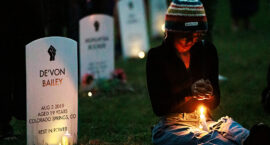
Sleep Is a Feminist Issue: Why Women’s Rest Is Political

Despite being among the top reasons women seek medical care, sleep disruptions during menopause have been understudied and undertreated. For women, sleep problems peak during the menopausal years, which span from their 40s to early 60s. Even more alarming, suicide rates also rise during these years. And the research shows that even amid immense hardship, the ability to sleep well buffers against suicidal thoughts. Yet, this crisis remains largely ignored.

Federal research, which now faces catastrophic budget cuts, has long neglected women’s sleep and menopause. And of course, in America, midlife women are holding the social safety net together, picking up the pieces of a broken welfare system.

Sleep is not a luxury. It is a nightly ritual restoring the brain through cellular growth and repair. To understand how we got here, we must examine the long history of how women’s sleep—or lack thereof—has been weaponized against us.

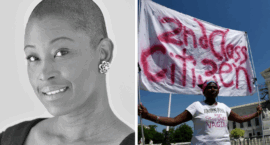
‘We Are the Experts of Our Experiences’: Why Renee Bracey Sherman Wants You to Tell Your Abortion Story

The We Testify founder and executive director explored the white supremacist roots of modern antiabortion policies—and the subversive power of abortion storytelling—in the latest episode of the Ms. Studios podcast Looking Back, Moving Forward.

“I had an abortion when I was 19 … even though I grew up in a family that was supportive of abortion, and I knew what I wanted … it still was really emotionally hard because I felt really alone. … I felt like there wasn’t anyone who looked like me talking about it or having an abortion. … Later, I ended up seeing For Colored Girls, the Tyler Perry film, and Tessa Thompson’s character had an abortion. I then saw someone who looks like me, even though my decision was completely different than hers and the experience was completely different than hers. … I felt so seen. … A lot of my work has been about ensuring that people who have abortions see versions of themselves, and ensuring that they get to be that version for someone else—and that they get to share their whole story.”

Listen to the second episode —”Inside the Feminist Fight to Reclaim Our Reproductive Freedom (with Renee Bracey Sherman, Michele Goodwin, Angie Jean-Marie and Amy Merrill, Susan Frietsche, and Gov. Maura Healey)”—on Spotify, Apple Podcasts or wherever you get your podcasts.

The U.S. Built Wealth Off Enslaved Women and Girls: Michele Goodwin on the History of Reproductive Injustice

Goodwin, an expert in constitutional law and health policy, uncovers the reproductive health rights stories embedded in American history—and what they tell us about the future of our fight for reproductive freedom.

Listen to the second episode Ms. podcast, Looking Back, Moving Forward—”Inside the Feminist Fight to Reclaim Our Reproductive Freedom (with Renee Bracey Sherman, Michele Goodwin, Angie Jean-Marie and Amy Merrill, Susan Frietsche, and Gov. Maura Healey)”—on Spotify, Apple Podcasts or wherever you get your podcasts.

Attacks on Abortion Access Are as Old as White Supremacist Patriarchy Itself. Here’s How We Fight Back.

What really underlies attacks on our bodily autonomy isn’t a devotion to “life,” but a desire for dominance. “In the history of abortion, every single time there is a wave of criminalization of abortion, it’s at the same time that the people in power, the forces that be, are concerned about losing power,” says Renee Bracey Sherman.

In the second episode of Looking Back, Moving Forward, advocates, lawmakers and experts explore the real roots of abortion criminalization throughout U.S. history — and lay out visions for where the fight for reproductive freedom must go next.

Listen to the second episode Ms. podcast, Looking Back, Moving Forward—”Inside the Feminist Fight to Reclaim Our Reproductive Freedom (with Renee Bracey Sherman, Michele Goodwin, Angie Jean-Marie and Amy Merrill, Susan Frietsche, and Gov. Maura Healey)”—on Spotify, Apple Podcasts or wherever you get your podcasts.

Black Activists Say Trump Administration’s ICE Raids Revive Jim Crow Tactics

“The ICE crisis is a Black issue, too,” said Myeisha Essex of Black Women for Wellness (BWW) at a recent press conference in Los Angeles. Essex was joined by leaders from other Black- and Latino-led grassroots organizations, including the Black Alliance for Just Immigration (BAJI) and the California Black Power Network (CBPN). Together, they warned that Trump’s crackdown threatens the safety and civil rights of immigrants and citizens alike, underscoring the need for solidarity across communities of color—and with allies—amid deepening political and racial divides.

The uncertainty and fear of this political moment intensified last month when the Supreme Court upheld the federal government’s ability to deport immigrants to third-party countries—even when individuals have not had a fair chance to contest removal or raise credible fears of torture or harm. Advocates argue the ruling undercuts due process and erodes bedrock democratic principles, leaving both immigrants and U.S. citizens questioning what rights remain secure.

“We are the ones—Black people, regardless of citizenship—who must define what resilience and resistance look like in this moment,” said Nana Gyamfi, executive director of BAJI. “The first human beings who migrated, allowing people to exist all over this planet, were Black people.”

‘We Have to Break the Spell We Have Been Under About What This Country Is’: Why Aimee Allison Still Believes in a Multiracial Feminist Democracy

Aimee Allison founded She the People to empower more of us to envision an America redefined and inspired by women of color. As its president, she launches and spearheads efforts to demonstrate the political power of women as color and advance racial, economic, and gender justice.

As part of the first episode of the new Ms. Studios podcast Looking Back, Moving Forward, Allison talked to Ms. about her vision for a feminist future, rewriting the American story, and what it will take for us to build a better democracy. 

“We stand for something extremely powerful, and we have a legacy of women who came before us that are going to actually show us the way forward.”

The Supreme Court Doesn’t Really Care About Originalism. ‘Medina v. Planned Parenthood’ Just Proved It.

By upholding a South Carolina order that strips Medicaid funding from abortion providers, the Supreme Court abandoned both patient choice and the original civil rights vision behind Medicaid.

Medicaid funding is crucial for low-income Americans—it’s the vital thread that connects them with healthcare in a society where universal healthcare does not exist. 

Weekend Reading on Women’s Representation: Elected Leaders Should Be Able to Serve Without Fear; Honoring Opal Lee, Grandmother of Juneteenth

Weekend Reading for Women’s Representation is a compilation of stories about women’s representation. 

This week:
—new research on the importance of women’s leadership
—how Opal Lee became known as the Grandmother of Juneteenth
—No matter who wins the race, Virginia’s next governor will be the first woman to ever hold the office.

… and more.

Juneteenth Calls for Economic Justice, Not Trump’s Racially Coded Gimmicks

As Juneteenth approaches, we are called to remember not just the day when the last enslaved Black Americans learned of their freedom, but the ongoing struggle for true justice and equality in this country.

In this context, Donald Trump’s economic and immigration policies—packaged as efforts to “Make America Great Again”—take on a more troubling meaning. They are not just policy proposals; they are part of a deliberate strategy to reinforce racial divides, undermining the very ideals that Juneteenth represents.

From Reckoning to Backlash, Black Women Reflect on the Stakes of the Moment

In 2020, the killing of George Floyd shocked Americans into action and into the streets by the millions, protesting the unrelenting killing of Black people by police. 

The moment sparked a nascent reckoning in America around systemic racism and institutional inequality—in many cases, with Black women at the center. Already the backbone of our democracy, many were called on to also be a bridge to racial healing.

Five years later, many of these same Black women find themselves at the center of a backlash, confronted with attacks on the diversity, equity and inclusion efforts that were previously championed.