In Afghanistan, women and girls are being systematically erased under a regime of gender apartheid—but we can help stop it. Stop Gender Apartheid in Afghanistan: Campaign for Afghan Women & Girls (a program of the Feminist Majority Foundation, publisher of Ms.) is urging the U.N. to recognize gender apartheid as a crime against humanity and to refuse recognition of the Taliban regime. Sign and share the petition to demand action and ensure Afghan women have an equal seat at every table shaping their country’s future.
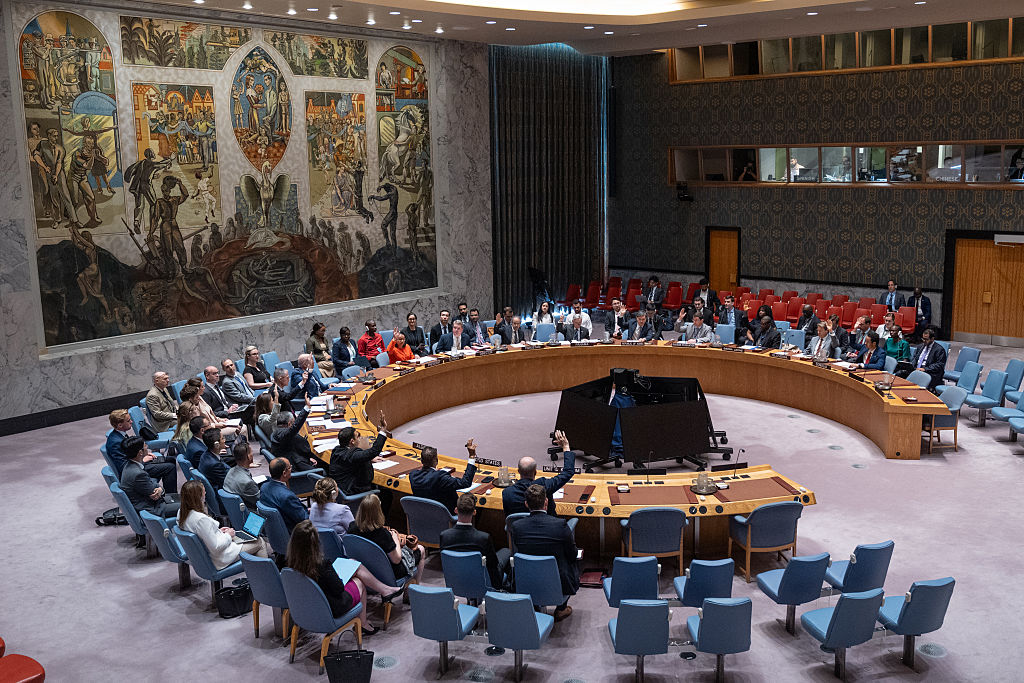
At a United Nations Security Council meeting late last month, diplomats delivered stark assessments of Afghanistan’s worsening crisis—condemning the Taliban’s repressive edicts, affirming support for Afghan women and reaffirming the importance of humanitarian aid. Yet beneath the layered statements and impassioned appeals was a sobering truth: The council remains no closer to articulating a unified or actionable strategy to confront the regime’s systemic gender apartheid.
After nearly four years of Taliban rule, Afghan women and girls remain systematically erased from public life—banned from education, excluded from work and increasingly pushed out of essential services. U.N. Women executive director Sima Bahous underscored the gravity: “Not a single restriction has been reversed. Repression has become more systematic and has calcified into structure and law.”
Despite repeated briefings and reports, the council has yet to articulate a coordinated plan to address these violations beyond rhetorical condemnation.
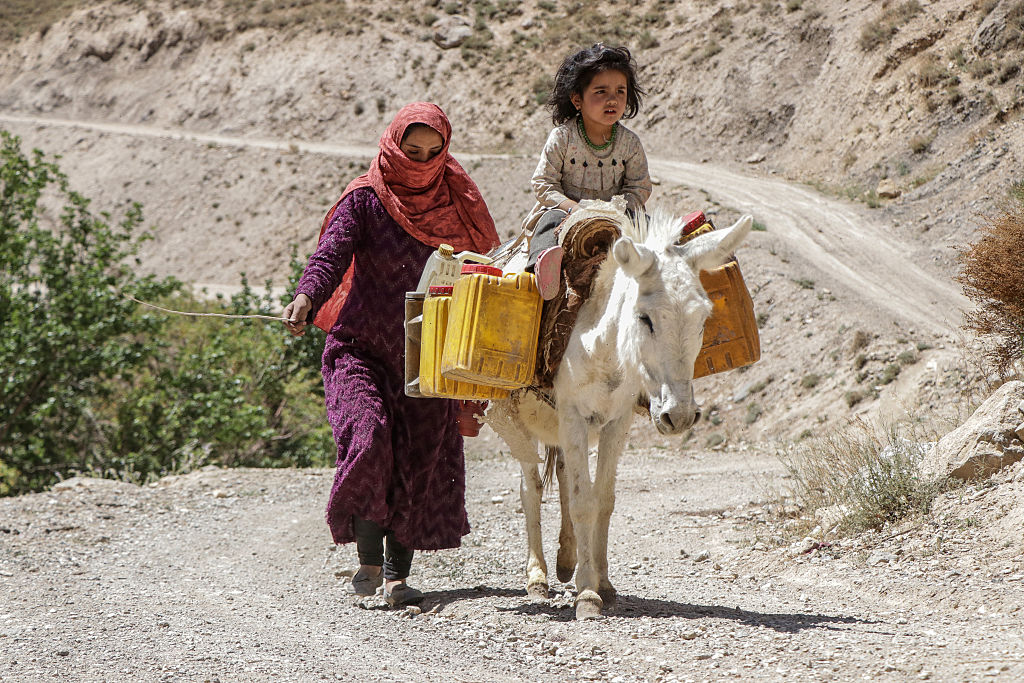
The humanitarian data alone is devastating. One in five Afghans is hungry. Over 3.5 million children are acutely malnourished, including 2.2 million girls barred from school. Maternal mortality rates exceed 2.5 times the global average. And Kabul faces a looming water crisis amid the region’s fourth drought in five years.
Yet the funding that once underpinned emergency services has dried up. Nearly 300 nutrition centers have closed, depriving 80,000 malnourished women and children of care. Assistant Secretary-General Joyce Msuya warned that the U.N.’s humanitarian plan remains less than 21 percent funded, with a $1.9 billion gap forcing agencies to “hyper-prioritize” limited aid.
“Reduced movement results in reduced reach,” she emphasized, particularly for women requiring mahram, or a male guardian who is a close family member, and Sharia-compliant conditions to receive care.
Still, the Taliban’s political calculus remains unchallenged.
Multiple speakers including France, Denmark and the U.K. condemned the regime’s policies and cited economic losses stemming from girls’ exclusion from education, estimated at $1.5 billion by 2030. But the international community has yet to impose tangible costs or consequences for these restrictions, or to at the very least align diplomatic engagement with demands for reversal. Even the Council’s own mechanisms, such as the 1988 Sanctions Committee, have not prioritized women’s rights violations as listing criteria—despite proposals to do so.
Meanwhile, as Bahous noted, Afghan women continue to resist. Underground schools persist. Women-led businesses in Bamiyan, with U.N. Women support, doubled their revenue in just one year. But without systemic support, such resilience cannot be sustained.
“Why invest in hope,” Bahous asked, “when hope is banned?”
The language used during the meeting was unambiguous. Member states described the Taliban’s policies as “gender apartheid,” “a war on women,” and “institutionalized repression.” Multiple countries cited economic fallout from the exclusion of women, called for their inclusion in future talks, and recognized the long-term damage this crisis poses for Afghanistan and global stability.
Yet no speaker articulated a concrete path forward. UNAMA’s recent report on the Taliban’s “Virtue and Vice” law also confirmed what Afghan women have long warned: the regime’s policies are not temporary, they are engineered for permanence. Despite these facts, there were no proposals for red lines, accountability mechanisms or enforcement tools. The strategy—if one can call it that—was limited to continued engagement and rhetorical support.
While the U.N. affirms the importance of engagement through the Doha Process and its “Mosaic” approach, Afghan women remain largely excluded from these discussions. Bahous called on member states to ensure gender parity in all future diplomatic forums.
But in practice, the de facto authorities dictate the terms—and the world, eager for stability or counterterrorism cooperation, continues to engage.
“Afghanistan cannot be a forgotten cause,” Panama’s representative warned.
But in a room full of acknowledgments, few were able to offer real impactful strategy. The Security Council, once a venue for decisive action, has instead become a platform for recurring regret and words of condemnation.
This inaction is not merely bureaucratic—it is existential. For Afghan women and girls, every closed school, every shuttered clinic, every day without recognition chips away at their futures. The system of gender apartheid now in place is not a matter of policy disagreement. It is a coordinated project of societal erasure. To reverse it will require more than speeches. It will require a plan.
Until then, the message to Afghan women remains painfully unchanged: The world sees you—but has yet to act.