War on Women Report: Antiabortion Extremist Charged in S.C. Shooting; Army OB-GYN Accused of Abusing Over 85 Women Patients

MAGA Republicans are back in the White House, and Project 2025 is their guide—the right-wing plan to turn back the clock on women’s rights, remove abortion access, and force women into roles as wives and mothers in the “ideal, natural family structure.” We know an empowered female electorate is essential to democracy. That’s why day after day, we stay vigilant in our goals to dismantle patriarchy at every turn. We are watching, and we refuse to go back. This is the War on Women Report.

Since our last report:
—North Dakota’s Supreme Court reinstated a total abortion ban, making it the 13th state with a near-total ban on abortion.
—Trump ordered Catherine Lucey, a woman reporter for Bloomberg, to be “quiet, piggy.”
—The U.S. moved to categorize countries with state-sponsored abortion and DEI policies as violators of human rights.
—Florida Attorney General James Uthmeier has sued Planned Parenthood over allegedly “misrepresenting the safety” of abortion pills.
—On Thursday, Dec. 4, an unprecedented law banning doctors from shipping abortion pills takes effect in Texas.
—”The country’s most respected newspaper hosted a conversation about whether women’s equality and freedom was a mistake.”
—Doctor Maj. Blaine McGraw, an OB-GYN at Fort Hood military base in Texas, the third-largest base in the country, is under investigation for sexual abuse against patients. As of Monday, 85 victims have come forward.
—With Jeffrey Epstein survivors watching from the gallery above, the House agreed in a near-unanimous vote to force the release of all files related to the investigation of the convicted sex offender.

… and more.

Trump’s War on Women Journalists Reveals His Fear of Truth

There is a cold wind that blows every time Donald Trump opens his mouth to belittle a woman who dares to ask him a question. Last week, that wind swept through Air Force One when Bloomberg reporter Catherine Lucey pressed him on the Epstein files. A reasonable question in a democracy: If there’s nothing incriminating, why fight so hard to keep the documents sealed? Trump wheeled toward her, finger stabbing the air, and snarled, “Quiet! Quiet, piggy.”

Lucey returned two days later—undaunted. Her courage was met with more schoolyard taunts: “You are the worst … I don’t know why they even have you.”

That is the tell of a man losing control: a loud desperation masquerading as swagger. The sound of someone terrified that truth might be closing in.

And we will keep telling the truth about Trump, about Epstein, about the women and children harmed, exploited, dismissed, erased. We owe it to the victims who never got to ask their own questions.

Feminists vs. Authoritarians: Honoring Leaders Holding the Line

Greetings from Los Angeles—on the heels of a very special evening to celebrate the heart and soul of the democracy movement. On Tuesday night, Ms. paid tribute at the Global Women’s Rights Awards to bold leaders operating at the intersection of media, the law and storytelling—recognizing these as the essential trifecta for toppling authoritarianism. And, importantly, for fueling a feminist future.

Keeping Score: Democrats Dominate Key Elections; Federal Government Reopens After 43 Days; ICE Targets Childcare Centers

In every issue of Ms., we track research on our progress in the fight for equality, catalogue can’t-miss quotes from feminist voices and keep tabs on the feminist movement’s many milestones. We’re Keeping Score online, too—in this biweekly roundup.

This week:
—Democratic candidates won elections across the country.
—At Crooked Con last week, Rep. Pramila Jayapal (D-Wash.) laid out her priorities for when Democrats regain power in Congress: “We’ve got to fix the Voting Rights Act, we have to deal with the money in politics, we have to deal with the Supreme Court and we need immigration reform.”
—ICE targeted childcare workers and is accused of inhumane detention conditions.
—Nancy Pelosi announced her retirement in 2027.
—Trump’s approval ratings continue to fall, a year out from the 2026 midterms.
—Many popular lubricants aren’t safe for vaginal health.

… and more.

When the Headline Gets It Wrong: Feminism Isn’t the Problem—Patriarchy Is

When I saw the headline “Did Women Ruin the Workplace? And if So, Can Conservative Feminism Fix It?” in The New York Times Opinion section, my heart sank. It felt like a headline torn from another era—a provocation that had no place in 2025.

False accusations remain extremely rare—estimated at between 2 percent and 8 percent of reports—while roughly two-thirds of sexual assaults are never reported at all. The crisis is sexual violence, not accountability.

Yet, for centuries, women have been labeled “emotional” or “petty” to justify their exclusion from leadership and public life. Hearing these stereotypes revived in 2025—in The New York Times, no less—is disheartening. At a time when reproductive rights are being stripped away and women’s autonomy is under attack, we don’t need pseudo-intellectual nostalgia for patriarchy disguised as debate. We need truth, solidarity and progress.

The message from the writers is clear: Women should know their place. But women already do—it’s everywhere decisions are made, everywhere power is exercised, everywhere the future is being built. We’re not staying in our lane. We made the road. And we’re not going anywhere.

‘Liberation’ Opens on Broadway—And Ms. Magazine Is at Its Heart

The feminist revolution has taken center stage. Liberation, written by Bess Wohl and directed by Whitney White, officially opened on Broadway on Oct. 28, 2025, at the James Earl Jones Theatre, following a critically acclaimed Off-Broadway run earlier this year.

In an interview with Vogue, Wohl said she was inspired by her mother’s work as an editor at Ms.: “The arc of history is so much longer than we realize. Already in 1970 women were feeling frustrated, like, ‘When is this gonna happen?’ … And I think that that urgency really powers so much of the story of the play.”

Russia Was Once a Revolutionary Feminist Motherland

Russia’s hostility to feminism today stems not from its foreignness, but from memory. A century ago, it was Russian women who lit the first sparks of revolution. On International Women’s Day in 1917, factory workers filled the streets of Petrograd demanding bread, peace and equality—an uprising that toppled the Romanovs and pulled the world into modernity. Under the Bolsheviks, women won the right to vote, divorce became accessible and abortion was legalized. For a brief, radical moment, the Soviet experiment made women’s liberation a pillar of the state.

Julia Ioffe’s book, Motherland: A Feminist History of Modern Russia, from Revolution to Autocracy, reminds us that today’s Russia rejects feminism precisely because it once knew what it could do: ignite revolutions, upend hierarchies and reimagine power itself.

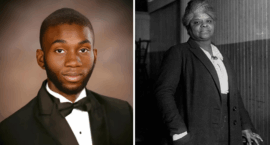
Trey Reed’s Death—and Its Swift Labeling as Suicide—Demands the Scrutiny Ida B. Wells Called For

Trey Reed, a young Black student, was found hanging from a tree on his college campus of Delta State University in Mississippi on Sept. 15, 2025. Trey Reed was a computer science major from Grenada, Miss., and a first-generation student, described as ambitious and eager to create a positive future for himself and his family.

Mississippi police and the Bolivar County coroner’s office have labeled the death a suicide. But Reed’s family members and other advocates, including Reps. Bennie Thompson (D-Miss.) and Ayanna Pressley (D-Mass.), activist and former NFL quarterback Colin Kaepernick, attorneys Ben Crump and Vanessa J. Jones (both of whom are representing the family), are calling for further investigation. 

Cases like Reed’s awaken questions rooted in legacies of racial violence in the South. “While the details of this case are still emerging, we cannot ignore Mississippi’s painful history of lynching and racial violence against African Americans,” said Thompson in the days following Reed’s death. That history is not distant: Mississippi recorded more lynchings than any other state, and the echoes of those crimes persist in how the deaths of Black people are investigated and discussed. The reflex to dismiss possible racial motives—or to declare a death a suicide before all evidence is known—reflects a deeper national unwillingness to confront the full scope of anti-Black violence.

The New York Times’ Recent ‘Abortion Pollution’ Story Serves the Antiabortion Agenda

For the last three years, Students for Life of America (SFLA) has sought to use environmental concerns to attack abortion rights, claiming—without scientific evidence—that the medication mifepristone contaminates U.S. water supplies and threatens wildlife, the environment and potentially human health.

A recent New York Times article amplified this antiabortion effort, presenting these claims without substantial context. The article does not include interviews with anyone informed about the politics behind the campaign or the science of mifepristone in wastewater. Only a brief mention—seven paragraphs in—notes that environmental experts have dismissed SFLA’s claims, before returning to treating the claims as a legitimate concern. 

“There is absolutely no evidence that this is an environmental issue,” said Nathan Donley, the environmental health science director for the Center for Biological Diversity. “Pharmaceutical waste can be a big issue when we’re talking about widely used drugs, but to somehow point to mifepristone as a bad actor here is completely disingenuous.”

Jack Vanden Heuvel, a molecular toxicologist at Pennsylvania State University, agreed: “Most wastewater treatment plants are very effective at getting rid of any mifepristone that is there.” He described SFLA’s position as “a pretty weakly supported argument.”

Strong Women, Loud Backlash. We’re Ready.

Those who raise their voices—whether for equality, democracy or reproductive freedom—are facing escalating threats. Online harassment spills into real-world violence, antiabortion attacks continue, and even professors, journalists and entertainers are being punished for speaking too boldly. Powerful institutions and individuals are working to chill movements for justice.

But history reminds us that these attacks are not signs of our weakness—they are signs of our progress. The louder the backlash, the clearer it is that our words and actions are reshaping the world.

Beneath every battle lies a deeper truth: Without explicit constitutional equality, no right we’ve won is truly safe—not reproductive freedom, not equal pay, not protection from violence. That’s why so many continue to press for recognition of the Equal Rights Amendment as the 28th Amendment to the Constitution. With 38 states already ratified and constitutional scholars confirming the legal foundation is there, what remains is political will—and in this moment, the outcome may be decided in the very districts and states where women’s votes will soon be cast.