‘In Whose Interests Are We Fighting?’ What Historian Premilla Nadasen Learned About Economic Justice from the Domestic Workers’ Rights Movement

Nadasen, who teaches history at Barnard College, offered lessons from the domestic workers’ movement for the current moment in the latest episode of Looking Back, Moving Forward. “We, as feminists today, like domestic workers in the 1970s and in the early 2000s,” she told me, “need to think outside the box.”

Listen to the latest episode of Looking Back, Moving Forward, “Women Can’t Afford to Wait for a Feminist Economic Future (with Premilla Nadasen, Rakeen Mabud and Lenore Palladino, Aisha Nyandoro, Gaylynn Burroughs, and Dolores Huerta)” on Spotify, Apple Podcasts or wherever you get your podcasts.


‘If You’re Not Centering the People Who Are Most Impacted, Your Policy Solution Will Fall Apart’: Gaylynn Burroughs Is Fighting for Economic Justice at the Intersections

Burroughs, the vice president of education and workplace justice at the National Women’s Law Center, connected the dots between poverty, policy and culture change in the latest episode of the Ms. Studios podcast Looking Back, Moving Forward. “Once you start seeing these problems as being problems that policy can solve,” she told me, “a whole world opens up.”

Listen to the latest episode of Looking Back, Moving Forward, “Women Can’t Afford to Wait for a Feminist Economic Future (with Premilla Nadasen, Rakeen Mabud and Lenore Palladino, Aisha Nyandoro, Gaylynn Burroughs, and Dolores Huerta)” on Spotify, Apple Podcasts or wherever you get your podcasts.

Why Dolores Huerta Is Hopeful About the Fight for a Feminist Future: ‘We’re Going to Be Able to Overcome’

Dolores Huerta has spent 70 years at the frontlines of the intertwined fights for economic justice and women’s rights. Huerta has pioneered campaigns to expand political representation for women and people of color; advance policies that improve the lives of women, LGBTQ+ folks, farmworkers, communities of color, and the poor; and spark dialogue around the intersectional fight for economic justice, and the ways it is intertwined with our democracy.

“This is a very, very scary time—and god knows it’s a time for women to rise up!” Huerta told Ms.

Listen to the latest episode of Looking Back, Moving Forward, “Women Can’t Afford to Wait for a Feminist Economic Future (with Premilla Nadasen, Rakeen Mabud and Lenore Palladino, Aisha Nyandoro, Gaylynn Burroughs, and Dolores Huerta)” on Spotify, Apple Podcasts or wherever you get your podcasts.

Poverty Is a Policy Choice—and Women Deserve More 

In the third episode of the Ms. Studios podcast Looking Back, Moving Forward, economists and advocates break down how our economy is leaving women behind and lay out strategies for advancing a feminist economic future.

“Poverty is the result of systems that have been intentionally put in place that the majority of us benefit from,” said Aisha Nyandoro, founding CEO of Springboard to Opportunities, home to the Magnolia Mother’s Trust guaranteed income program.

“So much of the conversation among economists and among policy people about infrastructure has always been about male-dominated infrastructure,” Lenore Palladino said. “We cannot rebuild our economy or build back better, as it were, with male-dominated sectors and not female-dominated sectors.”

“We have to continually ask: In whose interests are we fighting? Who will benefit from the work that I’m doing right now? Who should we put at the center of our organizing campaigns?” said Premilla Nadasen, labor and women’s historian.

The newest Ms. podcast, Looking Back, Moving Forward is out now on Spotify, Apple Podcasts or wherever you get your podcasts.
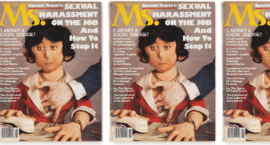
Keeping Score: States Ramp Up Antiabortion Efforts; Black Women Forced Out of the Workforce; Only a Quarter of Americans Say Trump Has Helped Them

In every issue of Ms., we track research on our progress in the fight for equality, catalogue can’t-miss quotes from feminist voices and keep tabs on the feminist movement’s many milestones. We’re Keeping Score online, too—in this biweekly roundup.

This week:
—States continue to develop strategies to pass antiabortion laws.
—Texas Attorney General Ken Paxton is still attempting to sue New York doctor Margaret Carpenter. New York Gov. Kathy Hochul responded, “Attorney General Paxton should focus more on his own private life instead of dictating the personal decisions of women across America.”
—Almost 300,000 Black women left the labor force in the past three months.
—Rep. Marc Veasey (D-Texas), co-chair of the Voting Rights Caucus, is leading a bill to prevent unnecessary redistricting in between censuses.
—Sens. Jeanne Shaheen (D-N.H.) and Brian Schatz (D-Hawaii) have introduced a bill preventing the unnecessary destruction of foreign aid food, medicine and medical devices.
—The Supreme Court enabled Trump to dismantle the Department of Education.
—Trans women were banned from U.S. women’s Olympic sports.
—Rep. Debbie Dingell (D-Mich.) is sharing her own history with domestic abuse as part of her advocacy to support survivors: “For me, it’s just about trying to keep other people from having to go through what we did and for mothers and fathers—there are men that are victims too—to know that there are resources.”
—Chef José Andrés details the policy changes needed to save millions in Gaza from starvation: “A starving human being needs food today, not tomorrow.”
—Under a quarter of Americans can name a female historical figure, and only 6 percent of monuments honor women.
—South African runner Caster Semenya won her case at the European Court of Human Rights.
—After bipartisan criticism in Congress, the Trump administration will release $1.3 billion for after-school programs that has been withheld from states.
—A Kentucky appeals court agreed that Jewish woman Jessica Kalb may continue her suit against the state’s strict abortion ban, which violates her religious beliefs.

… and more.

No-Rehire Clauses Let Employers Retaliate Against Harassment Victims … Legally

For Charlotte Bennett, alleged harassment at the hands of former New York Gov. Andrew Cuomo (D-N.Y.) led to years of costly litigation and “extraordinary pain.” Bennett’s state-level case was finally settled in April, with a little-known clause included: If a worker settles a case accusing their employer of sexual harassment, discrimination or any form of abuse, their employer may legally include a “no-rehire” clause in the settlement. This clause bars accusers from seeking future jobs with their employer.

No-rehire clauses can also bar workers from employment with any affiliates, subsidiaries or partners of their ex-employer’s organization. If another company hires an employee, and it is later acquired by or merged with a company that employee has a no-rehire clause with, a federal court affirmed in 2023 that the worker can legally be terminated from that new job, too.

In an age of mergers and monopolies, the consequences of a no-rehire clause may follow a victim of workplace harassment forever. Depending on the size of their former employer, an ex-employee could be barred from hundreds of different companies if their settlement includes a no-rehire clause.

New York state Assemblymember Catalina Cruz (D) introduced AB 293 to fully ban such clauses across the state. If the Assembly bill and its Senate counterpart were passed, New York would join California and Vermont as the only states prohibiting or limiting these clauses.

Now Streaming: New Film ‘Lilly’ Tells Transformative Story of Equal-Pay Hero Lilly Ledbetter

It’s tempting these dark days to dismiss the idea that any one person can make a difference. And yet, every day ordinary people fight injustice. And some days, those people persist long enough, resist long enough, that their fights rise to national prominence.

One such fight is chronicled in the new film Lilly, released in theaters this May and now available for rent. The brainchild of director Rachel Feldman, Lilly tells the story of Lilly Ledbetter, “an ordinary woman who became extraordinary,” in the words of Patricia Clarkson, who portrays her in the film.

Women’s Health Needs Are Ever-Changing. It’s Time for Flexible Benefits That Meet Us Where We Are.

With traditional group insurance, employees typically have just a few plans to choose from, none of which are a guaranteed fit. As a result, many women are forced onto a plan that fails to meet their medical needs, leaving them with high costs but still missing the support that matters most.

By switching group insurance to an Individual coverage health reimbursement arrangement (ICHRA), companies can provide the flexible and affordable benefits that meet women where they are. 

One-size-fits-all group insurance, selected by employers, no longer makes sense for female employees with unique and ever-evolving health needs. As employers across sectors embrace this new, flexible approach, more women stand to benefit from customizable coverage.

Historic Cuts to SNAP Deepen the War on Women

 Republicans in the House and Senate scrambled to pass legislation that will cut $184 billion from SNAP through 2034—by far the largest cut to SNAP in the program’s history—to finance tax cuts for the wealthy big businesses. They also hope to increase funding for pursuit of immigrants. 

This extremist budget will drive millions of people into poverty and hunger. It also represents a full-throated assault on women—particularly single mothers, for whom SNAP has been a lifeline.