
Disabled couples are still forced to choose between love and survival due to an unjust “marriage penalty” baked into U.S. law that puts their benefits, healthcare and autonomy at risk.


More Than A Magazine, A Movement

Civil rights mean equal protections and opportunities under the law, and are a vital part of human rights and for the functioning of a democracy. They include liberties such as the right to vote, the right to a trial, and the right to access government services and education.
Disabled couples are still forced to choose between love and survival due to an unjust “marriage penalty” baked into U.S. law that puts their benefits, healthcare and autonomy at risk.
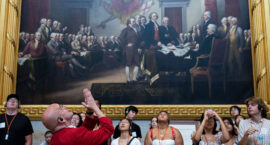
Weekend Reading for Women’s Representation is a compilation of stories about women’s representation in politics, sports and entertainment, judicial offices and the private sector—with a little gardening mixed in!
This week:
—This Friday marks the 249th anniversary of the signing of the Declaration of Independence. The journey for women’s equal representation remains unfinished.
—Zohran Mamdani looks poised to join 36-year-old Boston mayor Michelle Wu as part of a new generation of leadership in the U.S. Northeast. It’s time for more aging men like Cuomo to step aside and let more women step up. And if New York City is any indication, the voters may take matters into their own hands.
—St. Paul in 2023 elected an all-women city council in its ranked-choice voting elections. There’s now a vacant seat, and three women are among the four candidates running in an Aug. 12 special election.
—Jacinda Ardern’s new book, A Different Kind of Power, highlights the shifting dynamics of power, how women are redefining what leadership can be, and the impact of fairer election systems for creating openings for new voices like her own.
… and more!

Recent headlines warn of a national budget bill that cuts Medicaid and food stamps, enabling billionaires to escape fair taxes.
The bill’s 1,000-plus pages contain another dangerous threat: freeing still-experimental AI from regulation, essentially turning Americans into lab rats in a billionaire-bro tryout without guardrails.
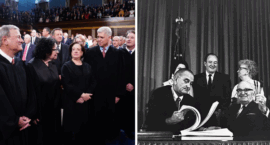
By upholding a South Carolina order that strips Medicaid funding from abortion providers, the Supreme Court abandoned both patient choice and the original civil rights vision behind Medicaid.
Medicaid funding is crucial for low-income Americans—it’s the vital thread that connects them with healthcare in a society where universal healthcare does not exist.
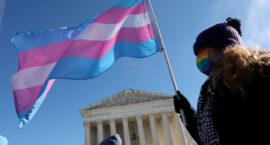
In 2022, the Supreme Court undid a constitutional right for the first time by declaring that the U.S. Constitution does not confer a right to abortion in the landmark decision Dobbs v. Jackson Women’s Health Organization.
In a decision this week called U.S. v. Skrmetti, they’ve taken the next step, extending the logic of Dobbs and destabilizing much of the law on sex discrimination.
The majority in Skrmetti was careful to cite case law on sex discrimination and suggest that the law at issue, which banned gender-affirming care for transgender youth, simply raised different issues. But Skrmetti shows how fragile protections against sex discrimination have become without any explicit guarantee, like the Equal Rights Amendment.

As Juneteenth approaches, we are called to remember not just the day when the last enslaved Black Americans learned of their freedom, but the ongoing struggle for true justice and equality in this country.
In this context, Donald Trump’s economic and immigration policies—packaged as efforts to “Make America Great Again”—take on a more troubling meaning. They are not just policy proposals; they are part of a deliberate strategy to reinforce racial divides, undermining the very ideals that Juneteenth represents.

Survivors of sexual violence, advocates and lawmakers in New York are calling for legislation that would fill key gaps in the state’s law, making it harder for those accused of sexual abuse, harassment and discrimination to sue their accusers for defamation. The legislation also includes a bill that would give people abused in state custody more time to seek justice.
“If New York truly supports survivors, our laws should make justice in civil court more accessible, not less. Survivors should be able to receive monetary compensation that can aid their healing without having to face onerous legal hurdles. The package of bills we’re urging Albany to pass this session will do exactly that,” said Emily Miles, executive director of the New York City Alliance Against Sexual Assault.

In 2020, the killing of George Floyd shocked Americans into action and into the streets by the millions, protesting the unrelenting killing of Black people by police.
The moment sparked a nascent reckoning in America around systemic racism and institutional inequality—in many cases, with Black women at the center. Already the backbone of our democracy, many were called on to also be a bridge to racial healing.
Five years later, many of these same Black women find themselves at the center of a backlash, confronted with attacks on the diversity, equity and inclusion efforts that were previously championed.

Last week was another raucous week in Congress, with continued discord over the fiscal, social and societal implications of President Donald Trump’s so-called “big, beautiful bill” as it heads to the Senate.
Meanwhile, the wheels continue to spin in dozens of statehouses across the country, many of which are at the height of their own legislative sessions. And it’s not all doom and gloom—which is one of the exciting aspects of state politics.
Either way, state legislatures offer an extraordinary window into the good, the bad and the ugly of the democratic process—a laboratory for what robust, participatory democracy can and often does achieve.

Grassroots organizations are on the frontlines of defending human rights at this moment. Yet, it’s alarming that major funders are leaving the field right when groups working to defend bodily autonomy and democracy need them most.
In the 2024 presidential election, we saw the consequences of what happens when donors abandon grassroots organizations—where a billion dollars were raised for the Harris campaign at the expense of movement organizations in key battleground states. In a presidential election lost to low voter turnout, the decision to underfund grassroots groups—those best equipped to knock on doors and mobilize voters—proved dangerously short-sighted.
(This essay is part of a collection presented by Ms. and the Groundswell Fund.)