U.N. Condemns Taliban’s Gender Apartheid at Security Council Meeting—But Offers No Path Forward

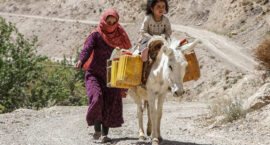
At a United Nations Security Council meeting late last month, diplomats delivered stark assessments of Afghanistan’s worsening crisis—condemning the Taliban’s repressive edicts, affirming support for Afghan women and reaffirming the importance of humanitarian aid. Yet beneath the layered statements and impassioned appeals was a sobering truth: The council remains no closer to articulating a unified or actionable strategy to confront the regime’s systemic gender apartheid.

Trump Is Ending Temporary Protected Status for Haitian Refugees. Here’s What That Means for Women.

The Trump administration announced late last month it will terminate Temporary Protected Status (TPS) for Haitian refugees in the United States. As a result of this decision, thousands of Haitian immigrants with legal status will become undocumented and eligible for deportation in September.

Women and girls face the brunt of violence in Haiti. Without TPS, Haitian women will be arrested by ICE, detained and eventually returned to a country where gangs frequently use sexual violence against women and girls to terrorize communities and gain control.

In 2024, the U.N. logged more than 6,400 cases of gender-based violence in Haiti.

Juneteenth Calls for Economic Justice, Not Trump’s Racially Coded Gimmicks

As Juneteenth approaches, we are called to remember not just the day when the last enslaved Black Americans learned of their freedom, but the ongoing struggle for true justice and equality in this country.

In this context, Donald Trump’s economic and immigration policies—packaged as efforts to “Make America Great Again”—take on a more troubling meaning. They are not just policy proposals; they are part of a deliberate strategy to reinforce racial divides, undermining the very ideals that Juneteenth represents.

Profiles in Courage: Admiral Shoshana Chatfield Was NATO’s Voice for Equality. Then Came the Purge.

Ms.Profiles in Courage spotlights women in the Department of Justice, federal agencies and the military whose careers have been defined by integrity, resilience and reform. Their quiet heroism—often at personal cost—reaffirms the enduring role of public servants who choose justice over self-interest. Through their stories, Ms. pays tribute to a tradition of service that safeguards democracy and inspires the next generation to lead with courage.

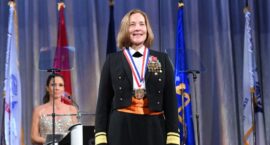
Vice Admiral Shoshana “Sho” Chatfield built a career on firsts: the first woman to pilot three Navy rotary-wing platforms in combat theaters; the first woman to command Helicopter Sea Combat Squadron 25; the first woman to lead a Joint Provincial Reconstruction Team in Afghanistan, earning the Bronze Star; and, in 2019, the first woman to preside over the U.S. Naval War College. In 2024, she shattered one more glass ceiling—becoming the sole female flag officer on NATO’s Military Committee and the senior American naval voice in allied strategy sessions.

Yet, on a quiet spring weekend in 2025, that historic ascent collided with partisan headwinds. Without warning, Chatfield received a call from Admiral Christopher Grady, acting chairman of the Joint Chiefs: Defense Secretary Pete Hegseth—champion of the administration’s campaign to eradicate “woke” policies—had ordered her relief.


Worldwide, Many Women Relied on the U.S. for Financial Support. This Afghan Woman Dares to Speak Out.

I’ve been writing for decades about America’s on-again-off-again support for the reproductive healthcare of women around the world, focusing on the Republican presidents who have slashed funding and jeopardized women’s lives.

When I spoke by phone to Seema Ghani in February, there was something more. Unlike many women I had reached out to this year in countries that have relied on the United States for financial support, Ghani was not afraid to speak to me—even though her homeland, Afghanistan, is the world’s most oppressive for women.

White Plight: Trump’s Embrace of White South African ‘Refugees’ Is a Racist Bullhorn

This week, Afrikaner “refugees” began arriving in the U.S.—some of the only refugees welcomed by the Trump administration. These white South Africans claim they are being persecuted at home: That white farmers are being attacked; that South Africa is not a safe place for them to live.

Much of the criticism of Trump’s decision to end refugee resettlement from just about everywhere else on the planet while welcoming a group that really isn’t facing particularly severe persecution has been derided as “political.” And it certainly is a stunt intended to provoke liberal outrage. But we should just call it what it is. It’s not “political.” It’s not a dogwhistle.

It’s racist.

This obvious troll from Trump (by way, I suspect, of Elon Musk and Stephen Miller) shows that, if they have their way, all the power will be white power.

Keeping Score: Bill Disenfranchising Women Voters Passes U.S. House, Heads to Senate; Barbara Lee Becomes Mayor of Oakland; Republicans Threaten SNAP and Medicaid

In every issue of Ms., we track research on our progress in the fight for equality, catalogue can’t-miss quotes from feminist voices and keep tabs on the feminist movement’s many milestones. We’re Keeping Score online, too—in this biweekly roundup.

This week: Only 34 percent of single women are looking for a relationship, compared to 54 percent of single men; the House passed the SAVE Act which could disenfranchise 69 million married women; Sen. Booker (D-N.J.) broke Senate speech record; Medicaid and SNAP are at risk of cuts; Kilmar Abrego Garcia remains illegally deported and imprisoned, and Trump says “homegrowns” are next; marking Asian American, Native Hawaiian, and Pacific Islander Equal Pay Day; 13 states have recently introduced bills to improve menopause care; Democratic Women’s Caucus leaders and over 150 House members urged RFK Jr. to restore frozen Title X funding; Georgia dropped charges against Selena Chandler-Scott, who was arrested after being found unconscious and bleeding after a miscarriage; and more.

A New Phase of U.S.-Taliban Relations Leaves Afghan Women in the Shadows

A new phase in U.S.–Taliban relations appears to be quietly unfolding under the Trump administration—marked by lifted bounties on senior Taliban officials, a symbolic embassy cleanup in Kabul, and the release of an American hostage. While these developments are being framed as constructive steps toward diplomacy, they also reveal a stark reality: The future of U.S.–Taliban engagement may be transactional, and Afghan women and girls are likely to be left out of the equation.

Afghan Women Are Trapped Between Two Prisons: Home and Society

“Hopelessness echoes from their [Afghan women’s] voices.”

Since the fall of the Islamic Republic of Afghanistan in 2021, Afghan women have been systematically erased from education, employment, and public life, making Afghanistan the only country where girls above sixth grade are barred from school. Once vital contributors to the nation’s progress, women are now trapped in a cycle of oppression that not only devastates their futures but also weakens Afghanistan’s economy and global standing. The world must take urgent action to combat this gender apartheid and support Afghan women in their fight for basic human rights.