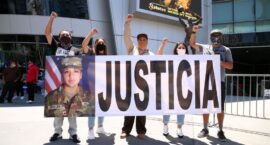
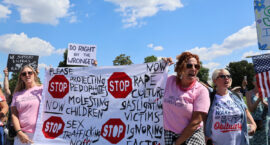
Virginia Giuffre’s Posthumous Memoir Is an Indictment of the Men and Institutions That Enabled Her Abuse

I thought I was mentally prepared to read Virginia Roberts Giuffre’s posthumous book, Nobody’s Girl. I was wrong. If reading the book was gut-wrenching, I can’t imagine what it was like for her and other girls and women who experience the horrors of being trafficked.

In the final paragraph of the book, and perhaps in some of the final sentences she ever wrote, Giuffre tells that she will have achieved her goal with Nobody’s Girl if “just one person” is moved to create “a world in which predators are punished, not protected; victims are treated with compassion, not shamed; and powerful people face the same consequences as everybody else.”

Although she never lived to see this day, her book, her courage and her rage compel us to fight for this goal in the name of all victims and survivors of sex trafficking. 
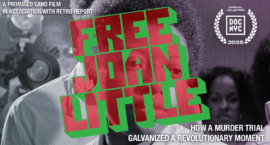
‘Freeing Black Girls’ and ‘Loving Black Boys’: Tamura Lomax on Revolutionary Mothering During Troubled Times

Tamura Lomax, a trailblazing Black feminist religious scholar, is on a mission to deliver a “Black feminist Bible on racism and revolutionary mother” with two companion books. The first, Freeing Black Girls, was published this year (2025); the second, Loving Black Boys, comes out next year.

Ms. contributing editor Janell Hobson spoke with Dr. Lomax about her latest works and the radical vision of “revolutionary mothering” that guides them.

“Black feminist mothering becomes this experiment. If people can teach sexism and hatred and racism, can we teach Black feminist politics? Is that possible? If we just do it from birth, and it’s just normal everyday talk it’s not this lesson that happens once at the dinner table but it’s just part of our everyday living. Can we do that the same way that we teach hatred?

“Revolutionary mothering is teaching those Black feminist politics everywhere—in the car, on the couch, during movie night, after the basketball game, in the football stands. It’s teaching a radical politics of our rights, our collective right to bodily autonomy first and foremost.”

The Ripple Effects of the U.S. Retreat from International Reproductive Care

The U.S. withdrawal of international reproductive health funding is already having devastating effects around the world. Clinics are closing, health workers go unpaid, and essential medications and contraceptives sit unused in warehouses while millions of women and families lose access to life-saving care.

These abrupt cuts are not just administrative—they are a direct attack on decades of global health progress, putting children, pregnant women and marginalized communities at heightened risk of preventable disease, unintended pregnancy and death.

Yet there is still a path forward. The infrastructure to deliver reproductive and public health services remains in place, and health workers are ready to act. If funding is restored, we can prevent the worst outcomes, safeguard global health, and ensure that the fundamental human rights to health, life and bodily autonomy are protected.

The global community must act urgently to reverse the harm and prevent a full-scale public health and human rights crisis.

America Is an Increasingly Dangerous Place for Women and Girls 

In America’s hyper-macho, gun-drenched culture, growing up female has never been safe. But under the Trump administration, America is becoming a much more dangerous place for women and girls.

America is dangerous for women and girls because our leaders choose to make it so. The Trump administration has already begun blocking access to abortion and Medicaid coverage for reproductive health, as well as targeting the rights of pregnant people within the 2023 Pregnant Workers Fairness Act.

Already, the macho culture of the U.S. has steadily made women’s safety in the nation decline. Around 41 percent of women in the U.S. have experienced sexual violence, while a third of women reported severe assault by a husband or boyfriend. The normalization of gun violence and violent pornography have also run rampant across the country, making America more dangerous day by day.

Yearning to Breathe Free [Part 1 of 3]

In the matter of K-E-S-G-, a Salvadoran woman stalked and threatened by gang members was denied asylum by the U.S. Board of Immigration Appeals on July 18, even though her persecution stemmed from her gender in a country that treats women as property. Advocates warn that this ruling could make it much harder for women fleeing violence to prove gender-based claims and may embolden immigration judges to discount their stories.

“This isn’t the first time the Trump administration has singled out women seeking asylum, and we know where this path leads,” said Neela Chakravartula of the Center for Gender & Refugee Studies. “More judges denying protection to women who qualify for it. More refugees being deported to danger.”

The decision highlights the ongoing struggle to recognize gender as a protected basis for asylum. Afghan and Salvadoran women, among others, may now face even steeper barriers to protection—a chilling effect that experts say could deter survivors from seeking safety in the U.S.

Hegseth’s Call to ‘Toughness’ Sparks Concerns About Military Sexual Violence

Secretary of Defense Pete Hegseth recently vowed to enforce “tough” new rules of engagement for the U.S. military, declaring there would be “no more walking on eggshells.” Critics say his rhetoric risks normalizing aggression and sexual violence both within the ranks and in combat.

Hegseth, a member of a Christian nationalist church that promotes patriarchy, also called for past infractions by so-called “tough” leaders to be expunged. Sexual assault in the military remains pervasive: the Department of Defense reported 8,195 cases in 2024, and estimates suggest nearly a quarter of active-duty women experience sexual assault during their service.

Historically, rape has been used as a weapon of war, from ancient Israel to World War II, and it continues today in conflicts abroad and at home. Experts warn that leadership matters—policies and rhetoric that prioritize violent masculinity put survivors at serious risk.

Escaping Abuse Isn’t Easy. Here’s What Survivors and Experts Want You to Know.

On Oct. 3, Sean “Diddy” Combs was sentenced to 50 months in federal prison, five years of supervised release and a $500,000 fine. Throughout, the question echoed: “Why didn’t she just leave?” 

“That’s the wrong question,” said Tonya King, vice president of programs at the National Network to End Domestic Violence. “We need to start asking: How can we keep a survivor safe in the first place?”

The Part of the Epstein Story We Keep Ignoring? Survivors.

Virginia Giuffre fought Jeffrey Epstein and Ghislaine Maxwell for decades. As a survivor of their trafficking, she spoke truth to power and endured public scrutiny as she became one of their most vocal and transparent accusers. On April 24, she died by suicide. 

Her death should have marked a devastating failure of our systems to support trafficking survivors. Instead, it became another footnote in a political circus focused on conspiracy theories and file releases.

The Push to Eliminate New York State’s Voluntary Intoxication Loophole: ‘You Should Be Allowed to Get Drunk and Not Be Taken Advantage Of’

Under current New York law, if someone was drinking by choice when they were assaulted, prosecutors can decide not to pursue the case. This law provides prosecutors with an out when it comes to sexual assault, and statistics show they take it. In 2019, prosecutors dropped nearly half of all sexual assault cases in the Manhattan district attorney’s office. A bill proposed in the state legislature is looking to make it harder for prosecutors to throw out sexual assault and rape cases by prohibiting the use of intoxication of the victim as a defense.