America Is an Increasingly Dangerous Place for Women and Girls 

In America’s hyper-macho, gun-drenched culture, growing up female has never been safe. But under the Trump administration, America is becoming a much more dangerous place for women and girls.

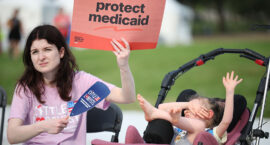
America is dangerous for women and girls because our leaders choose to make it so. The Trump administration has already begun blocking access to abortion and Medicaid coverage for reproductive health, as well as targeting the rights of pregnant people within the 2023 Pregnant Workers Fairness Act.

Already, the macho culture of the U.S. has steadily made women’s safety in the nation decline. Around 41 percent of women in the U.S. have experienced sexual violence, while a third of women reported severe assault by a husband or boyfriend. The normalization of gun violence and violent pornography have also run rampant across the country, making America more dangerous day by day.

Five Things to Know About Missed Period Pills

If your period is late and you don’t want to be pregnant, do you really have to wait for a positive pregnancy test before you can act? The answer is often no. Increasing availability of “period pills” means you don’t have to wait or sit in uncertainty.

As missed period pills change how people stay in control of their bodies—and how early abortion care may be accessed—we see more questions and, unfortunately, more attacks from those who don’t support a full range of pregnancy options.

Here’s what’s important to know.

Keeping Score: Trump’s Dangerous Claims About Tylenol; Government Shutdown Begins; Diddy’s Four-Year Sentence

In every issue of Ms., we track research on our progress in the fight for equality, catalogue can’t-miss quotes from feminist voices and keep tabs on the feminist movement’s many milestones. We’re Keeping Score online, too—in this biweekly roundup.

This week:
—Doctors push back against Trump’s dangerous claims that Tylenol in pregnancy increases the risk of autism.
—The U.S. entered a government shutdown, affecting millions of federal workers.
—Sean “Diddy” Combs was sentenced to four years in prison.
—Zoologist and anthropologist Jane Goodall died at age 91.
—University of California students and faculty are suing the Trump administration for violating free speech rights.
—Student activists are stepping up to get around birth control bans on campus.
—Louisiana admits non-citizens voting is not a systemic problem.
—The ACLU and religious freedom organizations are suing to block 14 more Texas school districts from implementing a law requiring classrooms to display Ten Commandments posters.

… and more.

One Megabill for the Megarich

The Trump administration is calling its new budget “the most pro-family legislation ever crafted.” But for women like Bre’Jaynae Joiner, a single mother of two in Oakland, the cuts to Medicaid and SNAP threaten her family’s very survival.

Over the next decade, more than 11 million Americans—mostly women and children—are expected to lose health coverage, while deep food assistance cuts and work requirements will push even more families into crisis. Advocates call the bill a massive transfer of wealth to the rich at the expense of the poor, a policy that will shutter rural hospitals, deny essential care and worsen maternal mortality.

As Sen. Raphael Warnock puts it plainly: “If you cut $900 billion out of Medicaid, people are going to die.”

Trump and RFK’s Pseudoscience Is Another Tool to Control Women

We have reached the point in American politics at which a sitting U.S. president sees fit to decree pregnant women must “tough it out.”

We all would be wise to strenuously push back on junk science—not just for our safety here and now, but in service of a future that doesn’t create new inroads for punishment of pregnancy.

Pregnant Women Deserve Relief From Pain and Fever—Without Judgment

One of the most common reasons for Tylenol, fever, poses significant risk for both the woman and her baby if untreated. High fevers may impact growth and development. The deep discomfort experienced during a fever is also associated with lethargy, decreased liquid and food intake, and an inability to function normally, impacting both mother and baby. The underlying infection causing the fever also poses a risk because so many viruses and bacteria threaten safe fetal development. An untreated infection may lead to more dire circumstances for the woman, threatening both her survival and the baby’s.

The Blueprint Reclaimed: Why America Needs More Black Midwives

Black women are three to four times more likely to die from pregnancy-related complications than white women. And yet, the very people we know we can rely on to protect us the most—Black midwives—have been nearly erased from the national birth narrative.

We must train more Black midwives and re-educate the public about midwifery practice. We also need funding, mentorship pipelines and community investment. We need our stories told, our legacy restored and our futures protected.

To become a Black midwife in America today is to resist and reclaim what was stolen. It is to plant seeds in soil that tried to bury us and watch them bloom anyway.

Every Black mother deserves someone who sees her. And every Black baby deserves to be welcomed into the world by someone who believes in their right to thrive.

(This essay is part of a collection presented by Ms. and the Groundswell Fund highlighting the work of Groundswell partners advancing inclusive democracy.)

This Hispanic Heritage Month, We Honor Immigrant Families by Fighting for Healthcare Justice

My family immigrated from Mexico to California when I was 3 years old. My brother wasn’t walking and was showing signs of physical delays. Unable to find answers back home, my parents sacrificed everything—our home, their small business, a familiar life—in search of a diagnosis, treatment and hope. This Latine Heritage Month, I’m reminded of the strength of the women in my family in the face of migration and uncertainty, and the extraordinary community in the U.S. that welcomed us. 

Immigrants have long been unable to healthcare because of coverage gaps or restrictions. Immigrant and migrant women have had especially difficult times getting access to abortions.

Healthcare access, including the full spectrum of reproductive care, can make or break lives. Nobody should be denied healthcare, no one should have to choose between paying for healthcare and rent, and no one should fear deportation for going to the doctor.

All of us should have access to care. Period.

(This essay is part of a collection presented by Ms. and the Groundswell Fund highlighting the work of Groundswell partners advancing inclusive democracy.)

The War on Drugs Was a War on Black Mothers

In the late 20th century, the so-called “crack baby epidemic” became a media obsession. Politicians, prosecutors and even physicians bought into a false narrative: that poor Black women who used cocaine during pregnancy were dooming their children to lives of permanent brain damage, misery and crime. The stories were sensational—and wrong. What these accounts ignored were the actual conditions of women’s lives: poverty, lack of healthcare, untreated trauma and mental illness. Instead of compassion, women like Regina McKnight—raped, grieving, depressed and self-medicating—were met with prosecution, prison sentences and public shaming.

The truth is, there was no epidemic of “biologically inferior” babies. Rigorous scientific research—largely disregarded by mainstream media—showed that cocaine exposure did not cause the catastrophic outcomes predicted by pundits. Yet the racialized panic over “crack babies” justified criminalizing pregnancy, targeting Black mothers, and fueling the broader war on drugs. These myths, and the policies they spawned, continue to shape how our legal and healthcare systems treat women—especially women of color—today.

[An excerpt from Michele Goodwin’s book Policing the Womb: Invisible Women and the Criminalization of Motherhood, published by Cambridge University Press in 2020.]

***

The road to recovery—and the right to recovery—is essential to a free and fair democracy. This essay is part of a new multimedia collection exploring the intersections of addiction, recovery and gender justice. The Right to Recovery Is Essential to Democracy is a collaboration between Ms. and the O’Neill Institute for National and Global Health at Georgetown Law, in honor of National Recovery Month.

Twenty-Five Years of Mifepristone: How Activists Brought the Abortion Pill to America and Changed Reproductive Health Forever

At the urging of antiabortion advocates and politicians, and based on a flawed and biased report put out by an antiabortion group, the Trump administration announced the launch of a new review of mifepristone—despite 100 peer-reviewed scientific studies proving the safety and efficacy of these medications and safe use by over 7.5 million U.S. women.

On the 25th anniversary of FDA approval of mifepristone, reproductive rights supporters are celebrating the creative, determined and courageous advocates who brought this medication to market.

One organization that played a critical role in bringing mifepristone, known as RU-486, to the United States was the Feminist Majority Foundation (FMF)—today the publisher of Ms.