How the Government Shutdown Is Hitting the Healthcare System—and What the Battle Over ACA Subsidies Means

Major rifts over key healthcare issues are at the heart of the federal government shutdown that began at the stroke of midnight on Oct. 1, 2025. Without a budget agreement in place, Trump ordered most federal agencies to wind down their nonessential activities. The shutdown will continue until Congress passes either a short-term or long-term funding bill and Trump signs it.

Government shutdowns are nothing new, but as a health policy expert, I worry this time around the impasse may have far-reaching effects on healthcare.

Republicans Are Holding Women’s Health Hostage

As the government shutdown drags into another week, women and their families have the most to lose. The Republican budget that triggered this fight guts Medicaid and rolls back ACA tax credits that make health insurance affordable for millions—what experts are calling a “quiet repeal” of the Affordable Care Act. Nearly 50 years after Rosie Jiménez died because she was denied Medicaid coverage for abortion, we’re watching the same systems endanger women’s lives all over again.

And yet, there’s reason for hope: The FDA just approved a new generic version of mifepristone, expanding access to medication abortion at a moment when it’s most under attack.

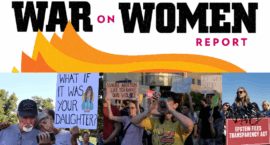
The War on Women Report: New Texas Law Targets Abortion Pills; More Planned Parenthoods Close Amid Federal Funding Cuts

MAGA Republicans are back in the White House, and Project 2025 is their guide—the right-wing plan to turn back the clock on women’s rights, remove abortion access, and force women into roles as wives and mothers in the “ideal, natural family structure.” We know an empowered female electorate is essential to democracy. That’s why day after day, we stay vigilant in our goals to dismantle patriarchy at every turn. We are watching, and we refuse to go back. This is the War on Women Report.

Since our last report:
—A judge in Missouri is currently deciding whether a proposed amendment that would ban abortion in the state’s constitution can appear on the 2026 ballot … even though Missourians voted just last fall to keep abortion legal in the state.
—The Trump administration announced in August that it would remove gender-affirming care from the health services offered to federal workers.
—Mississippi declared a public health emergency as the state’s infant mortality rate soars to a rate nearly double the national average.

… and more.

‘We Need Equal Rights in the Constitution’: NOW’s New Leaders Kim Villanueva and Rose Brunache See ‘a Lot of Energy for Advocacy’

Almost 60 years ago, in 1966, Pauli Murray, a queer Episcopal priest and legal scholar, approached noted feminist Betty Friedan about the need for an organization to push the Equal Employment Opportunity Commission to enforce the Civil Rights Act. Although the Act had passed in 1964 and banned discrimination based on race, color, national origin, sex, and religion, Murray understood that the law’s promise would remain unfulfilled without vigilance and pressure from activists. Friedan agreed, and later that year, the National Organization for Women (NOW) was created.

Newly-installed president Kim Villanueva—the former president of NOW’s Illinois chapter, cofounder of the Asian American and Pacific Islander Caucus and chair of the National Election Committee—and vice president Rose Brunache, former president of the DC chapter, spoke to Ms. reporter Eleanor J. Bader one month after taking office.

This Hispanic Heritage Month, We Honor Immigrant Families by Fighting for Healthcare Justice

My family immigrated from Mexico to California when I was 3 years old. My brother wasn’t walking and was showing signs of physical delays. Unable to find answers back home, my parents sacrificed everything—our home, their small business, a familiar life—in search of a diagnosis, treatment and hope. This Latine Heritage Month, I’m reminded of the strength of the women in my family in the face of migration and uncertainty, and the extraordinary community in the U.S. that welcomed us. 

Immigrants have long been unable to healthcare because of coverage gaps or restrictions. Immigrant and migrant women have had especially difficult times getting access to abortions.

Healthcare access, including the full spectrum of reproductive care, can make or break lives. Nobody should be denied healthcare, no one should have to choose between paying for healthcare and rent, and no one should fear deportation for going to the doctor.

All of us should have access to care. Period.

(This essay is part of a collection presented by Ms. and the Groundswell Fund highlighting the work of Groundswell partners advancing inclusive democracy.)

What Does a Federal Government Shutdown Mean for Women’s Healthcare? A Stealthy Rollback of Coverage

If cuts to premium tax credits and Medicaid stick, this won’t just be another budget fight. It will be a quiet repeal of the Affordable Care Act (ACA)—and women will bear the brunt of it.

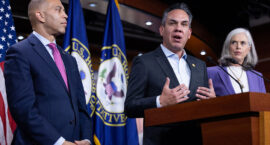
Sen. Chuck Schumer and Rep. Hakeem Jeffries have put forward a reasonable path: Roll back the Medicaid cuts and make premium tax credits permanent. States are bracing for the Medicaid cuts, warning Washington that slashing the program would destabilize families and hospitals in their states. Extending these tax credits has bipartisan support. By any definition of negotiation, the offer has something for both sides.

Yet President Trump has dug in, canceling meetings, while the House has left town. With Republicans in control of all three branches of government, the responsibility for protecting women and families rests squarely with them.

This isn’t about “other people.” It’s about all of us.

‘Not Just About Abortion’: Amidst Federal Attacks on Planned Parenthood, Georgia Clinics Fight Maternal Mortality and Postpartum Neglect

Amidst the federal attacks on Planned Parenthood, there are many independent clinics—especially those in southern states facing heightened restrictions—fighting to provide expanded care, beyond abortion access.

“We are just as interested and focused on people having healthy, safe, joyous birth outcomes as we are on people’s ability to have safe terminations of pregnancy,” said Kwajelyn Jackson, the executive director of The Feminist Center Georgia Initiative.

The Antiabortion Movement’s Decades-Long Goal Achieved: Planned Parenthood Defunded

Republicans have finally achieved a decades-long goal: defunding Planned Parenthood. In July, President Trump signed a spending bill that blocks Medicaid reimbursements and federal grants for nonprofit health centers that provide abortions—including Planned Parenthood—even though federal law already prohibits Medicaid from covering abortion. The result is that more than a million low-income and disabled patients who rely on Planned Parenthood for contraception, STI testing, and cancer screenings can no longer use their insurance there. Hundreds of clinics across the country are expected to close, and in many communities, there are no alternatives waiting to replace them.

What does this mean in practice?

It means people like Colleen—who discovered she had breast cancer because of an affordable visit to Planned Parenthood—will face new barriers to care.

It means patients who already struggle to cover basic expenses will be asked to pay out-of-pocket for lifesaving services.

And it means thousands of people living in rural or medically underserved areas may have no nearby provider at all.

The political fight over Planned Parenthood has always been framed as a battle about abortion, but the immediate impact is much broader: fewer clinics, fewer screenings, and fewer chances to catch disease before it’s too late.


IVF Promises, Healthcare Cuts: The New Reproductive Hypocrisy

In today’s political landscape, fertility has become a brand—plastered across speeches and press releases as a symbol of family values and new life. But behind the fanfare (and empty promises) of IVF expansion lies a much darker truth: Healthcare systems are collapsing, maternity wards are closing, and protections against toxic chemicals are being rolled back. The result is a reproductive paradox in which women are pushed to give birth in environments that are increasingly hostile to their survival.

This is not a coherent pro-family agenda. It is chaos disguised as care—fertility promoted when politically useful, maternal health ignored when inconvenient, and science dismissed when it interferes with corporate interests. Families are promised new beginnings, but stripped of the very resources needed to support them.

Until mothers and children are placed at the center of policy—not as props but as the purpose—the reproductive hypocrisy will persist.