Recovery Saved My Life. It Can Also Save U.S. Democracy.

For many years, alcohol and other substances felt like the only thing that made me feel safe, seen and comfortable in my own skin. Growing up in a small Midwestern town, I never fit the mold of what a boy was “supposed” to be. I was bullied for how I dressed and looked, and called names when I showed emotion or vulnerability. The message was clear: Who I was wasn’t acceptable. Anxiety and depression followed, and by the time I discovered alcohol as a teenager, it felt like the only thing that made life bearable. But that relief was fleeting. My life spiraled into darkness—I failed out of college, lost relationships and, most painfully, felt like I was losing myself. Recovery gave me my life back. It reminded me that no matter how dark life becomes, there is always a way forward.

But recovery is not just a personal journey—it is a political one. When people recover, they become active participants in their communities. They vote, parent, work, study and volunteer. Recovery teaches us how to sit beside people who are different from us, offer a hand, and say: You got this, you are not alone. At a time when our democracy feels fractured and so many are isolated and hurting, recovery provides a roadmap for how we can heal together. It’s not only about saving individual lives—it’s about restoring the conditions that make democracy possible: connection, resilience and shared purpose.

***

The road to recovery—and the right to recovery—is essential to a free and fair democracy. This essay is part of a new multimedia collection exploring the intersections of addiction, recovery and gender justice. The Right to Recovery Is Essential to Democracy is a collaboration between Ms. and the O’Neill Institute for National and Global Health at Georgetown Law, in honor of National Recovery Month.


The Abortion Pill That Transformed Medicine Is Under Attack

By approving mifepristone (the first pill in the two-step medication abortion regimen), the Food and Drug Administration gave people access to one of the safest, most effective and most studied medications in modern medicine.

Yet despite overwhelming evidence and broad public support, there are relentless attempts to restrict access to mifepristone. In 2023, a coalition led by extremist antiabortion groups filed a lawsuit seeking to roll back the FDA’s approval of the drug (which the Supreme Court ultimately dismissed). But the attacks have continued, fueled by a dangerous belief that science is optional.

We’ve seen it with COVID vaccines. We’ve seen it with birth control. We’ve seen it in lawsuits claiming Tylenol causes autism. We’ve even seen people question milk pasteurization and folic acid in prenatal vitamins—two of the most basic public health measures we have. The through line is the same: Ignore the evidence, stir up doubt and leave patients to bear the consequences.

Leading Health Groups Slam Trump and RFK’s Claims Linking Tylenol to Autism: ‘Irresponsible and Misleading’

Doctors and autism researchers stress that acetaminophen remains safe during pregnancy and warn that Trump and Kennedy’s claims risk spreading harmful misinformation.

American Academy of Pediatrics (AAP): “Today’s White House event on autism was filled with dangerous claims and misleading information that sends a confusing message to parents and expecting parents and does a disservice to autistic individuals.”

American College of Emergency Physicians (ACEP): “Emergency physicians must align around clear, evidence-based guidance for patients. The data from numerous studies have shown that acetaminophen is safe and effective.”

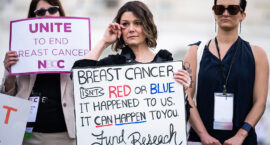
Hitting Where It Hurts: Expiring Healthcare Tax Credit Means Price Hikes for Americans with Cancer

For more than 18 million Americans living with cancer, access to healthcare and health coverage is more than just financial security. It connects them to life-saving care that maintains and improves their quality of life.

However, federal action—and inaction—may sever that connection for people with cancer.

Without congressional action, current marketplace premium tax credits will plummet on Jan. 1, 2026—by an average of 93 percent in HealthCare.gov states. Among people with cancer receiving these tax credits, 86 percent report they will have difficulty affording and getting necessary health care services.

IVF Promises, Healthcare Cuts: The New Reproductive Hypocrisy

In today’s political landscape, fertility has become a brand—plastered across speeches and press releases as a symbol of family values and new life. But behind the fanfare (and empty promises) of IVF expansion lies a much darker truth: Healthcare systems are collapsing, maternity wards are closing, and protections against toxic chemicals are being rolled back. The result is a reproductive paradox in which women are pushed to give birth in environments that are increasingly hostile to their survival.

This is not a coherent pro-family agenda. It is chaos disguised as care—fertility promoted when politically useful, maternal health ignored when inconvenient, and science dismissed when it interferes with corporate interests. Families are promised new beginnings, but stripped of the very resources needed to support them.

Until mothers and children are placed at the center of policy—not as props but as the purpose—the reproductive hypocrisy will persist.

Keeping Score: Charlie Kirk’s ‘Professor Watchlist’ Put Educators at Risk; Epstein Survivors on Capitol Hill; Lawmakers Condemn RFK’s ‘War on Science’

In every issue of Ms., we track research on our progress in the fight for equality, catalogue can’t-miss quotes from feminist voices and keep tabs on the feminist movement’s many milestones. We’re Keeping Score online, too—in this biweekly roundup.

This week:.
—Karen Attiah, a Washington Post columnist, said she was fired over social media posts she made following the killing of Charlie Kirk. “I did my journalistic duty, reminding people that despite President Trump’s partisan rushes to judgement, no suspect or motive had been identified in the killing…”
—Epstein survivors spoke out in support of the Epstein Files Transparency Act.
—Missouri state lawmakers held a sit-in to protest redistricting.
—Texas banned trans people from using public bathrooms.
—Senators pushed back against RFK Jr.’s anti-vaccine views.
—Colleges and universities experience a chilling effect of Trump’s war on DEI.
—Being stalked increases the risk of heart disease.
—Tea Party Patriots co-founder said they plan to pressure Senate Republicans to attach the SAVE Act to must-pass funding legislation in September.

… and more.

Dying to Be Men: American Masculinity as Death Cult

Much as owing guns at home is most likely to injure or kill the people living with those guns than the supposed threats posed by home invaders, the violent discourse espoused by Charlie Kirk and many others has resulted in his murder in front of a crowd of thousands of students.

Kirk built his career on racism and misogyny, encouraging young Americans to the side of a fully radicalized and extremist Republican party that has abandoned any pretense of caring for Americans and instead has become a propaganda machine pathetically flaying to prove that they are all men.

I’m sorry for Charlie Kirk and all the other men like him that have been raised in this America and with these ideals of masculinity. I’m sorry that he decided to adopt this hateful ideology and to profit from it. And as the mother to a boy and a girl, my heart breaks for the America these children are growing up in. Here’s hoping we can save ourselves.

Memory, Medicine and Law: Reflecting on the 20th Anniversary of Hurricane Katrina @ Washington, D.C., Sept. 11-13

This fall marks 20 years since Hurricane Katrina devastated New Orleans and the Gulf Coast, leaving more than 1,800 people dead and hundreds of thousands displaced. Katrina was not just a natural disaster—it was a political, legal and public health catastrophe that exposed deep inequities in the United States. Women, low-income communities and communities of color were hit hardest, and the failures of government response left lasting scars that continue to shape policy and memory today.

To reflect on these legacies, Georgetown University will host a three-day symposium, “Memory, Medicine and Law: Reflecting on the 20th Anniversary of Hurricane Katrina,” from Sept. 11-13, 2025, at its Capitol Campus and adjoining Law Center, located at 125 E Street NW in Washington, D.C.

The symposium is free and open to the public, but registration is required.

Explainer: No, Contraceptives Don’t Cause Abortion

Misinformation about contraception is deadly.

Just ask Evaline Chepkemol, a mother of three in Kenya’s rural Narok County—a place with one of the country’s highest maternal death rates. Chepkemol has encountered many women in her community who are fearful of contraceptives.

“They have the belief that if you insert the family planning [device], you either lose the children or will never give birth again,” she told UNFPA, the United Nations sexual and reproductive health agency. “They were saying that when you put in family planning, you will never give birth to any child because the children will disappear,” she explained.

RFK Jr.’s HHS Slashes Healthcare Access and Safety Net, Putting Both Citizens *and* Immigrants at Risk

The Trump administration has pulled the rug out from under America’s safety net: In mid-July, the Departments of Health and Human Services, Justice, Labor, Education and Agriculture issued notices barring many legal immigrants, as well as those without legal status, from using numerous public services funded with federal dollars. Should these policies go into effect—reversing 30 years of law—critical programs including Head Start, community mental health services, suicide hotlines and emergency housing assistance could be shuttered, and millions, including U.S. citizens, could be denied help when they need it most.

HHS Secretary Robert F. Kennedy Jr. called the policies necessary to end the diversion of “hardworking Americans’ tax dollars to incentivize illegal immigration.” A coalition of state attorneys general has called the revision an unmitigated crisis in public health and safety, bringing suit to block the changes, which are temporarily on hold until mid-September.

The new rules mark a dangerous and seismic shift in interpretation of the Personal Responsibility and Work Opportunity Reconciliation Act (PRWORA) of 1996, legislation born of a broader agenda to vilify the poor and others accused of gaming the system.

At its core, this is an extension of the administration’s relentless desire to close the border—a tool to sow discord and consolidate power.