
Read the reviews from the best documentaries like Dear Ms.: A Revolution in Print and Zurawski v Texas from the past year.


More Than A Magazine, A Movement

Read the reviews from the best documentaries like Dear Ms.: A Revolution in Print and Zurawski v Texas from the past year.

From devastating dramas to sharp satires and genre-bending thrillers, this year’s feminist fiction on screen refused easy answers—and demanded our attention. These films and series center women’s agency, ambition and survival, offering stories that linger long after the credits roll. Here are some of the standout feminist fiction watches of the year.
Aviva Dove-Viebahn reviews the top fiction feminist watches from the past year including The Substance, Ironheart and The Better Sister.

We can’t afford to look away from changing beauty norms in our society, and how they are fueling eating disorders.
Jennifer Rollin, an eating disorder therapist based in Maryland, says, “What I hear from a lot of clients is that when they are trying to recover from their eating disorder in this society, it almost feels wrong, because ‘everyone around me is talking about Ozempic,’ and ‘all the celebrities are talking about their big amount of weight loss.’”
But while it can feel cathartic to criticize or distance ourselves from prominent women who seem to be conforming to dangerous beauty standards, that criticism is harmful and does not bring us any closer to addressing the problem.

Another year of feminist struggles, another year of feminist triumphs. Our pop culture pushed back and provided many glimpses into feminist resistance throughout the culture.
This year’s top feminist moments reveal how artists, storytellers and creators confronted regressive politics with imagination, joy, righteous anger and expansive visions of humanity.
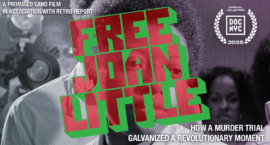
A new documentary short chronicles Little’s groundbreaking case—and her historic victory as the first U.S. woman acquitted for using deadly force to resist sexual assault.

As Hulu’s Only Murders in the Building unfolds, safety begins to look less like locked doors and more like open conversation.
The friendship among Charles (Steve Martin), Oliver (Martin Short) and Mabel (Selena Gomez) is where this transformation starts. Mabel—young, Latina and less financially secure—doesn’t fit the Arconia’s image of who belongs. But through her, Charles and Oliver begin to question the false comfort of wealth and privacy. Together, they build a kind of safety grounded in trust and shared vulnerability.
By its later seasons, Only Murders has redefined what security means. It’s no longer about who can afford to keep others out—it’s about who’s willing to let others in. The show suggests that real safety comes not from walls, locks or property values, but from empathy, care and connection.

For three years running, artist and activist Tiffany Shlain has created calls to action around her feminist history tree ring sculpture in advance of U.S. elections where women’s voting rights, reproductive rights and long held democratic principles face historic setbacks. The milestones and tribulations of women’s history seared onto its surface are particularly resonant now, as many records of women’s presence and accomplishments are disappearing from public view.

After Charlie Kirk’s assassination, many mourners grieved the untimely death of a “father and husband.” Opinions of his rhetoric aside, the unintended implication is that he would be less worthy of being mourned if he were single and childless.
As a 47-year-old male who’s never been married and has little to no interest in dating, you’d better believe I’ve been asked questions like, “When are you gonna settle down?” and “why are you still single?” But this isn’t about me venting. It’s about what’s behind these questions: the core assumption that not having a partner is lacking.

Paul Thomas Anderson is not the first to subvert one Black femme stereotype after another. He’s just the whitest. However, the director’s latest film, One Battle After Another, serves to hold up a mirror to 2025 America.
Some critics have accused Anderson of writing Black women who are too sexualized, stereotypical or sidelined. However, recent interviews reveal that actors were often encouraged to go off script in order to add more authenticity to their roles. So it’s likely that many of the shades of gray used to paint these Black women as imperfect yet inspiring insurgents are derived from the Black women with whom PTA collaborates and cohabitates.
For me, the results defied history with humor and humanity.

Kim Snyder’s The Librarians follows women in a long-undervalued and underpaid profession—who are now coming under attack. The film premiered to acclaim at Sundance and later SXSW, and will be released in select theaters this fall.