A Global Telehealth First: Women Help Women Begins Producing Abortion Pill Combipack

The feminist telehealth provider Women Help Women is redesigning how abortion pills are packaged to reflect what users actually need: a combination pack that includes one mifepristone tablet and eight misoprostol tablets for use up to 12 weeks of pregnancy.

“It’s a huge revolution of who actually gets to decide when, how and with the support of whom they can have an abortion and until when,” said Women Help Women coexecutive director Kinga Jelinska. “It centers the needs of users rather than institutions or markets. The underlying notion is that abortion can be friendly, and abortion can be easy.” 

Self-managed abortion is disruptive. We were told that abortion is a difficult decision; that it has to be difficult to access, and that only doctors control it. Self-managed abortion subverts that,” said Lucía Berro Pizzarossa, fellow coexecutive founder.

Women in Politics Weekly Roundup: Miami’s First Woman Mayor; Congress Moves to Reform How We Vote; Forbes Ranks World’s 100 Most Powerful Women

Weekend Reading for Women’s Representation is a compilation of stories about women’s representation in politics, sports and entertainment, judicial offices and the private sector—with a little gardening mixed in!

This week:
—A seachange in New Mexico’s new women-majority legislature.
— The Ranked Choice Voting Act has been introduced in Congress, which would require RCV for all primary and general congressional races beginning in 2030, allowing voters to express their ranked support for multiple candidates.
—Eileen Higgins is elected as Miami’s first woman mayor. She ran on a platform of structural reforms: affordable housing, climate resilience, improved municipal governance and expanded representation.
—Australia enacts a nationwide ban on social media accounts for children under 16.
Forbes 2025 ranking of the world’s 100 most powerful women spotlights an increasingly diverse and influential generation of female leaders across business, politics, technology, media and culture.

… and more.

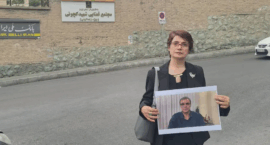
Reza Khandan: A Year in Prison for Supporting Women’s Rights

It has been a year since 60-year-old Iranian human rights activist Reza Khandan was arrested in what was clearly another official attack on his family. Political prisoners in authoritarian regimes are meant to disappear into hopeless silence, but Reza has become a force to be reckoned with.

“The crime for which Reza Khandan is in prison is the crime of love,” writes Ariel Dorfman, author and friend of Khandan and his wife, activist Nasrin Sotoudeh. “Not just love of his country and its culture. Not just love of humanity and our rights to be human. Not just love for the future. But also, the real reason why he is being punished: Reza loves the extraordinary Nasrin with whom he shares a life, a land, and a cause. How those who persecute Reza must fear his loyalty and steadfastness. He will prevail.”

“I will continue until I achieve legal rights, restore my family’s dignity, and change the conditions of the prison administration,” Khandan wrote. “May the shadow of terror and tyranny be removed from our beloved country one day. And finally, I would like to add: ‘I object to the compulsory hijab!’” 

Ms. Global: 300 Schoolchildren Kidnapped in Nigeria, Italian Parliament Recognizes Femicide and More

The U.S. ranks as the 19th most dangerous country for women, 11th in maternal mortality, 30th in closing the gender pay gap, 75th in women’s political representation, and painfully lacks paid family leave and equal access to health care. But Ms. has always understood: Feminist movements around the world hold answers to some of the U.S.’s most intractable problems. Ms. Global is taking note of feminists worldwide.

This week: News from Nigeria, Afghanistan, Japan and more.

International Telehealth Provider ‘Abortion Pills in Private’ Ready to Ramp Up if FDA Restricts Mifepristone

As Trump’s FDA threatens to block U.S.-based medical providers from offering telehealth abortion, one international telehealth provider—Abortion Pills in Private—has vowed to continue providing mifepristone and misoprostol to U.S.-based patients, no matter what.

Their commitment is clear: “We will continue to send mifepristone, even if the FDA takes it off the market inside the U.S.. … We want to make this service easy, the best experience that it can be, with dignity. You can just go online, and it’s easy, and there’s no judgment. If you need this, we are here for you. Here are your pills. Here’s the support service that you need. You can do this from home. Whatever the reason is, we want to have that service there for you to be able to do that, no matter where you live.”

Their service and determination grew directly out of the post-Roe crisis. People find Abortion Pills in Private through the Plan C website. Since March 2024, they have served almost 3,500 patients in the U.S., most of them living in the hardest-hit states—those with abortion bans and severe restrictions. “They are from all over, but they are very much from banned states. Texas is always number one. Then Florida, Georgia. Even Ohio and Pennsylvania. There are some blue states too.”

Seventy Years After Rosa Parks’ Arrest: How We Commit to Carrying the Work Forward

Weekend Reading for Women’s Representation is a compilation of stories about women’s representation in politics, sports and entertainment, judicial offices and the private sector—with a little gardening mixed in!

This week:
—The 2025 elections prove that voters across the country want women as their leaders.
—Democratic leaders are exploring ranked-choice voting for the 2028 presidential primaries.
—In a Tennesee special election, Democratic nominee Aftyn Behn surpassed electoral expectations for her congressional district.
—Fort Collins, Colo., elected Emily Francis as mayor in its first use of ranked-choice voting.
—College student Any Lucía López Belloza was deported in Massachusetts on her way home to Texas for Thanksgiving.

… and more.

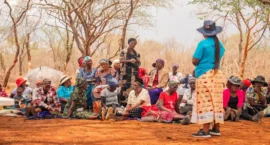
Breaking the Silence: Zimbabwe Initiative Reaches Survivors of Violence

For years, Tjedza endured sexual violence at the hands of her father. Clara, an elderly woman, experienced abuse at the hands of her son. And for most of Tabeth’s married life, she bore abuse at the hands of her husband. 

These abuses—and many more like them—went unseen for far too long. Yet in rural Zimbabwe, services to support survivors of gender-based violence are often out of reach. Survivors often must travel long distances to seek help, and when they do, they risk facing stigma and blame from the very responders who are meant to protect them.  

But today, for survivors like Tjedza, Clara and Tabeth, the years of fear and silence are over. 

An initiative in Zimbabwe’s Bubi District, known as Women at the Center, is improving access to essential protection and support services—and improving the quality and delivery of these services as well. Now, when one survivor receives respectful care and protection, others are emboldened to speak out too.

“I only got the confidence to report after seeing how other survivors had received care and were in a much better place,” Tjedza shared.

“This program didn’t just save my life; it gave me back my dignity,” said Clara.

Inside the Global Network of Abortion Doulas Supporting Self-Managed Care

As barriers to clinic-based abortion care have increased in recent years, an increasing number of women are self-managing their abortions: finding and using abortion pills independently of the formal medical system. They are obtaining abortion pills through online abortion pill services, community networks sharing pills for free and websites selling pills.

To support self-managed abortion, feminists are creating a global network of online abortion doulas—trained companions who offer one-on-one support by phone, email and text to people using abortion pills. A leader in this effort is the organization Rouge Doulas, which runs the Rouge Abortion Doula School.

Six Ways Masculine Stereotypes Are Still Limiting Boys

Rigid norms of manhood—based in manly confidence and toughness, emotional stoicism, disdain for femininity and dog-eat-dog banter—are influential among boys and young men.

Between one quarter and one half of boys and young men endorse these norms. Over half feel pressure from others to live up to them, believing most people expect them always to be confident, strong and tough.

These are some of the findings from a new Australian survey of adolescents aged 14-18 years, conducted by The Men’s Project at Jesuit Social Services.

In a climate of heightened concern about boys and young men and violent masculinity, this study provides invaluable data on boys’ and young men’s own views. This includes the pressures they feel to live up to stereotypical masculine norms and the profound impact of those beliefs.