
Explore the 30 most popular articles published this year on MsMagazine.com—the articles feminists most clicked, shared, studied, bookmarked and passed out at marches.


More Than A Magazine, A Movement

Explore the 30 most popular articles published this year on MsMagazine.com—the articles feminists most clicked, shared, studied, bookmarked and passed out at marches.

Weekend Reading for Women’s Representation is a compilation of stories about women’s representation in politics, sports and entertainment, judicial offices and the private sector—with a little gardening mixed in!
This week:
—We mark 60 years since former President Lyndon Johnson advanced equal opportunity in employment.
—When women come together, share our strength, and lift one another up, the impossible becomes possible.
—In a landslide victory, Adelita Grigalva becomes Arizona’s first Latina to Congress.
—Of the four Republican House members signing the petition about the actions and allies of sexual predator Jeffrey Epstein, three are women.
—A record number of U.S. legislators won’t run for reelection next year.
—Hillary Clinton “sees a dangerous moment for women’s rights and democracy.”
—Akshi Chawla, who writes the #WomenLead Substack and is a valuable resource on international women’s representation, on the great question: “How do I get started?”
—The Marshall Islands, a rapidly vanishing Oceania nation, is led by the region’s first-ever woman president, Hilda Heine.
—Who was the first American woman to have an airport named in her honor?
… and more.

In the wake of Trump’s reelection—America’s first “podcast election”—commentators pointed to his surprising success with young male voters, driven in part by appearances on popular “brocasts” like The Joe Rogan Experience and Bussin’ With the Boys. These shows, often focused on comedy, sports and self-improvement, gave Trump a platform to project masculine authenticity and connect with disaffected young men. As UFC CEO Dana White put it, podcasters like the Nelk Boys and Adin Ross played a pivotal role in Trump’s victory.
Conservative media has created a space where right-wing ideas feel rebellious and “real men” vote Republican. These podcasts offer not just political messaging but a sense of belonging during a “loneliness epidemic.” Unless Democrats figure out how to enter these spaces and shift the narrative, they risk losing another generation of young male voters.

Gen Z men in their teens and twenties are leaning further right than ever… or so mainstream media would have you believe.
For months before and since the November 2024 election, news articles, podcasts and polls have been pointing to the widening gender gap between young men and young women. (Young white men in particular voted for Donald Trump by a 28-point margin in 2024, compared to 2020 when young white men between 18 and 29 supported Joe Biden over Trump by six points.)
However, new polling from the Young Men Research Project (YMRP) suggests there might be more to the story.
“The share of young men who say they voted for Trump in 2024 but no longer view him favorably, it’s on the order of 5 to 8 percent of young men,” John Ray, YMRP team member and senior director of polling at YouGov, told me in an interview.

When the editors of Ms. asked me to guest-edit “Ms. on Men,” a feature section in the latest print issue highlighting key issues related to men and masculinity, I knew this was more than a symbolic gesture—it was a necessary intervention.
In the wake of the 2025 election, with a growing number of young men embracing right-wing populism, we need a pro-feminist vision of masculinity rooted in justice, not grievance. This section brings together voices committed to that vision, offering both critique and possibility.
The first piece from the feature—going live on MsMagazine.com early Friday, July 25—will answer the question we’ve all been pondering: Why is the vice president sitting like that?

Barely six months into the new administration, President Trump and his allies are advancing a bill that will fundamentally change our elections and make it harder for millions of women to register, vote and participate in our democracy.
The deceptively named SAVE Act represents the latest and most dangerous threat of election denialism to date.
Proponents of the SAVE Act would have us believe that anyone can walk into a polling station and cast a vote without being identified at all. This could not be further from the truth.
SAVE Act supporters allege mass fraud in our elections, votes under the names of dead people and party activists voting multiple times. This, too, is false.

Pollster and leading Democratic strategist Celinda Lake has been examining the data on women and feminist voters for decades. I talked to her about what Americans really want. (Spoiler alert: It’s not Project 2025.)
“People think that feminism is a dirty word. In fact, it’s a very strong word. Particularly for progressives and Democrats—feminism is highly correlated with voting for Democrats. Half of Independents consider themselves feminists; when you describe it, a third of Republicans and 83 percent of Democrats do. Our voters consider themselves feminists. It is a very quiet movement out there that is really underestimated. …
“Feminist issues, however we define them, are doing quite well. What we don’t have is we don’t have enough of them out front. We don’t have enough leaders taking them on.”
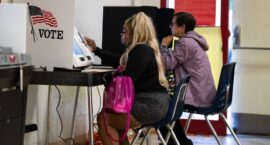
In recent weeks, a wave of rumors has surfaced online suggesting the 2024 election may have been “stolen” or, more specifically, tampered with due to faulty machines. While many of these claims remain vague or speculative, some are beginning to gain traction across social media platforms and alternative news sites.
In the interest of democracy, transparency and election security, I reached out to a group of leading experts—many of whom work at the intersection of voting rights, cybersecurity and public trust—to share two examples of the kinds of articles I’ve seen on this topic, and ask for their take.
What follows are responses from some of the country’s most experienced voices on election integrity. Their insights are a valuable reminder that while election systems are not perfect, there is currently no credible evidence supporting claims of widespread vote manipulation in 2024. Instead, these experts highlight what’s real, what’s theoretical and where our attention should actually be focused as we work to protect democracy.

Mom Abby Blum tells why she was forced her to end her much-wanted pregnancy. She warns that an unexpected tragic event can happen to any woman—even if they think they’ll never need an abortion.
“It felt like an impossible choice, but I decided to go ahead and have the abortion to end my pregnancy so I could start the treatment I needed to save my life. … For me, the abortion was a medical necessity. And, in hindsight, I realize that in the post-Roe v. Wade era, I was lucky to be in a state where I had access to an abortion and to all the healthcare that I needed. ….
“If I had lived in a state like Texas, which bans abortion in nearly all cases, my story would have had a very different ending. I didn’t choose to get cancer and to have to make the decision to end my pregnancy, but that’s what can sometimes happen in life.”
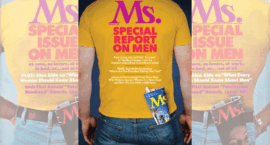
It’s true that many boys and men are struggling. It’s also true that the right has successfully weaponized those struggles in their relentless attacks on feminists, liberals and progressives, and anyone else they can accuse of “wokeism,” and subsequently disparage and defund.
The “Special Report on Men” in the upcoming Ms. Summer issue—on newsstands July 1—seeks, instead, to understand the ways in which men’s struggles are connected to larger questions of gender and power that feminists have wrestled with for centuries.
You’ll find:
—Why is the vice president sitting like that? Organizer and writer Garrett Bucks sees through JD Vance’s awkward posture to reveal his self-defeating message for young men.
—Mental health clinician Jewel Woods argues that healing men and boys requires looking beyond grievance-based narratives.
—Jackson Katz promotes an untapped strategy for preventing violence against women: making it men’s work.
… and more!