
You’ve read the other “Best of” lists—now read this one. You know, the one for the rest of us.
Here are Ms. magazine’s top feminist books of 2025.


More Than A Magazine, A Movement

Spotlighting books that tell important feminist stories.
You’ve read the other “Best of” lists—now read this one. You know, the one for the rest of us.
Here are Ms. magazine’s top feminist books of 2025.
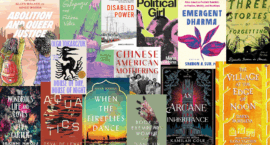
Each month, Ms. provides readers with a list of new books being published by writers from historically excluded groups.
December’s 14 titles are great for gifting or curling up with on a cold winter’s night. Wishing you all a lovely holiday season!

As the year winds down, I find myself returning—as I always do—to the stories, performances and ideas that have shaped my teaching and thinking. Feminism’s past is never really past; it’s a living archive we carry with us, full of unresolved questions, missteps, breakthroughs and beautiful, complicated people. This year’s reading and viewing list reflects that sensibility.
Liberation forces its contemporary narrator—and its audience—to reckon with the impossible expectations we’ve placed on small groups of women in church basements.
Molly Jong-Fast’s memoir presses on the tender, maddening ties between feminist foremothers and the daughters who grew up in their shadow.
Sarah Weinman’s study of spousal rape laws exposes just how recently the law stopped treating wives’ bodies as open territory—while showing how fiercely survivors and advocates have had to push for change that should never have been controversial.

Each month, Ms. provides readers with a list of new books being published by writers from historically excluded groups.
I hope you find something on this list of 20 that fuels your feminism and reminds you of the power of our collective stories.

Russia’s hostility to feminism today stems not from its foreignness, but from memory. A century ago, it was Russian women who lit the first sparks of revolution. On International Women’s Day in 1917, factory workers filled the streets of Petrograd demanding bread, peace and equality—an uprising that toppled the Romanovs and pulled the world into modernity. Under the Bolsheviks, women won the right to vote, divorce became accessible and abortion was legalized. For a brief, radical moment, the Soviet experiment made women’s liberation a pillar of the state.
Julia Ioffe’s book, Motherland: A Feminist History of Modern Russia, from Revolution to Autocracy, reminds us that today’s Russia rejects feminism precisely because it once knew what it could do: ignite revolutions, upend hierarchies and reimagine power itself.

American humanitarian worker Claudia Krich—co-director of the American Friends Service Committee medical relief program from 1973 to 1975—was one of only a handful of Americans who stayed in Vietnam past April, 30, 1975, after the war ended. (She and her husband finally left in July 1975.)
Fifty years later, in April, Krich published her full journal from those months in Vietnam. Those Who Stayed: A Vietnam Diary, now available from the University of Virginia Press, combines Krich’s 1975 diary—including sections originally published in Ms.‘ July 1976 print issue—with extra historical content and some first-person accounts by people mentioned in or relevant to the book.
To celebrate the book’s release earlier this year, Claudia Krich communicated with Ms. about her book and her experiences as an American woman living and working in Vietnam during this historic moment.
“People think the war was North versus South, but that’s not true. … I hope my book motivates more people to travel, to take risks, to be outspoken, to record what they experience.”

Since the start of their career, Arabelle Sicardi has worked to carve out a niche as a beauty writer who takes the industry to task. In an industry that thrives on affiliate links, and where publications near universally get commissions for the products they recommend, it’s a hard angle to take: Critiquing the system, let alone exposing the inequality that goes on behind the scenes, can put you in a vulnerable position.
Sicardi sat down with Ms. to discuss beauty under fascism, the labor issues at play in the beauty industry, and finding community and connection in an industry that’s fraught with violence.

In a time when we need it the most, these 20 books will provide the knowledge, respite, ideas, empathy and rage we need right now to continue the work of liberation.

Kim Snyder’s The Librarians follows women in a long-undervalued and underpaid profession—who are now coming under attack. The film premiered to acclaim at Sundance and later SXSW, and will be released in select theaters this fall.
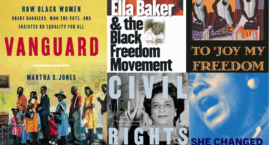
While writing my new book about the contributions Black women have made in the global struggle for human rights, I was humbled to see, over and over, how many of these women did not come from rich families, or hold positions of great power, or even have all that much education. But they did the hard and dangerous work required, day in and day out, because they believed in equal rights for everyone, around the world.