She Was an Antiabortion Poster Child. Now She’s a Reproductive Freedom Activist.

At the age of 15, Charlotte Isenberg took to social media to process complicated feelings about a miscarriage after alleged sexual abuse. That was what first brought her to the attention of antiabortion groups.

“Almost immediately, anti-abortion actors threaded a narrative for me between my grief, my miscarriage and anti-abortion sentiment. I clung to it with desperation,” Isenberg wrote.

Feeling isolated from peers due to both her traumatic experiences and the COVID-19 pandemic, Isenberg found a sense of belonging in these online spaces.

But in May 2024, at age 20, Isenberg says her birth control failed, and she became pregnant for the second time. The timing was devastating: She was unemployed, without stable housing or transportation, and preparing to relocate for college—the first in her family to access higher education. 

When she couldn’t find adequate support for her unplanned pregnancy, Isenberg scheduled an appointment at her local Planned Parenthood for an abortion consultation, unsure of what she would ultimately decide. Another prominent antiabortion activist, one of Isenberg’s best friends in the movement, found out about her appointment; she and other members of the group intervened aggressively.

Despite this pressure, Isenberg was able to make the decision that was best for her and her body. Since her own abortion, she’s become a reproductive freedom activist, educating others about extremist antiabortion tactics and promoting systemic protections for people navigating reproductive healthcare. 

Seventy Years After Rosa Parks’ Arrest: How We Commit to Carrying the Work Forward

Weekend Reading for Women’s Representation is a compilation of stories about women’s representation in politics, sports and entertainment, judicial offices and the private sector—with a little gardening mixed in!

This week:
—The 2025 elections prove that voters across the country want women as their leaders.
—Democratic leaders are exploring ranked-choice voting for the 2028 presidential primaries.
—In a Tennesee special election, Democratic nominee Aftyn Behn surpassed electoral expectations for her congressional district.
—Fort Collins, Colo., elected Emily Francis as mayor in its first use of ranked-choice voting.
—College student Any Lucía López Belloza was deported in Massachusetts on her way home to Texas for Thanksgiving.

… and more.

Pete Hegseth Doubles Down on His Culture War Against Feminism

Many of the military officers who sat through Pete Hegseth’s and Donald Trump’s speeches about not tolerating “fat generals” and the need for “male standards” of physical fitness, are men who have not only served with highly capable, talented and accomplished women; many of them have mentored and promoted them as well. They know how vital and indispensable women are to functioning militaries in the modern era.

Secretary Hegseth’s speech was more than an announcement of new Pentagon priorities. It was, in many ways, a performative declaration of what is a much wider right-wing culture war against feminism.

From Berlin to Beijing to U.S. Congress, Women’s Courage to Convene Propels Us Forward

Weekend Reading for Women’s Representation is a compilation of stories about women’s representation in politics, sports and entertainment, judicial offices and the private sector—with a little gardening mixed in!

This week:
—We mark 60 years since former President Lyndon Johnson advanced equal opportunity in employment.
—When women come together, share our strength, and lift one another up, the impossible becomes possible. 
—In a landslide victory, Adelita Grigalva becomes Arizona’s first Latina to Congress.
—Of the four Republican House members signing the petition about the actions and allies of sexual predator Jeffrey Epstein, three are women.
—A record number of U.S. legislators won’t run for reelection next year.
—Hillary Clinton “sees a dangerous moment for women’s rights and democracy.”
—Akshi Chawla, who writes the #WomenLead Substack and is a valuable resource on international women’s representation, on the great question: “How do I get started?”
—The Marshall Islands, a rapidly vanishing Oceania nation, is led by the region’s first-ever woman president, Hilda Heine.
—Who was the first American woman to have an airport named in her honor?

… and more.

Tools of the Patriarchy: How Communication Double Standards Silence Women

“Sorry, but—”

I paused as the words flew from my mouth, forming an apology before I could even consider why I felt the need to begin my confrontation with one. A moment earlier, my friend had interrupted me during a heated debate, and I wanted to finish making the point I had been in the middle of.

“No worries, it’s all good,” he said with a smile, continuing with his argument. I sat stunned by how in a matter of seconds, I had been interrupted, then enabled to apologize for trying to address the interruption—all with the end result of my friend getting to speak over me.

These types of interactions happen to women all the time. Compulsive apologies, interruptions, mansplaining and emotional weaponization are all barriers that get in the way of women getting their point across, and being heard.

Communicating is already complicated enough, but it is even more difficult as a woman—so let’s talk about it.

From Limbaugh to Rogan: The Rise of the Conservative ‘Brocast’

In the wake of Trump’s reelection—America’s first “podcast election”—commentators pointed to his surprising success with young male voters, driven in part by appearances on popular “brocasts” like The Joe Rogan Experience and Bussin’ With the Boys. These shows, often focused on comedy, sports and self-improvement, gave Trump a platform to project masculine authenticity and connect with disaffected young men. As UFC CEO Dana White put it, podcasters like the Nelk Boys and Adin Ross played a pivotal role in Trump’s victory.

Conservative media has created a space where right-wing ideas feel rebellious and “real men” vote Republican. These podcasts offer not just political messaging but a sense of belonging during a “loneliness epidemic.” Unless Democrats figure out how to enter these spaces and shift the narrative, they risk losing another generation of young male voters.

Young Men May Not Be as Conservative as You Think

Gen Z men in their teens and twenties are leaning further right than ever… or so mainstream media would have you believe.

For months before and since the November 2024 election, news articles, podcasts and polls have been pointing to the widening gender gap between young men and young women. (Young white men in particular voted for Donald Trump by a 28-point margin in 2024, compared to 2020 when young white men between 18 and 29 supported Joe Biden over Trump by six points.)

However, new polling from the Young Men Research Project (YMRP) suggests there might be more to the story.

“The share of young men who say they voted for Trump in 2024 but no longer view him favorably, it’s on the order of 5 to 8 percent of young men,” John Ray, YMRP team member and senior director of polling at YouGov, told me in an interview.

‘The Feminist Agenda Is Wildly Popular’: Celinda Lake on the Political Power of Feminist Voters

Pollster and leading Democratic strategist Celinda Lake has been examining the data on women and feminist voters for decades. I talked to her about what Americans really want. (Spoiler alert: It’s not Project 2025.)

“People think that feminism is a dirty word. In fact, it’s a very strong word. Particularly for progressives and Democrats—feminism is highly correlated with voting for Democrats. Half of Independents consider themselves feminists; when you describe it, a third of Republicans and 83 percent of Democrats do. Our voters consider themselves feminists. It is a very quiet movement out there that is really underestimated. …

“Feminist issues, however we define them, are doing quite well. What we don’t have is we don’t have enough of them out front. We don’t have enough leaders taking them on.”

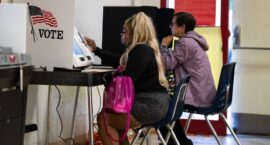
I Asked Top Election Experts About 2024 Tampering Claims. Here’s What They Said.

In recent weeks, a wave of rumors has surfaced online suggesting the 2024 election may have been “stolen” or, more specifically, tampered with due to faulty machines. While many of these claims remain vague or speculative, some are beginning to gain traction across social media platforms and alternative news sites. 

In the interest of democracy, transparency and election security, I reached out to a group of leading experts—many of whom work at the intersection of voting rights, cybersecurity and public trust—to share two examples of the kinds of articles I’ve seen on this topic, and ask for their take.

What follows are responses from some of the country’s most experienced voices on election integrity. Their insights are a valuable reminder that while election systems are not perfect, there is currently no credible evidence supporting claims of widespread vote manipulation in 2024. Instead, these experts highlight what’s real, what’s theoretical and where our attention should actually be focused as we work to protect democracy.

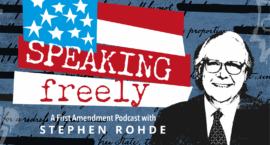
A Podcast for Our Constitutional Crisis: ‘Speaking Freely’ Provides Echoes of History—and Warnings for Today

As threats to free speech continue to escalate under the Trump administration, we must do our part to defend First Amendment rights for all.

In an illuminating new 10-episode series, Speaking Freely: A First Amendment Podcast, Stephen Rohde, who has litigated and written about freedom of expression for decades, explores some of the most controversial free speech and free press cases decided by the U.S. Supreme Court—looking at hot-button issues like hate speech, defamation, incitement, social media, obscenity, flag burning, espionage and academic freedom.

Listen to Speaking Freely on Apple Podcasts, Spotify or iHeart. All 10 episodes available now.