What 200 Gen Z Women Told Me About Birth Control Should Alarm Every Woman in America

Birth control is the single most powerful tool for women’s economic mobility and autonomy in modern history. It changed everything: When women could plan if, when and with whom they wanted to have children, college enrollment soared, dropout rates fell and poverty rates declined. The ability to access contraception has been directly tied to women’s ability to stay in school, build careers and make decisions about their own futures.

So why, in 2025, are we finding ourselves in a messaging war on birth control?

What the ‘Wicked’ Weight-Loss Discourse Gets Wrong

We can’t afford to look away from changing beauty norms in our society, and how they are fueling eating disorders. 

Jennifer Rollin, an eating disorder therapist based in Maryland, says, “What I hear from a lot of clients is that when they are trying to recover from their eating disorder in this society, it almost feels wrong, because ‘everyone around me is talking about Ozempic,’ and ‘all the celebrities are talking about their big amount of weight loss.’”

But while it can feel cathartic to criticize or distance ourselves from prominent women who seem to be conforming to dangerous beauty standards, that criticism is harmful and does not bring us any closer to addressing the problem.

Women in Politics Weekly Roundup: Miami’s First Woman Mayor; Congress Moves to Reform How We Vote; Forbes Ranks World’s 100 Most Powerful Women

Weekend Reading for Women’s Representation is a compilation of stories about women’s representation in politics, sports and entertainment, judicial offices and the private sector—with a little gardening mixed in!

This week:
—A seachange in New Mexico’s new women-majority legislature.
— The Ranked Choice Voting Act has been introduced in Congress, which would require RCV for all primary and general congressional races beginning in 2030, allowing voters to express their ranked support for multiple candidates.
—Eileen Higgins is elected as Miami’s first woman mayor. She ran on a platform of structural reforms: affordable housing, climate resilience, improved municipal governance and expanded representation.
—Australia enacts a nationwide ban on social media accounts for children under 16.
Forbes 2025 ranking of the world’s 100 most powerful women spotlights an increasingly diverse and influential generation of female leaders across business, politics, technology, media and culture.

… and more.

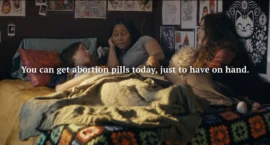
Shout Your Abortion Short Films Seek to Normalize Keeping Abortion Pills at Home: ‘You Always Have Options’

The grassroots abortion-stigma-busting juggernaut Shout Your Abortion has released two new powerful public service announcements urging people across the U.S. to order abortion pills in advance to have on hand, in case they have an unwanted pregnancy.

Made by Detroit-based filmmaker Na Forest Lim, the short films follow two women—a teenager named Dani and a single mother in her 30s named Poppy—who find out they are pregnant and use abortion pills at home, supported by friends and family.

Both of the main characters have easy access to abortion pills: Dani’s friend arrives with pills in her backpack, and Poppy keeps a pack tucked away in her top dresser drawer.

Building on that vision of easy access, the Dani PSA shows what it looks like when abortion pills are already part of teenagers’ lives and a pregnancy never has the chance to become a crisis.

Six Ways Masculine Stereotypes Are Still Limiting Boys

Rigid norms of manhood—based in manly confidence and toughness, emotional stoicism, disdain for femininity and dog-eat-dog banter—are influential among boys and young men.

Between one quarter and one half of boys and young men endorse these norms. Over half feel pressure from others to live up to them, believing most people expect them always to be confident, strong and tough.

These are some of the findings from a new Australian survey of adolescents aged 14-18 years, conducted by The Men’s Project at Jesuit Social Services.

In a climate of heightened concern about boys and young men and violent masculinity, this study provides invaluable data on boys’ and young men’s own views. This includes the pressures they feel to live up to stereotypical masculine norms and the profound impact of those beliefs.

Meet Dr. Lincoln, the Internet’s Favorite OB-GYN

You may know—and love—Dr. Jennifer Lincoln already. If you are unfamiliar, she’s a board-certified OB-GYN and a famous content creator with 2.8 million followers on TikTok and large platforms on Instagram and YouTube. Dr. Lincoln is also a practicing OB-hospitalist who works in labor and delivery, night and day.

She makes content to dispel medical misinformation, a frequent tool of the patriarchy. As ‘MAHA’ influencers decry everything from birth control to Tylenol, at the expense of women, she’s pushing back with evidence-based information.

Like most Americans, I felt uninformed about sexual reproductive health, even after my in-school health classes. In high school, I searched YouTube for information about reproductive health, where I found my way to Dr. Lincoln, who not only provided the health class I never had, but also ignited my interest in reproductive justice. Without her influence, I likely would not have become a feminist writer at Ms.

Over Zoom, I had the privilege of chatting with Dr. Lincoln about her journey from OB-GYN to viral educator, how the post-Dobbs landscape has reshaped her work, and why she believes accurate, inclusive sex education is one of the most powerful tools we have for liberation. Our conversation spanned everything from social media strategy to Christian nationalism—and what it really means to fight misinformation with empathy.


Sahaj Kohli Is Helping Immigrant Daughters Break the Silence They Inherited

Seventy-seven percent of Indian Americans ages 25 and older hold a bachelor’s or advanced degree—one of the highest education levels of any group in the country. However, there aren’t many that are civically active in their communities. Few post about controversial issues. Fewer donate. Almost none speak publicly. These are the women who are otherwise bold: executives, founders, fundraisers, moms who command rooms. But when it comes to controversial topics—especially anything that could “stir the pot”—there’s a quiet, familiar retreat.

Therapist and founder of Brown Girl Therapy, Sahaj Kohli has spent years studying this phenomenon. Through a book, a podcast and a mental health community for bicultural and immigrant women, she’s helping these women understand “your voice doesn’t have to be angry or loud in order for it to be brave. It just has to be yours.”

As we celebrate Diwali—a festival that honors light’s triumph over darkness—it’s worth remembering that our voices are part of that light. Choosing to speak, even when it’s uncomfortable, is how we brighten the path for those who come after us.

Technical Difficulties: How Social Media Is Impacting the Landscape of Misinformation About Reproductive Health

There’s a lot of unreliable information circulating about birth control—and it’s doing real harm.

The Trump administration is mischaracterizing contraceptives as abortifacients and using that false claim to justify plans to destroy nearly $10 million worth of birth control. For now, the supplies sit in a Belgian warehouse, their fate uncertain.

Meanwhile, social media is flooded with misleading videos about hormonal contraception, watched billions of times. This wave of misinformation is helping drive a decline in contraceptive use among young women that can’t be explained by access alone.

We know from experience that accurate, engaging storytelling can counter these lies—shows like East Los High have proven it—and the same approach could transform TikTok and other short-form platforms.

Texas A&M Professor Dismissed, President Steps Down: The Price of Teaching Gender

Texas A&M University president Mark A. Welsh III has resigned after a viral video of a student confronting a professor over gender content in a children’s literature course sparked a firestorm of political interference. The professor, Melissa McCoul, along with two administrators, were removed from their positions after Republican lawmakers demanded action, framing the discussion of gender identity as a threat to state values. Faculty and student leaders had rallied in support of Welsh prior to his resignation, emphasizing the importance of defending academic freedom and thoughtful leadership in higher education.

The incident at Texas A&M is emblematic of a broader assault on educators’ ability to address gender, sexuality and identity in the classroom. Laws like Senate Bill 37 and executive orders restricting discussion of “gender ideology” weaponize state power against both students and professors, undermining constitutional protections and silencing marginalized voices.

As Zeph Capo of the Texas American Federation of Teachers notes, these public calls for removal based on viral clips constitute an abuse of power—and yet, they are becoming normalized. This moment underscores the urgent need to protect feminist and LGBTQ+ perspectives in education, to ensure that classrooms remain spaces for inquiry, critical thinking and the affirmation of all students’ lived experiences.