A Century After the Eugenics Movement, the U.S. Is Again Barring Disabled Immigrants

This month, Secretary of State Marco Rubio instructed visa officers to consider obesity and other chronic health conditions, such as heart disease, cancer and diabetes, as justification to deny people visas to the United States.

Many were outraged and shocked, observing the Trump administration’s new expansion of the “public charge” rule—directing visa officers to deny entry to people with disabilities, chronic illnesses or age-related conditions—as a modern revival of eugenic immigration policy designed to exclude, control and institutionalize disabled and marginalized people.

When Trump first took office in 2016, the Trump administration broadened the definition of public charge to include people who receive SNAP benefits, medicaid, housing assistance, childcare subsidies and more. This new rule was published in 2019 and went into effect in 2020 and early 2021; President Biden ended the use of this public charge rule definition in March 2021, returning it to the older but still restrictive version. Following Trump’s new rule, visa denials based on the “public charge” rule exploded during Trump’s first residency, rising from just over 1,000 denials in 2016 to over 20,000 in 2019, and it had disastrous effects.

As the Migration Policy Institute (MPI) found, broadening this public charge rule led many people to reduce or stop using benefits or services for themselves.

When the Federal Government Fails, Local Organizers Step In—With Laws, Not Just Protests

We are living through the hollowing out of federal protection. And while the usual narrative goes something like, “Vote, wait, trust the system,” in many places, the people closest to the chaos have stepped up to envision and advance new laws.

In California this year, four bills moving through the legislature were not the result of think tank white papers or party strategists. They came from organizers, queer folks, women of color, survivors—people who have lived the very broken systems they are now trying to change.

A process that centers lived experience as a form of policy expertise is a cutting-edge theory of governance. And it’s replicable: Invest in community-led policy training. Bring people into the lawmaking process not as tokens but as co-authors. Demystify legislative drafting. Reimagine who gets to define what safety, dignity and justice look like.

(This essay is part of a collection presented by Ms. and the Groundswell Fund highlighting the work of Groundswell partners advancing inclusive democracy.)

‘You Only Get What You’re Organized to Take’: On Sustaining Social Change From the Bottom Up

Mainstream media, conservatives and politicians want people to believe that the poor will always be with us. But it’s a lie.

In You Only Get What You’re Organized to Take: Lessons from the Movement to End Poverty, Presbyterian minister and long-time anti-poverty organizer Liz Theoharis and writer-organizer Noam Sandweiss-Back deconstruct this fallacy and present dozens of examples of organizing by poor people to win affordable housing, accessible healthcare, high-quality public education, a living wage, nutritious food and most importantly, dignity.

The Next President Will Decide Domestic Violence Policy for Millions of Survivors

Survivor Justice Action, alongside survivors and allies across the country, is taking the conversation about domestic violence beyond individual homes, ensuring it’s heard loudly throughout the halls of Congress.

We refuse to settle for a world that enables, perpetuates and ignores the root causes of domestic violence. We will always make survivors voices a priority, and we won’t stop until domestic violence ends.

Mothers Without Homes: Tips on Raising Children While Living on the Streets

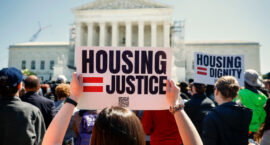
When the U.S. Supreme Court ruled in June that punishing homeless people for sleeping on public property does not violate the Eighth Amendment’s prohibition against cruel and unusual punishment, reality for those experiencing homelessness got much tougher.

In an effort to highlight a significant and unrecognized segment of America’s homeless population, a survival guide for mothers raising their children without a home: The Three Melissas: A Practical Guide to Surviving Family Homelessness

Nowhere to Turn: Survivors are Unsafe at Home and Criminalized on the Streets

As domestic violence and housing costs skyrocket, the Supreme Court’s answer to the crisis of homelessness is more cruelty.

Now, it’s up to state and local governments to invest in proven strategies that help end abuse and homelessness, such as broad investments in affordable housing and targeted investments in survivor-specific housing programs. Survivors can’t wait any longer for the safe, affordable housing they need.

The Cost of Being Myself: Cosmetics and Gender-Affirming Care

For Alice, a young transgender woman, navigating out of homelessness, a $40 bottle of foundation is lifesaving. She regularly purchases it, despite the steep price, because it’s the only product that properly covers the shadow of her facial hair. Doing so ensures that she is not identified and targeted as trans in public.

From physical safety to job security, how your present yourself to the world is critical. To transgender and other LGBTQ+ youth—in particular those that are unhoused, at risk or street involved—beauty products like makeup or haircare are neither optional nor frivolous expenses.

A Story of the Unhoused: The Ms. Q&A with Author Roxanne Chester

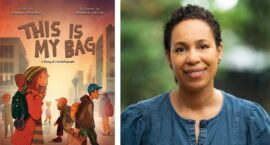
How should you talk about unhoused people with children? Read them This is My Bag.

The children’s picture book looks at the day-to-day realities of diverse people—children and elderly, able-bodied and disabled and diverse in race—who are forced to carry their valuables with them because they lack a permanent residence.

The author, Roxanne Chester, spoke to Ms. reporter Eleanor J. Bader in late December, several weeks after the book was released.