

Breaking the Silence: Zimbabwe Initiative Reaches Survivors of Violence

For years, Tjedza endured sexual violence at the hands of her father. Clara, an elderly woman, experienced abuse at the hands of her son. And for most of Tabeth’s married life, she bore abuse at the hands of her husband. 

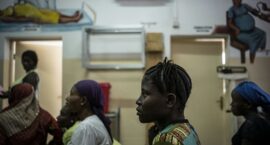
These abuses—and many more like them—went unseen for far too long. Yet in rural Zimbabwe, services to support survivors of gender-based violence are often out of reach. Survivors often must travel long distances to seek help, and when they do, they risk facing stigma and blame from the very responders who are meant to protect them.  

But today, for survivors like Tjedza, Clara and Tabeth, the years of fear and silence are over. 

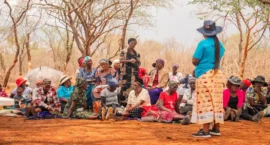
An initiative in Zimbabwe’s Bubi District, known as Women at the Center, is improving access to essential protection and support services—and improving the quality and delivery of these services as well. Now, when one survivor receives respectful care and protection, others are emboldened to speak out too.

“I only got the confidence to report after seeing how other survivors had received care and were in a much better place,” Tjedza shared.

“This program didn’t just save my life; it gave me back my dignity,” said Clara.
Female Genital Mutilation in Infancy Still Common, Gambian Mothers Say

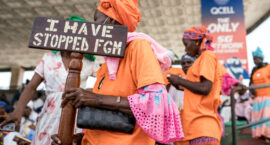
Hulay Damba, 55, spent years performing female genital mutilation on girls in her community. Her role as a practitioner was passed down from her grandmother. “It was what I was taught,” she explained. 

Despite years of steady advocacy in the Gambia, rates of female genital mutilation remain high, even among younger generations. According to 2021 data, almost three quarters of girls aged 15 to 19 have been subjected to female genital mutilation, roughly the same proportion as women a generation older than them (aged 45 to 49). 

Surveys of mothers also show mixed progress: When women with daughters aged 25 and under were asked whether their daughters had been been subjected to female genital mutilation, 54 percent said no. But 22 percent said that their daughters had not only undergone the practice—they had experienced it by their first birthday.

Explainer: No, Contraceptives Don’t Cause Abortion

Misinformation about contraception is deadly.

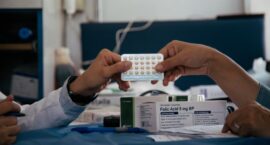
Just ask Evaline Chepkemol, a mother of three in Kenya’s rural Narok County—a place with one of the country’s highest maternal death rates. Chepkemol has encountered many women in her community who are fearful of contraceptives.

“They have the belief that if you insert the family planning [device], you either lose the children or will never give birth again,” she told UNFPA, the United Nations sexual and reproductive health agency. “They were saying that when you put in family planning, you will never give birth to any child because the children will disappear,” she explained.

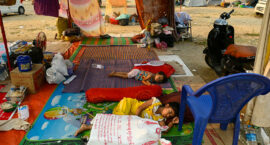
Gender-Based Violence Rises in Gaza, Case Workers Tell of Harrowing Conditions: ‘There Aren’t Enough Safe Spaces for Women and Their Children’

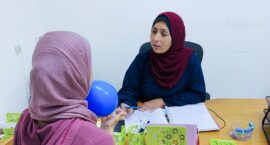
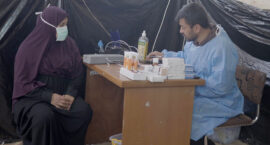
“There’s been a sharp increase in survivors seeking help,” said Suhair, who works at a safe space for women and girls in Gaza’s central Deir El-Balah Governorate.  “We’re working under extremely difficult conditions, including repeated incursions. There aren’t enough safe spaces for women and their children,” she told UNFPA, the United Nations sexual and reproductive health agency. 

Repeated, forced displacements, movement restrictions and a prolonged lack of fuel and electricity have also made it more difficult to help those most at risk. “We’re providing services over the phone because survivors can’t reach safe spaces,” added Suhair.

Widespread illness, poverty, mass displacement and depleted healthcare and social services are all heightening stress levels within households. These exacerbated conditions have led to rising reports of increased domestic violence, sexual exploitation and abuse. Many are turning to child labor and forced marriages to cope with devastating levels of hunger.

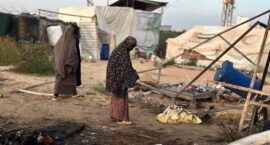
With over 714,000 people—one third of Gaza’s population—forced to move again over the past three months, families are being separated and the local support structures they once relied on have crumbled. Women and girls in particular describe feeling afraid on the street, at aid delivery points and in overcrowded, makeshift shelters that lack privacy, sanitation or basic security measures.

From Natural Process to Nightmare: How Gaza’s Women and Girls Cope With Their Periods in a War Zone

Since March 2, 2025, Israel has imposed a total aid blockade on Gaza that has caused the complete depletion of hygiene supplies, including sanitary pads for menstrual health. Almost 90 percent of water and sanitation infrastructure in Gaza has been either destroyed or partially damaged, and fuel for water pumping and distributions has now run out. 

As nine in 10 households face severe water shortages, women and girls are forced to manage their periods without clean water, soap, supplies or even privacy. Many now describe menstruation as a source of anxiety and isolation.

One adolescent girl expressed the deep frustration and helplessness so many feel: “Every time my period comes, I wish I weren’t a girl.”

‘Everything Fell Apart in Seconds’: Women and Girls Need Urgent Support After Disastrous Earthquake in Myanmar

 “I’ve lived here all my life, but I have never experienced anything as devastating as this earthquake,” said 55-year-old Than in Mandalay, her voice trembling. “Everything fell apart in seconds.”

On March 28, 2025, a powerful 7.7-magnitude earthquake struck central Myanmar, devastating communities across the regions of Mandalay, Sagaing and beyond. Homes crumbled, bridges collapsed and essential services were brought to a halt. The disaster left thousands dead and injured, and countless others—especially women and girls—battling to survive.

Explainer: How Does Family Planning Save Lives?

When a war forcibly displaces tens of thousands of people, UNFPA, the United Nations sexual and reproductive health agency, equips displacement camps and medical personnel with critical supplies—including condoms, oral and injectable contraceptives, contraceptives implants and intrauterine devices. 

When an earthquake tumbles whole city blocks, UNFPA puts contraceptives onto emergency relief convoys, alongside kits for delivering babies and medicines to stop internal bleeding.

When a cyclone slashes through remote island communities, UNFPA sends contraceptives just as it sends sterile medical equipment.

Why? Because contraceptives are part of life-saving humanitarian care.

Men in Detention Face Sexual Torture Amid War in Ukraine

The world is seeing “heightened levels of conflict-related sexual violence, fuelled by arms proliferation and increased militarization,” a recent United Nations report notes. Although the vast majority of victims of this crime are women and girls, this kind of violence is also all too common—and severely underreported—among men, boys and people of diverse gender identities.

“Most of the reported incidents against men and boys occurred in detention settings,” the U.N. report states. 

‘Gaza Is at Breaking Point’: Health Workers and Patients Describe an Unfolding Catastrophe in Rafah

Since the escalation of hostilities in October 2023, around 1.7 million people have been displaced in Gaza, with an estimated 1.5 million crowded into Rafah. As food, fuel, clean water and medical supplies run desperately low, disease, illness, severe hunger and acute malnutrition are rife, particularly among the more than 155,000 pregnant and breastfeeding women and their newborns.