


bell hooks Taught Us to Imagine Freedom. Universities Are Forcing Us to Fight for It.

On the day bell hooks became an ancestor, four years ago today, my beloved friend, comrade and co-conspirator Black feminist sociologist Shawn McGuffey and I were consoling one another over text when he wrote, “We should do something.” “Say less,” I replied.

We had institutional support from Northeastern University at a time when universities and other institutions were publicly and ceremoniously committing to funding DEI related initiatives in the tidal wave of so-called racial reckoning that occurred in the aftermath of George Floyd’s death. The first symposium took place two months later on a cold and clear February morning in 2022. This annual gathering became an important tradition that we looked forward to each year.

This week, we mark four years since the woman born Gloria Jean Watkins, a Black feminist writer, academic, professor and activist became an ancestor. But in 2026, there will be no bell hooks symposium at my university. Due to university wide fiscal austerity, we will not mark the anniversary this year in any official way. It is a tremendous loss, for our students and for our community locally, nationally and internationally.

As I grappled with my own grief over this loss, I had to also reflect deeply about what it means to be a Black feminist scholar in the academy today.
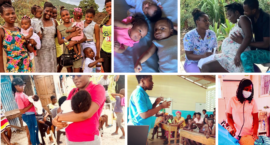

Thinking Big With Haitian Midwives

In Haiti, there are high rates of maternal and neonatal morbidity and mortality.

Founded in 2014, the Foundation for Advancement of Haitian Midwives (FAHM) partners with and supports Haitian midwives through education and outreach. Their work is urgent today while Haiti is in political turmoil, and unrelenting assaults by paramilitary groups have led to severe insecurity in the capital.

“Most people who are drawn to this want to produce safe competent, evidence-based care and to respect people’s voices, preserving the honor and dignity of every human being.”

‘Freda’ Is the Film We Need Now

Because Haiti is in the news again, we are bombarded with stories about unrelenting political turmoil, destabilizing unrest and crippling poverty.

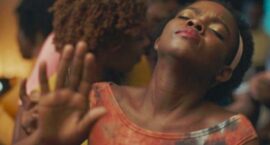
Set in contemporary Port-au-Prince, Gessica Généus’s film Freda affirms that not only do Haitian women exist, but that their existence is replete with complexity and beauty. A feminist film in every way, Freda’s commitment to the female characters especially asks us to carefully consider what we look for when we see Haitian women.

Learning From and Leaning Into Juneteenth

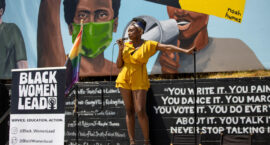
What does Juneteenth mean to me, to you, to us today? Long before corporate decisions to recognize Juneteenth, Black people in this country were joyfully and jubilantly celebrating this day in our own way.

As a feminist scholar, I marvel at Black women’s pivotal role in Juneteenth celebrations. It reminds me that Black women have always been architects of freedom.

‘Picturing Black Girlhood’: A Praise Song for Black Girls

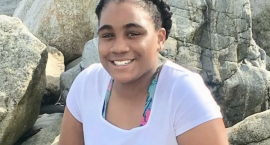
Never before have Black girls been so visible—the thought kept occuring to me as I explored the wonder that is “Picturing Black Girlhood: Moments of Possibility,” to date the largest exhibition on Black girls in the world. The expansive showcase of emerging and established photographers and filmmakers takes us on a journey into Black girls’ interior lives that simultaneously imagines a more capacious worlds for them.

The exhibition curated by photographers Scheherazade Tillet and Zoraida Lopez-Diago highlights the history of Black women photographers while also re-imagining this world for Black girls.

The Biden Administration’s Expulsion of Haitians Is Unconscionable—and a Missed Opportunity

The Biden Administration’s Expulsion of Haitians Is Unconscionable—and a Missed Opportunity

“No one leaves home unless home is the mouth of a shark. … No one puts their children on a boat unless the boat is safer than the land.”

Recent expulsions of thousands of Haitian migrants showcase how far the U.S. has to go on immigration reform.

The proliferation of Haitian migrants at the Mexican border did not begin under this administration. But for Biden, this represents not only a missed opportunity to distinguish himself on immigration, but also an egregious lack of humanity and regard for Black lives in the Caribbean.

“Madan Sara” Tells the Story of Haitian Women Both Ordinary and Extraordinary

"Madan Sara" Tells the Story About Haitian Women Who Are Both Ordinary and Extraordinary

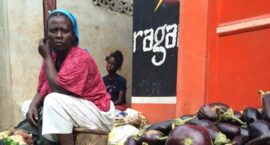
“Madan Sara” centers Haitian women’s voices, perspectives and even policy recommendations to imagine a future in which Haitian businesswomen no longer operate on the margins.

“To talk about Madan Sara is to talk about Haitian women”—but it is also to talk about pressing issues like structural violence, government failures and resistance to neoliberalism that resonate throughout the Global South.