
Read the reviews from the best documentaries like Dear Ms.: A Revolution in Print and Zurawski v Texas from the past year.


More Than A Magazine, A Movement

Read the reviews from the best documentaries like Dear Ms.: A Revolution in Print and Zurawski v Texas from the past year.
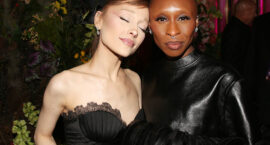
We can’t afford to look away from changing beauty norms in our society, and how they are fueling eating disorders.
Jennifer Rollin, an eating disorder therapist based in Maryland, says, “What I hear from a lot of clients is that when they are trying to recover from their eating disorder in this society, it almost feels wrong, because ‘everyone around me is talking about Ozempic,’ and ‘all the celebrities are talking about their big amount of weight loss.’”
But while it can feel cathartic to criticize or distance ourselves from prominent women who seem to be conforming to dangerous beauty standards, that criticism is harmful and does not bring us any closer to addressing the problem.
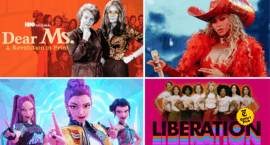
Another year of feminist struggles, another year of feminist triumphs. Our pop culture pushed back and provided many glimpses into feminist resistance throughout the culture.
This year’s top feminist moments reveal how artists, storytellers and creators confronted regressive politics with imagination, joy, righteous anger and expansive visions of humanity.
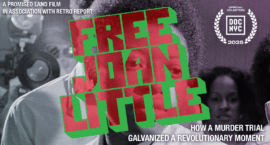
A new documentary short chronicles Little’s groundbreaking case—and her historic victory as the first U.S. woman acquitted for using deadly force to resist sexual assault.
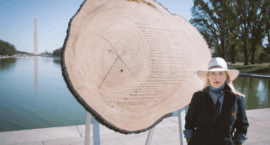
For three years running, artist and activist Tiffany Shlain has created calls to action around her feminist history tree ring sculpture in advance of U.S. elections where women’s voting rights, reproductive rights and long held democratic principles face historic setbacks. The milestones and tribulations of women’s history seared onto its surface are particularly resonant now, as many records of women’s presence and accomplishments are disappearing from public view.

Many of the military officers who sat through Pete Hegseth’s and Donald Trump’s speeches about not tolerating “fat generals” and the need for “male standards” of physical fitness, are men who have not only served with highly capable, talented and accomplished women; many of them have mentored and promoted them as well. They know how vital and indispensable women are to functioning militaries in the modern era.
Secretary Hegseth’s speech was more than an announcement of new Pentagon priorities. It was, in many ways, a performative declaration of what is a much wider right-wing culture war against feminism.
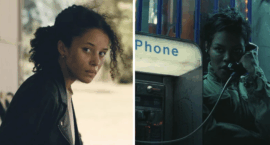
Paul Thomas Anderson is not the first to subvert one Black femme stereotype after another. He’s just the whitest. However, the director’s latest film, One Battle After Another, serves to hold up a mirror to 2025 America.
Some critics have accused Anderson of writing Black women who are too sexualized, stereotypical or sidelined. However, recent interviews reveal that actors were often encouraged to go off script in order to add more authenticity to their roles. So it’s likely that many of the shades of gray used to paint these Black women as imperfect yet inspiring insurgents are derived from the Black women with whom PTA collaborates and cohabitates.
For me, the results defied history with humor and humanity.
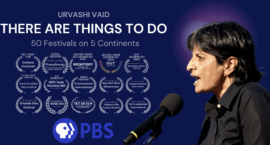
When the 18-minute documentary There Are Things To premiered in Provincetown, Mass., in 2023, it was never meant to be a global statement. It was meant to be a love letter, a short community film about a long legacy. But like the woman it honors— activist Urvashi Vaid—it refused to stay small.
And how could it? We are living through a time when naturalized citizens are being threatened with denaturalization, children are being separated from their parents during immigration raids, people are crossing state lines just to access basic reproductive healthcare, and pregnant women who desperately want children are dying in homes and hospitals or on their way to seek medical care because doctors delay or deny treatment under strict abortion laws. These are not fringe headlines—they are daily realities in one of the most powerful nations in the world.
Against this backdrop, There Are Things to Do (now available for streaming on PBS) arrives like a gentle ambush. Its power is subtle, but the provocation is clear: What if the most radical thing an immigrant could do in America is not assimilate, but organize?
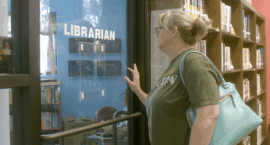
Kim Snyder’s The Librarians follows women in a long-undervalued and underpaid profession—who are now coming under attack. The film premiered to acclaim at Sundance and later SXSW, and will be released in select theaters this fall.
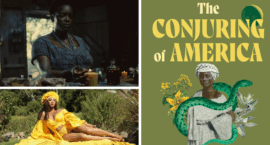
The “Black Feminist in Public” series continues with a feature on Lindsey Stewart, an associate professor at the University of Memphis, whose latest book, The Conjuring of America: Mojos, Mermaids, Medicine, and 400 Years of Black Women’s Magic, released this week. A native Southerner, born and raised in South Louisiana, Stewart draws on the literary and cultural traditions of Black women in this region, also highlighted in her first book, The Politics of Black Joy: Zora Neale Hurston and Neo-Abolitionism (2021). With our popular culture now learning to celebrate “conjure women”—from Beyoncé to HBO shows like Lovecraft Country and recent films like The Exorcist: Believer (2023) and this year’s Sinners, The Conjuring of America could not have come at a better time.
Ms.’ Janell Hobson spoke with Lindsey Stewart earlier this summer to discuss her latest book.
“So many of the things that we interact with in our daily lives have hidden origins. And Black people are not just Black people, but magic. … I’m interested in how Black women used magic, used conjure to create a sense of safety in their communities. It was a type of luck management.”
“One of the things I’m trying to do with this book is to debunk the scariness and the association with evil that comes out of conjure, because when you look at Black culture, it’s present in so many of the sayings, superstitions, and practices that we use everyday, even though it’s been rejected in these Christian spaces.”
“There’s another lineage of Negro Mammies, another story about Negro Mammies that’s powerful. They were amazing women. And one of the things I wanted to do with this book is help Black women get closer to their ancestors and release the shame about how we survived. These women were powerful.”