A Very Bad Year for Women’s Health

When I started writing for The Contrarian, a funny-not-funny inside joke was whether there would be enough fodder for a weekly democracy column that overtly centers gender. I think you already know the punchline. Suffice it to say, I did not miss a single Wednesday in all of 2025.

For my final entry of the year, we thought it worthwhile to offer a snapshot—a year’s worth of reporting on the depth of damage this administration has wreaked on women’s health, with real-time Contrarian reporting noted.

The Ripple Effects of the U.S. Retreat from International Reproductive Care

The U.S. withdrawal of international reproductive health funding is already having devastating effects around the world. Clinics are closing, health workers go unpaid, and essential medications and contraceptives sit unused in warehouses while millions of women and families lose access to life-saving care.

These abrupt cuts are not just administrative—they are a direct attack on decades of global health progress, putting children, pregnant women and marginalized communities at heightened risk of preventable disease, unintended pregnancy and death.

Yet there is still a path forward. The infrastructure to deliver reproductive and public health services remains in place, and health workers are ready to act. If funding is restored, we can prevent the worst outcomes, safeguard global health, and ensure that the fundamental human rights to health, life and bodily autonomy are protected.

The global community must act urgently to reverse the harm and prevent a full-scale public health and human rights crisis.

U.S.-Funded Contraceptives Meant for Crisis Zones Are Headed for the Furnace—Unless Congress Acts

Nearly $10 million worth of U.S.-funded contraceptives—purchased to support women in some of the most desperate places on Earth—are currently sitting in a Belgian warehouse, slated for destruction. The supplies include long-acting contraceptives such as implants and IUDs, as well as birth control pills, many of which remain sealed, viable and do not expire until 2031.

According to advocates, there are qualified organizations—including the United Nations Population Fund (UNFPA) and MSI Reproductive Choices—prepared to accept and distribute the supplies at no additional cost to the U.S. government. But Secretary of State Marco Rubio, appointed earlier this year, has not authorized their release.

In response, Sens. Jeanne Shaheen (D-N.H.) and Brian Schatz (D-Hawaii) have introduced legislation to stop the destruction. The Saving Lives and Taxpayer Dollars Act would require the contraceptives to be released for their intended humanitarian use and prohibit incineration of still-viable medical supplies.

Advocates are urging members of the public to call or email their senators and representatives to demand they pressure the State Department to release the contraceptives, not destroy them.


The U.N. Should Condemn the U.S.’ Human Rights Record on Abortion

The periodic United Nations review of the United States’ human rights record is coming up in November. With the Trump administration’s far-reaching, intensifying attacks, the timing could not be more opportune. Never have U.S. institutions, funding and initiatives that promote the rule of law, faced such an abject threat. This is a moment to shine a light on U.S. abuses on the global stage.

Foreign Aid Cuts Will Lead to 34,000 More Pregnancy-Related Deaths in Just One Year 

The freeze on U.S. foreign assistance funding and the subsequent stop work order has already taken an irreversible toll on global health programs, including family planning services, causing chaos across public health systems and forcing many sexual and reproductive health providers and programs to close doors permanently. Despite ongoing litigation to challenge these actions in court—including an important court victory that found this attack likely unconstitutional—most USAID partners are still waiting for government payments for work already completed. Adding to the upheaval, the administration gutted USAID staff and cancelled 83 percent of its aid contracts. 

Contrary to the Trump administration’s claims, cutting foreign aid for reproductive health is not a fiscal gain, but a significant step backward.  

Weaponizing Aid: How U.S. Policies Undermine Reproductive Health in Humanitarian Crises

U.S. policies like the global gag rule (GGR) have long restricted access to reproductive healthcare worldwide, but their impact on refugee women and girls in humanitarian crises is often overlooked. By cutting funding to NGOs that provide or even discuss abortion care, the GGR limits essential services such as contraception, post-abortion care, and maternal health support for millions of displaced women. In conflict zones and refugee camps, where healthcare is already scarce, these restrictions leave women without options, increasing the risks of unsafe abortions, maternal mortality and gender-based violence.

As the U.S. continues to wield foreign aid as a political tool, the lives of the world’s most vulnerable women hang in the balance.

‘Silence Is an Enemy’: Rep. Frankel Leads the Fight for Global Reproductive Rights

The Global HER Act, led by Rep. Lois Frankel, aims to permanently repeal the global gag rule, which restricts funding for international healthcare providers that offer or even discuss abortion services—jeopardizing reproductive care for millions worldwide.

“They’re gagging you, they’re putting something over your mouth to prevent you from giving information. … Silence is an enemy,” Frankel told Ms. “And so, we cannot be silent. … One of the ways that we talk is with a bill.”

Keeping Score: Trump’s Executive Orders Undo Progress; Meta Allows Hate Against Women and LGBTQ People; Abortion Ban States Are Losing Residents

In every issue of Ms., we track research on our progress in the fight for equality, catalogue can’t-miss quotes from feminist voices and keep tabs on the feminist movement’s many milestones. We’re Keeping Score online, too—in this biweekly roundup.

This week: Trump enacts harmful executive actions on immigration, global abortion care, DEI and foreign assistance; Trump’s new treasury secretary said expanding tax cuts for the wealthy is “the single most important economic issue of the day”; Trump pardoned anti-abortion extremists; ICE raids spread fear; 1.4 percent of trans teens participate in sports, but 40 percent are bullied at school; Whole Woman’s Health has expanded its 24/7 abortion care services; states hostile to abortion rights see challenges attracting and retaining workers; female firefighters will now receive federal compensation for treatment for reproductive cancers; remembering Cecile Richards, and more.

‘Gagging’ Abortion Access: The Global Threat of Trump’s Second Term to Sexual and Reproductive Healthcare

President Donald Trump signed an executive order on Friday reinstating the global gag rule, known as the “Mexico City policy,” which prohibits overseas groups from collecting U.S. aid if they provide abortion, counsel on abortion or advocate for abortion rights.

During his first presidential term, one of Trump’s earliest actions was the reinstatement of the global gag rule—a wholly expected move from a Republican president. But he also inaugurated an unprecedented expansion of the rule’s reach … red-flagging what likely lies ahead.

Fueling the sense of urgency, Project 2025 calls for the further expansion of the gag rule beyond foreign health aid to include “all foreign assistance, including humanitarian aid.” This expansion would increase the affected funding from about $7.3 billion to about $51 billion. Project 2025’s vision of an expanded global gag rule would also, for the first time, include foreign governments in addition to NGOs within its prohibitive sweep.

Only the permanent rescission of the global gag rule will jettison this impending threat to the sexual and reproductive rights and well-being of women around the globe.

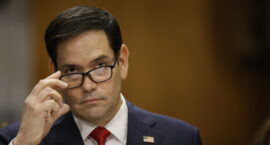
Secretary of State Marco Rubio Will Be a Disaster for Women

On Wednesday, Marco Rubio appeared before the Senate Foreign Relations Committee for his confirmation hearing as the next secretary of state. Rubio is expected to be confirmed without any serious opposition, thanks to the rarity of Cabinet nominee rejections and public support for Rubio, even among Democratic senators. (Rubio served for years on the Senate Foreign Relations Committee as a senator from Florida, and Democrats like Jeanne Shaheen of New Hampshire and Cory Booker of New Jersey greeted him warmly on Wednesday.)

But make no mistake—Rubio’s history of hostility toward reproductive autonomy and his recent embrace of “America First” nationalism heralds a State Department that decimates women’s health, human rights and well-being.