When the Headline Gets It Wrong: Feminism Isn’t the Problem—Patriarchy Is

When I saw the headline “Did Women Ruin the Workplace? And if So, Can Conservative Feminism Fix It?” in The New York Times Opinion section, my heart sank. It felt like a headline torn from another era—a provocation that had no place in 2025.

False accusations remain extremely rare—estimated at between 2 percent and 8 percent of reports—while roughly two-thirds of sexual assaults are never reported at all. The crisis is sexual violence, not accountability.

Yet, for centuries, women have been labeled “emotional” or “petty” to justify their exclusion from leadership and public life. Hearing these stereotypes revived in 2025—in The New York Times, no less—is disheartening. At a time when reproductive rights are being stripped away and women’s autonomy is under attack, we don’t need pseudo-intellectual nostalgia for patriarchy disguised as debate. We need truth, solidarity and progress.

The message from the writers is clear: Women should know their place. But women already do—it’s everywhere decisions are made, everywhere power is exercised, everywhere the future is being built. We’re not staying in our lane. We made the road. And we’re not going anywhere.


This International Day of the Girl, ‘Doing Nothing Is Not an Acceptable Choice’

On Oct. 11, we celebrate International Day of the Girl, a global call to recognize girls’ rights and confront persistent inequality.

When hope wavers and progress stalls, I look for words that steady me. Recently, I found them in writer Roxane Gay’s powerful essay in The New York Times, “Civility Is a Fantasy,” where she writes: “As a writer, as a person, I do not know how to live and write and thrive in a world where working for decency and fairness and equality can be seen as incivility … I worry and I worry and I worry, and I feel helpless and angry and tired, but also recognize that doing nothing is not an acceptable choice.”

After reading Gay’s words, I reminded myself of the girl I am and the change I lead, and thought about the many girls who might be feeling that same helplessness right now—those watching rights roll back, hearing their worth debated or wondering if their voices still matter. So, on International Day of the Girl, this letter is for them. It’s a call for action.

Grief, Power and the Ongoing Fight for Women’s Rights

From daily violence to decisions over their bodies, women’s suffering is ignored and their losses go largely ungrieved—a reflection of a culture that shapes which rights are protected and whose lives are mourned.

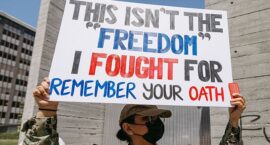
The newly released Beijing report warns that progress is not guaranteed, and regression is already underway. This anniversary must be more than a commemoration; it must be a recommitment. As Hillary Clinton cautions: “This is an all-hands-on-deck moment for women across the world who have benefited from the changes in the laws, regulations, and norms over the last 30 years to realize that there are strong forces at work to try and turn the clocks back.”

The clock will not be turned back—not if we raise our voices, grieve loudly for women and refuse silence.

Women’s Equality Day Has Never Been More Urgent

From reproductive rights and workplace protections, to access to education and voting, the freedoms women have fought for are under attack like never before.

This Women’s Equality Day cannot be symbolic. It must be a reckoning. Because if women’s rights continue to erode, it won’t just be women who lose—it will be democracy itself.

The time for quiet patience is over. The only way forward is louder, stronger and unstoppable.

Green Dildos and Fragile Egos: Misogyny’s Latest Play in Women’s Sports

The latest headline to make me question reality: green dildos thrown on the court during WNBA games.

Yes, that happened. And no, it’s not harmless.

When they can’t match our talent, they reach for props. When they can’t silence us, they try to embarrass us.

In an era when women’s rights are being stripped away—when reproductive freedom, bodily autonomy and basic equality are under siege—this is not the moment to shrug off “pranks” aimed squarely at women. We are already fighting to keep our resilience and focus intact. We cannot pretend that degrading women in the public eye—particularly women who have achieved power, visibility and influence—is just part of the game. It isn’t. It’s misogyny with a juvenile laugh track.

Finding My Fight Again: How Billie Jean King Lit My Fire—Twice

I’m tired. Maybe you are too.

I’ve been fighting for gender equality for over two decades—pushing against outdated norms, challenging industries that resist change and speaking up in rooms where I wasn’t always welcome. And while I’ve seen progress, the setbacks have a way of draining your spirit.

But last week, I felt a shift in my energy.

I saw Billie Jean, the new play about Billie Jean King, at the Chicago Shakespeare Theater. And just like that, something inside me reignited.

I’m writing thisn ot to share a story about a play, but to share a truth about persistence. The path to equality is long, winding and punishing. But it is also worth every step.

Title IX at 53: How One Law—and One Match—Changed Everything

Monday, June 23, marks the 53rd anniversary of Title IX, the 37 words that changed everything for girls and women in the United States.

A year after Title IX became law, another historic moment unfolded, not in Congress, but on a tennis court in the Houston Astrodome. On Sept. 20, 1973, Billie Jean King faced off against Bobby Riggs in what was billed as the “Battle of the Sexes.”

Title IX was a beginning, not an end. On its 53rd anniversary, let’s recommit to finishing the fight for equality, and for every girl who still has to prove she belongs.

‘Three Dolls or Four Dolls’: Misogyny, Racism and the Lies We Tell Our Children

The media is casting Donald Trump as this year’s Scrooge after he doubled down on the need for high tariffs and fewer dolls in an interview with Kristen Welker. “I don’t think a beautiful baby girl that’s 11 years old needs to have 30 dolls,” he said. “I think they can have three dolls or four dolls.”

Clearly, this was an attempt to deflect from economic hardship (and buying dolls are the least of parents’ concerns when the price of essentials like car seats and strollers are soaring). Because, let’s be clear, girls didn’t create tariffs or supply chain crises. Yet, Trump finds it easier to belittle girls than to acknowledge the failures of male-dominated policymaking.