


Historic wins reveal what’s possible when systems evolve to support women’s leadership.
At RepresentWomen, we’ve been watching this year’s election cycle closely—not just for who would win, but for what the outcomes would reveal about how women win and the structures that make those wins possible. From governors’ mansions to city halls, legislative chambers to ballot measures, voters across the country affirmed a simple but powerful truth: When we design systems that work for women, women lead and democracy strengthens.
This year’s races showcased both the momentum and the mechanics of progress. Record numbers of women ran in state legislative contests. Cities across the country tested reforms like ranked-choice voting to create fairer elections. And two of the most closely watched gubernatorial races in the nation—in Virginia and New Jersey—produced groundbreaking results for women’s representation that will reverberate far beyond their state lines.
Together, these outcomes mark a turning point for gender parity and democratic design. They’re proof that systems reform and representation are inseparable, and when women gain ground, they bring with them new models of leadership, collaboration and inclusion with them.
Building a Democracy That Works for Women, Works Better for Everyone
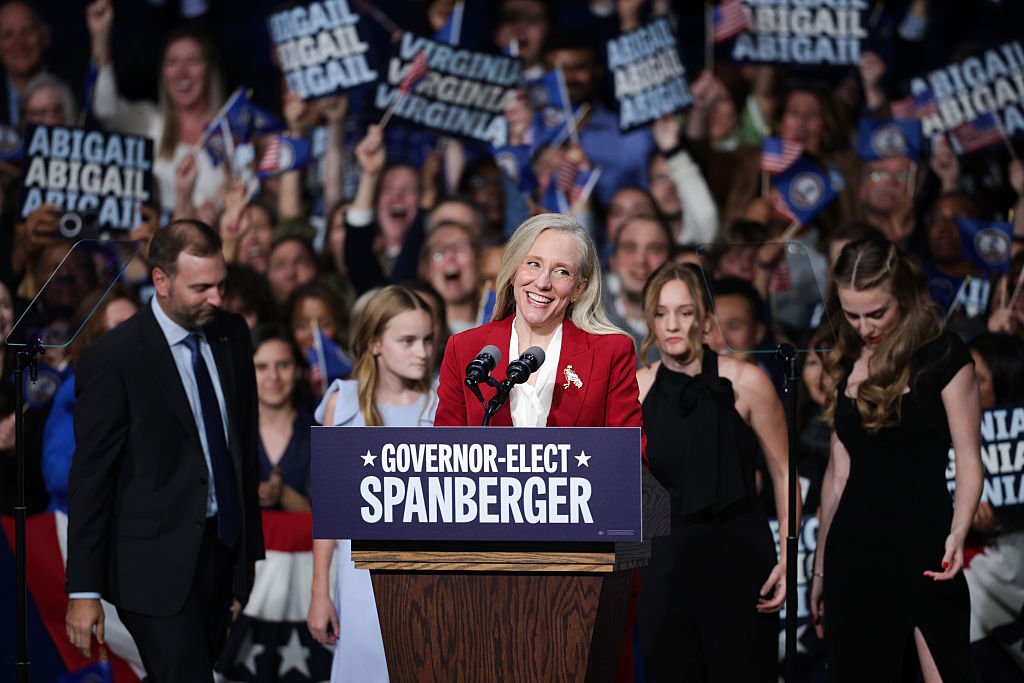
In a night of firsts, two close friends and former roommates, Abigail Spanberger of Virginia and Mikie Sherrill of New Jersey, made history together. Spanberger became Virginia’s first woman governor-elect. At the same time, Sherrill became New Jersey’s first Democratic woman elected governor and the first female military veteran to serve as governor in American history.
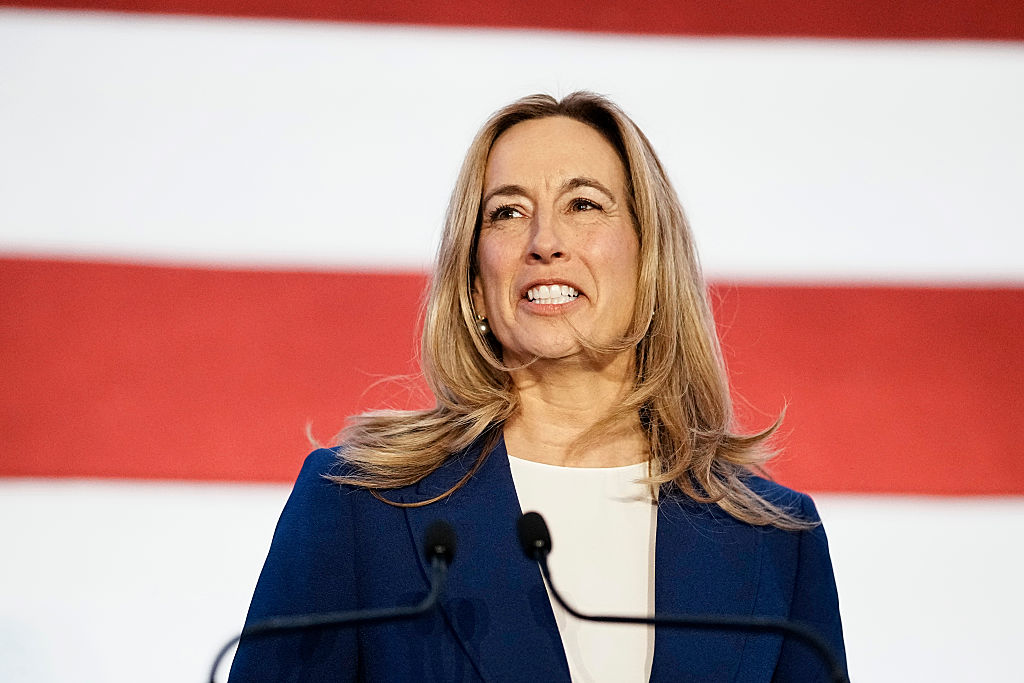
Their personal connection made these victories especially powerful, but their paths also reveal something deeper about how change happens. Both women built careers through public service, coalition-building and pragmatic leadership. Their journeys—from the halls of Congress to the governors’ mansions—demonstrate what’s possible when systems evolve to support women’s ambition and when pipelines are strong enough to sustain it.
In Virginia, the breakthroughs didn’t stop there. Voters also elected state Sen. Ghazala Hashmi as lieutenant governor, making her the first Asian American and Muslim woman ever to hold statewide executive office in the Commonwealth. Her win expands the story of representation; not just who leads, but whose experiences are reflected in leadership.
Governor-elect Spanberger’s victory speech captured the kind of leadership our democracy needs: respectful, collaborative and focused on results for all Virginians. Standing on stage for her victory speech, she said:
“I would like to thank my opponent for a hard-fought race. The lieutenant governor’s story, her military service and her years of service here in Virginia deserve our respect and our gratitude, and I ask that you join me in wishing her and her family well. I also know that those who were supporting my opponent are disappointed today, but I want you to know that my goal and intent are to serve all Virginians. … I believe in the idea that there’s so much more that unites us, as Virginians and as Americans, than divides us.”
At RepresentWomen, we’ve long said that when women lead, they bring empathy, pragmatism and bridge-building to the forefront of governance. These are not soft skills, but rather the foundations of effective democracy. And this year, those qualities won at the ballot box.
And these wins are not just individual milestones—they shift the distribution of power. For years, RepresentWomen’s Gender Parity Index has placed both Virginia and New Jersey in the lower half of state scores. Virginia received an “F” a decade ago and has earned a “D” grade every year since 2017, with women holding just one of the state’s three executive offices and roughly 35 percent of legislative seats. New Jersey has been similarly stagnant, maintaining a “D” grade consistently since 2003. However, with Spanberger and Hashmi’s victories in Virginia, our projections show that these victories will lift the state into “C” territory, with Virginia’s single change at the top worth nearly a 10-point gain on its own.
Further gains among women in New Jersey’s lower house could push the Garden state toward a “B”; however, we cannot confirm the state’s exact letter standing until all races are confirmed.
Victories at the executive level in Virginia and New Jersey will likely demonstrate how a single win effects representation across the whole system. Governors shape appointments, influence legislative priorities and open the door for more women to step into positions of power. When women lead at the top, the pathways widen for all who follow.
State Legislatures: Where Momentum Compounds
In Virginia’s House of Delegates, women built on the statewide momentum that Governor-elect Spanberger and Lieutenant Governor-elect Hashmi set in motion. With a record number of women nominees on the ballot this cycle, the 2025 elections produced new milestones and a clear signal that structural change and candidate recruitment are reinforcing one another.
According to data from the Center for American Women in Politics (CAWP), women’s representation in the Virginia General Assembly will reach a new record high in 2026, both in the full legislature and in the House of Delegates. Women currently hold 35 of 100 House seats (27 Democrats, 7 Republicans) and 49 of 140 seats overall in the General Assembly (38 Democrats, 11 Republicans). Following this year’s elections, at least 41 women (36 Democrats, 5 Republicans) have won seats in the House of Delegates, surpassing the previous record of 36. Four races featuring women candidates remain too close to call, meaning that the total number could rise even higher.
This is compounding progress in action. As parties have strengthened recruitment pipelines and voters have responded to more inclusive systems, Virginia has steadily climbed toward gender balance. Representation is no longer confined to symbolic breakthroughs at the top, but is taking root throughout the ranks of power across the state.
New Jersey tells a slightly different but equally instructive story. While the state will fall short of its record for women in the legislature, the data shows durable gains. As of now, at least 22 women (20 Democrats and 2 Republicans) continue to serve in the upper chamber. Ten races (6 Democratic, 4 Republican) remain too close to call, meaning women’s overall share could still increase.
Additionally, women currently hold 31 of 80 Assembly seats in New Jersey (25 Democrats and 6 Republicans) and 40 of 120 legislative seats overall (32 Democrats and 8 Republicans). Even with modest fluctuations, the trend remains clear: women’s representation in the Garden State has stabilized at a high watermark, sustained by growing pipelines of women legislators and the rising visibility of women executives.
Together, these results illustrate how systems reform and candidate support work in tandem—what we at RepresentWomen call the “Twin-Track Approach.” When rules encourage fair competition and parties commit to recruitment, women not only enter politics; they stay, advance and lead.
City Halls: Milestones and Proof that Design Matters
The local level is where new rules and new leaders meet, and this year, women made history across major cities.
- In Detroit, voters elected Mary Sheffield as the city’s first woman—and first Black woman—mayor, a milestone decades in the making for one of the country’s most storied political cities.
- In St. Paul, Kaohly Vang Her became both the city’s first woman and its first Hmong American mayor, joining an all-women city council and reflecting a community deeply shaped by inclusion and representation.
- In Albany, Dorcy Applyrs was elected as the city’s first Black mayor, underscoring how leadership pipelines and movement partnerships translate into governing power.
- In Greensboro, North Carolina, voters chose Marikay Abuzaiter as mayor, expanding the map of cities led by women across the South.
- In Boston, Mayor Michelle Wu—the first woman and person of color elected to lead the city—won a second term unopposed, demonstrating how once “firsts” can become fixtures when the systems evolve to sustain women’s leadership.
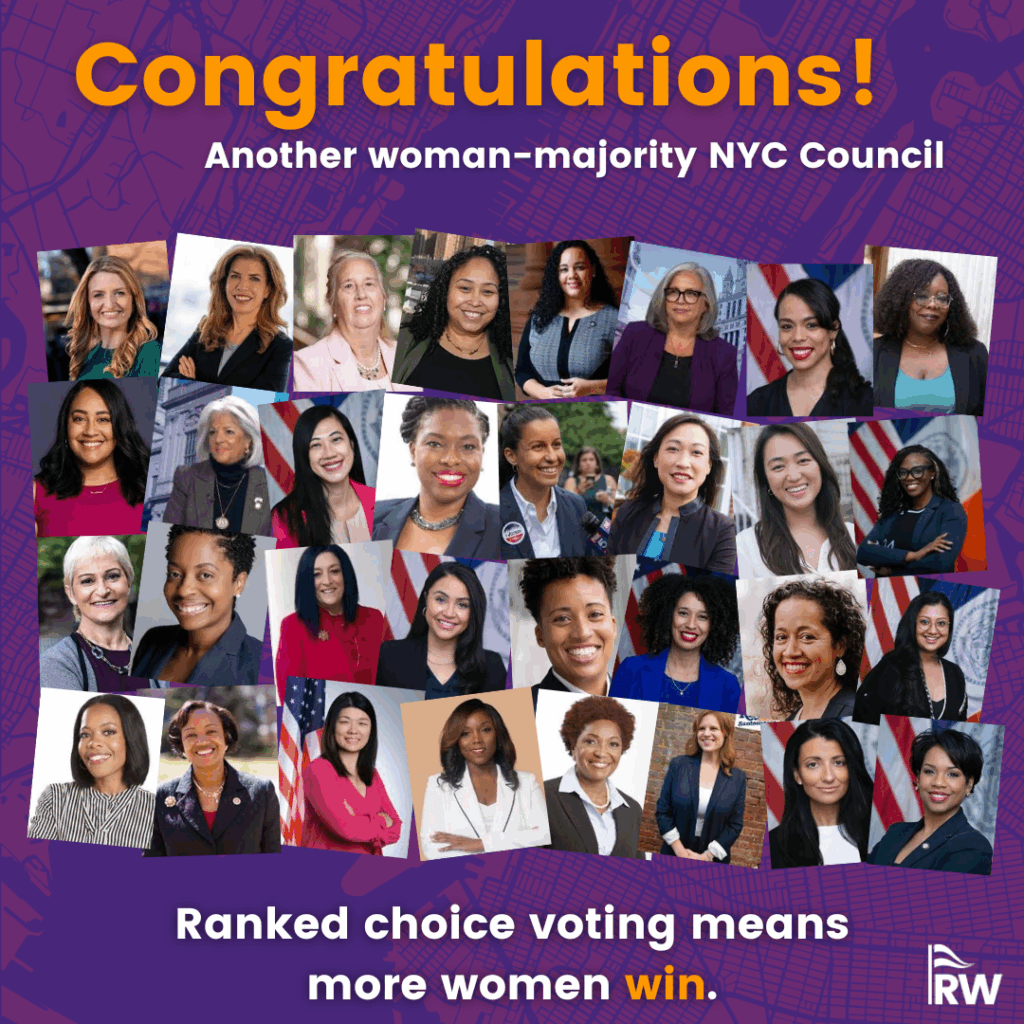
- And in New York City, women sustained their super-majority on the 52-member Council—rising to 32 women after Brooklyn’s Kayla Santosuosso won an open seat and the Bronx’s Shirley Aldebol flipped the city’s only Republican-held Bronx seat from R to D. The details matter: Women didn’t just win; they expanded their foothold in pivotal districts, proving that once systems shift, new norms can take hold.
Elsewhere, women’s representation in mayoral leadership remains dynamic. Seattle’s race remains too close to call, and Miami’s election will head to a runoff, both featuring women candidates in competitive, high-profile contests.
Altogether, 27 women now serve as mayors among the nation’s 100 most populous cities. Of these, four are Asian or Pacific Islander women, eight are Black women, three are Latina and twenty-two are white women. These numbers tell a story of both representation and resilience, showing how women’s leadership continues to expand in size, scope and impact.
Additionally, in another historic first, Alicia M. Johnson has won a special election to serve on Georgia’s Public Service Commission (District 2), becoming the first Black woman to serve in a statewide elective executive office in Georgia.
Ranked-Choice Voting: Better Rules, Better Representation
It’s often said that the rules of the game shape the players on the field. This cycle again demonstrated how ranked-choice voting (RCV) reduces vote splitting, rewards broad coalitions and helps women compete on an equal footing.
In Fort Collins, Colorado, voters used RCV for the first time and elected Emily Francis mayor in an RCV contest that demonstrated majority support and healthy competition without “spoiler dynamics,” as the second runner-up was also a woman candidate.
In Greenbelt, Maryland, voters approved an advisory measure to adopt RCV, making it part of a national record in which RCV has succeeded now 32 of the last 33 times it has gone to voters. We’re especially proud that this win was led by RCV Maryland, whose executive director, Michelle Whittaker, also chairs RepresentWomen’s board. This victory showcases the power of women not only in races but also in leading reform initiatives that open the doors for increased women’s representation in future elections.
Why These 2025 Wins Matter for Women’s Representation
It’s tempting to view 2025 as a year of “firsts.’ But the real story is design and the growing public will to sustain it.
The record-tying 14 female governors who will serve in 2026, the increase in Virginia’s and New Jersey’s statewide parity, and the durability of women’s supermajorities in places like New York City, along with the spread of voter-centered rules like ranked-choice voting, collectively mark a structural evolution in our democracy. The architecture of political power is slowly shifting toward greater inclusion.
Still, systems alone don’t create transformation—people do. The exit polling data from this election reveal just how pivotal women voters were in shaping that change.
In Virginia, Governor-elect Abigail Spanberger won a commanding 65 percent of women voters. Among men, the race was roughly split, underscoring the gender gap that continues to define modern politics.
Spanberger’s success among women, especially women of color (96 percent Black women) and young women voters (82 percent women ages 18-29), proved decisive in breaking one of the country’s oldest executive glass ceilings.
In New Jersey, the pattern repeated. Governor-elect Mikie Sherrill won 62 percent of women voters, compared to 37 percent for her opponent, according to CNN polling. She led across subgroups, including 95 percent of Black women, 73 percent of Latina women and 54 percent of white women—coalitions broad enough to deliver a decisive statewide victory.
These figures aren’t just data points; they are mirrors of what voters are demanding: balance, collaboration and leadership that reflects the complete diversity of America.
Yet, progress remains fragile, despite recent victories. Systems that are outdated or adversarial to participation still limit women’s power, especially for women of color, younger women, veterans, immigrants and caregivers. But when reforms expand access and representation expands in response, the result is compounding momentum toward an architecture of democracy that finally reflects all the people it serves.
As I wrote in a thought piece earlier this week, every election tells a story about power—who holds it, who’s excluded and how it changes hands. This year’s election story is clear: When women lead, democracy wins.