


Letter From the Editor: Welcome to 2026! Women Are Shaping What Comes Next.

Welcome to 2026!

Here at Ms., we’re looking forward to the new year, and are prepared for the battles that are in store for us, from Capitol Hill and the Supreme Court to statehouses and ballot boxes, workplaces and classrooms and in our day-to-day lives.

And if 2025 taught us anything, it’s that women will play a decisive role in the outcomes of these decisions—whether in their roles as lawmakers on Capitol Hill, in statehouses and mayors’ offices across the country; in media and in newsrooms; or as a powerful voting block.

As we enter this new year, with so much at stake, know that you can depend on Ms. to keep providing the thoughtful feminist reporting and analysis you count on to stay informed—and ready to fight back.

Here’s to another year of reporting, rebelling and truth-telling. We’re so glad you’re with us!

The Supreme Court Case That Could Shield Unregulated Pregnancy Clinics From Oversight

On Dec. 2, the U.S. Supreme Court heard oral arguments in First Choice Women’s Resource Centers v. Platkin, an unregulated pregnancy clinic’s constitutional challenge to the New Jersey attorney general’s subpoena for information about its operations, including donor records. 

Despite being awash in revenue, and serial reports of fraud, waste and illegal use of taxpayer funds, these antiabortion clinics are positioning to realize a long-term goal: to “replace” Planned Parenthood and Title X programs and secure federal taxpayer funds to advance an agenda that promotes childbirth and undermines evidence-based healthcare. 

As right-wing politicians decimate the reproductive health delivery system for low-income and uninsured Americans, the UPC industry is ramping up the narrative that their unregulated pregnancy clinics are the answer to the maternal healthcare deserts their policies have created. 

Most media observers are predicting the Court will rule for the crisis pregnancy center, First Choice. If it does, unregulated pregnancy clinics nationwide will be further emboldened to resist any state oversight, including of their medical services. A bold, innovative, multi-front action by reproductive justice advocates, public health professionals and pro-choice officials is the only way we ensure they can’t succeed. 

Women in Politics Weekly Roundup: Miami’s First Woman Mayor; Congress Moves to Reform How We Vote; Forbes Ranks World’s 100 Most Powerful Women

Weekend Reading for Women’s Representation is a compilation of stories about women’s representation in politics, sports and entertainment, judicial offices and the private sector—with a little gardening mixed in!

This week:
—A seachange in New Mexico’s new women-majority legislature.
— The Ranked Choice Voting Act has been introduced in Congress, which would require RCV for all primary and general congressional races beginning in 2030, allowing voters to express their ranked support for multiple candidates.
—Eileen Higgins is elected as Miami’s first woman mayor. She ran on a platform of structural reforms: affordable housing, climate resilience, improved municipal governance and expanded representation.
—Australia enacts a nationwide ban on social media accounts for children under 16.
Forbes 2025 ranking of the world’s 100 most powerful women spotlights an increasingly diverse and influential generation of female leaders across business, politics, technology, media and culture.

… and more.

Keeping Score: 137 Women Are Killed by Partners or Family Per Day; Bipartisan Push for Epstein Files; Trans Day of Remembrance and Native Women’s Equal Pay Day

In every issue of Ms., we track research on our progress in the fight for equality, catalogue can’t-miss quotes from feminist voices and keep tabs on the feminist movement’s many milestones. We’re Keeping Score online, too—in this biweekly roundup.

This week:
—137 women and girls are killed by intimate partners or family members every day.
—Congress votes overhwlemingly to force the Justice Department to release their Epstein files.
—Donald Trump snaps at women journalists: “Quiet, piggy” and “you are an obnoxious—a terrible, actually a terrible reporter.”
—Violence against trans women remains high.
—DACA recipients are being targeted and detained under the Trump administration.
—Higher-income college students often receive more financial support than they need, while low-income students struggle.
—Tierra Walker died from preeclampsia in Texas after being repeatedly denied an abortion.
—Viola Ford Fletcher died at age 111. She was the oldest living survivor of the 1921 Tulsa Race Massacre. 
—North Dakota’s total abortion ban was reinstated after the state’s Supreme Court reversed a temporary injunction from a lower court. There are now 13 states with total bans.

… and more.

Ms. Global: 300 Schoolchildren Kidnapped in Nigeria, Italian Parliament Recognizes Femicide and More

The U.S. ranks as the 19th most dangerous country for women, 11th in maternal mortality, 30th in closing the gender pay gap, 75th in women’s political representation, and painfully lacks paid family leave and equal access to health care. But Ms. has always understood: Feminist movements around the world hold answers to some of the U.S.’s most intractable problems. Ms. Global is taking note of feminists worldwide.

This week: News from Nigeria, Afghanistan, Japan and more.

Seventy Years After Rosa Parks’ Arrest: How We Commit to Carrying the Work Forward

Weekend Reading for Women’s Representation is a compilation of stories about women’s representation in politics, sports and entertainment, judicial offices and the private sector—with a little gardening mixed in!

This week:
—The 2025 elections prove that voters across the country want women as their leaders.
—Democratic leaders are exploring ranked-choice voting for the 2028 presidential primaries.
—In a Tennesee special election, Democratic nominee Aftyn Behn surpassed electoral expectations for her congressional district.
—Fort Collins, Colo., elected Emily Francis as mayor in its first use of ranked-choice voting.
—College student Any Lucía López Belloza was deported in Massachusetts on her way home to Texas for Thanksgiving.

… and more.

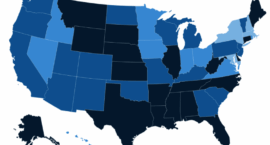
Where ACA Premiums Could Spike Most in 2026 if Congress Lets Enhanced Tax Credits Expire

The Affordable Care Act (ACA) offers premium tax credits to help make health insurance more affordable. Under original Affordable Care Act provisions, an income cap for premium tax credits was set at 400 percent of the federal poverty level. Above that threshold, federal financial assistance was not available, creating a “subsidy cliff.”

Enhanced premium tax credits expire at the end of this year. Enrollees currently receiving premium tax credits at any level of income will see their federal assistance decrease or disappear if enhanced premium tax credits expire, with an average increase of 114 percent to what enrollees pay in premiums net of tax credits.

The impact will be greatest for those whose unsubsidized premiums are highest: older Marketplace enrollees and those living in higher-premium locales.

Making the Invisible Visible: How Misogyny Is Driving Rising Political Violence

We have seen a rise in political assassinations and assassination attempts, along with violent extremist attacks that have ticked upward for years. Mass casualty plots in the U.S. have increased by over 2,000 percent since the 1990s, leading to the deaths or grievous injury of thousands of people in shootings at schools, grocery stores, theaters, parades, concerts, houses of worship and more.

In the search for explanations, the public and policy discourse is most often swept up in heated debates about far-left or far-right ideologies.

But the data shows that the biggest and clearest predictor of mass shootings, across ideologies, sits somewhere else: in rising gendered grievances, patriarchal backlash, and the perpetrators’ histories of gender-based violence and misogyny.

Sex, Power and Impunity: Epstein’s Legacy in Historical Perspective

The scandal that has preoccupied much of mainstream U.S. politics has, been, at one level, delightful: We have seen extremist Republicans—Reps. Marjorie Taylor Greene, Lauren Boebert, Thomas Massie and Nancy Mace—break with their party and its president in an effort to force into light the U.S. Department of Justice files on convicted sex trafficker and pedophile Jeffrey Epstein. 

The story is almost irresistible for critics of the current national administration, feminists among them: Will we finally get to items from Epstein like the CD labeled “girl pics nude book 4”? What might these materials reveal? And whose misbehavior might they reveal?  

Fire the starting gun on analyses from every liberal, left, critical corner. Claims abound of shifting coalitions, changing tides, pages turned, a president’s authority shredded. 

But there are still as many questions stirring in the Epstein pot as there are answers. Why did these particular Republicans break from the pack? Is this a contemporary Republican version of feminism? 

And beneath them all: What good does it actually do us—or Epstein’s particular victims, or the scads of other victims of sexual coercion, trafficking and other mistreatment—to raise the heat so high on this particular scandal?