


The Epstein files are forcing a reckoning—but with what, exactly?

“[W]ith our response . . . we in turn create the unseen structure within which our children must live.”
—Suzannah Lessard, ‘The Architect of Desire’
Adapted from Felicia Kornbluh’s Substack History Teaches … post, “MTG & Andrea Dworkin: From the Stanford White Murder and the ‘Trial of the Century’ to Jeffrey Epstein.”
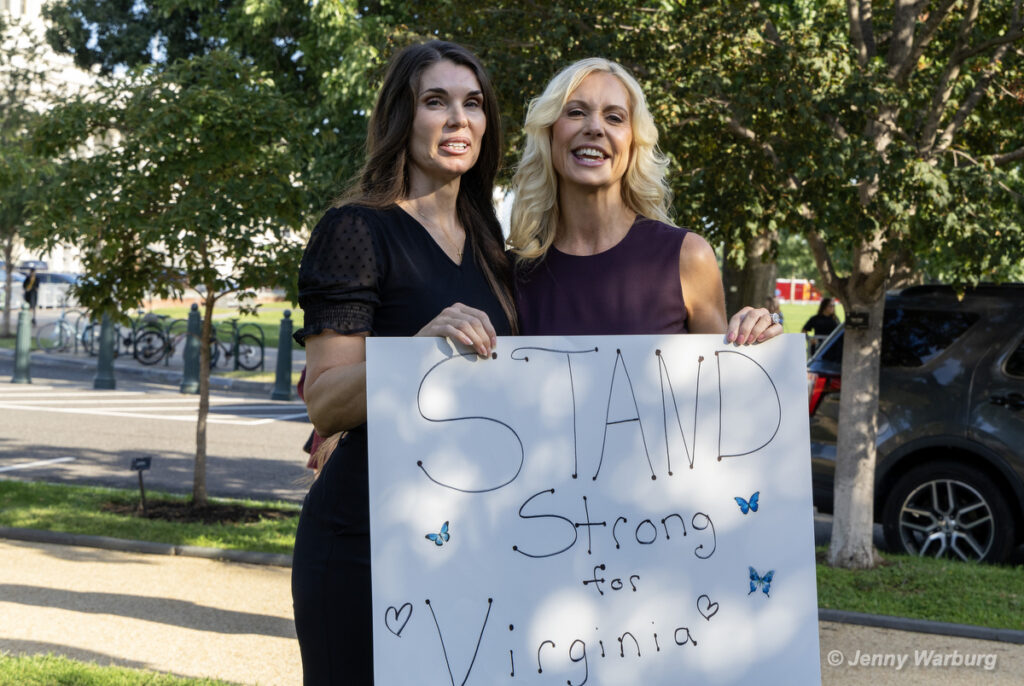
The scandal that has preoccupied much of mainstream U.S. politics has, been, at one level, delightful: We have seen extremist Republicans—Reps. Marjorie Taylor Greene, Lauren Boebert, Thomas Massie and Nancy Mace—break with their party and its president in an effort to force into light the U.S. Department of Justice files on convicted sex trafficker and pedophile Jeffrey Epstein.
In the face of their pressure, both houses of Congress passed a bill calling for the documents’ release. President Donald Trump signed it on Nov. 19. It pledged the Department of Justice to release more, possibly much more, by Dec. 19. The department could in fact release some or all of the materials at any point prior to that date, and even on that date, we may not see everything that is to be seen.
The story is almost irresistible for critics of the current national administration, feminists among them: Will we finally get to items from Epstein like the CD labeled (according to People) “girl pics nude book 4”? What might these materials reveal? And whose misbehavior might they reveal?
Fire the starting gun on analyses from every liberal, left, critical corner. Claims abound of shifting coalitions, changing tides, pages turned, a president’s authority shredded.
But there are still as many questions stirring in the Epstein pot as there are answers. And beneath them all: What good does it actually do us—or Epstein’s particular victims, or the scads of other victims of sexual coercion, trafficking and other mistreatment—to raise the heat so high on this particular scandal?
Some thoughts:
Why did these particular Republicans break from the pack? Why did they win?
In part, because their politics have both roused mass, populist anger and tamed it.
As Republicans in a Republican era, they have chosen not to take meaningful action to improve the lives of most of the screwed-over people in their districts: Northwest Georgia (Rep. Taylor Greene), the Eastern Plains of Colorado (Rep. Boebert), Lexington, Ky., and its environs (Rep. Massie) and the South Carolina Lowcountry (Rep. Mace). They have intuited, or learned, it is possible to maintain the kind of elite support that funds Republican political campaigns by not pursuing meaningful fights for better and cheaper healthcare, or wages that match the nation’s recent productivity gains, or paid time off from work or decent childcare.
Instead, they have signaled being “on your side” to non-elite constituents by setting themselves against a phantom version of the real elites that run the country: a shadowy, mysterious, powerful cabal that preys on the most vulnerable (girls) for purely evil reasons.
It’s always been a little blood libel-y—a couple inches away from an anti-Semitic conspiracy theory … or, when Rep. Taylor Greene opined in 2018 about a “space laser” controlled by the Rothschilds being responsible for a California wildfire, zero inches from anti-Semitic conspiracy theory. It’s also a convenient parallel to the anti-government ideology that appeals to rich people and autocratic foes of independent expertise that can keep them from taking all the state power.
This kind of 21st-century conspiracism landed, via “Pizzagate,” on well-heeled Democrats, such as Hillary Clinton and the Clinton-era insiders, who stayed at or near the center of power for decades after their 1990s heyday—and who were, in actual fact, “globalists” who helped pass trade agreements that have been blamed for much of what ails rural, extraction-heavy and formerly manufacturing-centered parts of the U.S.
The whole swirl around Epstein is too much like Pizzagate and QAnon to drop, for those who have built their careers walking that particular tightrope, stoking the anger, letting it dribble away in mass fantasy, then stoking it again and defusing it again.
Is this a contemporary Republican version of feminism?
Maybe … [Reps. Marjorie Taylor Greene, Lauren Boebert and Nancy Mace] were finally fed up with defending other Republicans who stand out on social media by ‘just kidding’-ly writing about women’s low IQ, divine destiny to raise children and incapacity for the elective franchise.
I prefer to call “girl power” politics—not “feminism,” because that would imply a serious ambition to change the social power balance between people who benefit from male-ness and masculinity, and those who don’t. The work of three far-right female Republicans, plus Rep. Massie, isn’t interested in social change, so far as I can tell. But it is interesting.
Rep. Mace is the clearest example of not-feminist “girl power” politics, although nothing about her is very clear: She has described herself as a survivor of sexual assault from a time when she was underage, and accused four men in her district, including her ex-fiancé, of having engaged in sexual assault, trafficking, and the nonconsensual sharing of nude images of women, herself included. She describes herself as “the leading Republican voice on women’s issues.” She has also been the leading Republican voice against transgender rights, including the rights of trans women such as Rep. Sarah McBride, whose presence in the U.S. House of Representatives triggered Mace’s advocacy of a bill that would reserve single-sex bathrooms and locker rooms in the Capitol for people whose “biological sex” matched that of the facility.
I don’t know about Massie, but Greene and Boebert are savvy in the way political people are expected to be savvy these days (lots of social media, eye-popping moments of rudeness, and race-to-the-bottom demeaning of people who are less straight, cisgender, white and Republican than they are).
Maybe one piece of the Epstein story for them is that they were just, finally, fed up with defending other Republicans who stand out on social media by “just kidding”-ly writing about women’s low IQ, divine destiny to raise children and incapacity for the elective franchise.
Is the Epstein scandal a grand metaphor?
I have read a wealth of opinion pieces recently that treated the scandal(s) as a big symbol, or synecdoche, taking the part for the whole, of contemporary capitalism.
But as a feminist, a real one, and “not,” as the late Andrea Dworkin said, “the fun kind,” I can’t turn the relationship between Epstein’s fancy network and Epstein’s victims into a metaphor for contemporary capitalism.
I also can’t get analytical about the scandal’s impact on the midterm elections. It’s repellant and revealing—sure, of all the other power relations and inside dealing and inability to appreciate the worth of other human beings, but first and most of all, of the ongoing and ubiquitous subordination of people who are socialized and live as women.
[It] may have become a metaphor … but it was real first. And what it was real about was the priority of men’s access to young women’s, and girls’, bodies.
Does Epstein-ism prove radical feminists were right about everything?
“Radical feminism” from the late 1960s through early ’80s, such as the feminism of Dworkin and some of her “women’s liberation” predecessors, had three big ideas.
First, sex hierarchy was primary—comparable to class hierarchy and not reducible to it, a prime mover in human history. In other words, it was vitally important for those who benefited from them to preserve sex- (or gender-) based power differentials, and those differentials shaped every aspect of our lives.
Second, and related, the system didn’t just come into being naturally and anonymously; in what used to be understood as a binary, male-female world, men as a class were the enemy of women as a class. They suffered, too, under this soul-destroying and dehumanizing system. But they benefited, too, systematically and predictably, and too much for us to count on them to be full partners in creating something different.
Third, and this comes a little later, sex itself, meaning access to women’s bodies, whether or not the women are genuinely interested or even willing, is at the root of much masculine behavior.
I think about this a lot with our current president: Did he always want the wealth and celebrity in order to abuse women, to violate their bodies and psyches, to create and preserve the right to ogle? Perhaps that was as important as any other motivation—not that being “famous,” as he famously described himself, had as a delightful side-benefit the unconstrained and endless objectification of a group of other people, but that the opportunity to grab and grope has been the point of everything else.
“Sexuality is to feminism,” legal theorist Catherine MacKinnon wrote, “as work is to Marxism: that which is most one’s own, yet most taken away.”
We made fun of these theories for a while, we hyper-well-educated people in feminist or feminist-adjacent humanities and social science fields. Dworkin and MacKinnon were the embarrassing feminists, running around with right wingers, trying to outlaw pornography, failing to understand how much play and imagination and fungibility there was in sex and gender.
The critique wasn’t wrong. Some things are fungible. Some women have a lot of power. Some men refuse to take up the masculine power that’s readily available to them. Journalist Ellen Willis and femme activist and Lesbian Herstory Archives founder Joan Nestle insisted sexuality could be one’s own and a source of fantasy, pleasure and its own forms of radicalism (including anti-patriarchy radicalism), even as it was also an arena in which patriarchal power played itself out.
The favorite reading in my history of feminism course has been, for over two decades, Nestle’s essay, “My Mother Liked to Fuck,” a brilliant and impassioned defense of her straight mother’s sexual desire, in the face of feminist efforts to describe women as sexual victims, only, and never agents.
As a historian and fan of grassroots social change, as well as of lesbian, gay, trans and straight writers who insist on our sexual agency, I would love to believe that everything has changed. And that the kind of totalizing view of men, women and sex that floated through certain feminist circles 40 years ago, has been proved wrong.
But still. Here we are.
Is the Epstein scandal just like earlier scandals of sex and power? Hasn’t anything changed?
I have been thinking a lot in the past two weeks about my friend Suzannah (“Suki”) Lessard, a truly great writer and brave person. The great-granddaughter of a notorious and yet still-celebrated sexual villain, architect Stanford White, Lessard is one writer who challenges us to think seriously about sex, money and power in this moment.
Lessard came to the notice of major magazine editors when she was quite young, no doubt because of her fierce intelligence and brilliant prose. She is probably best-known by her ability to drive straight into the busy downtown, as it were, of the salacious and celebrity-laden scandal of women’s sexual exploitation. Her writing on the subject, from the late 1970s onward, left no glamour behind it, except the glamour of her truth-telling. There was nothing winking or self-dealing about the way she approached the subject, no sly hope for partisan advantage or effervescent schadenfreude.
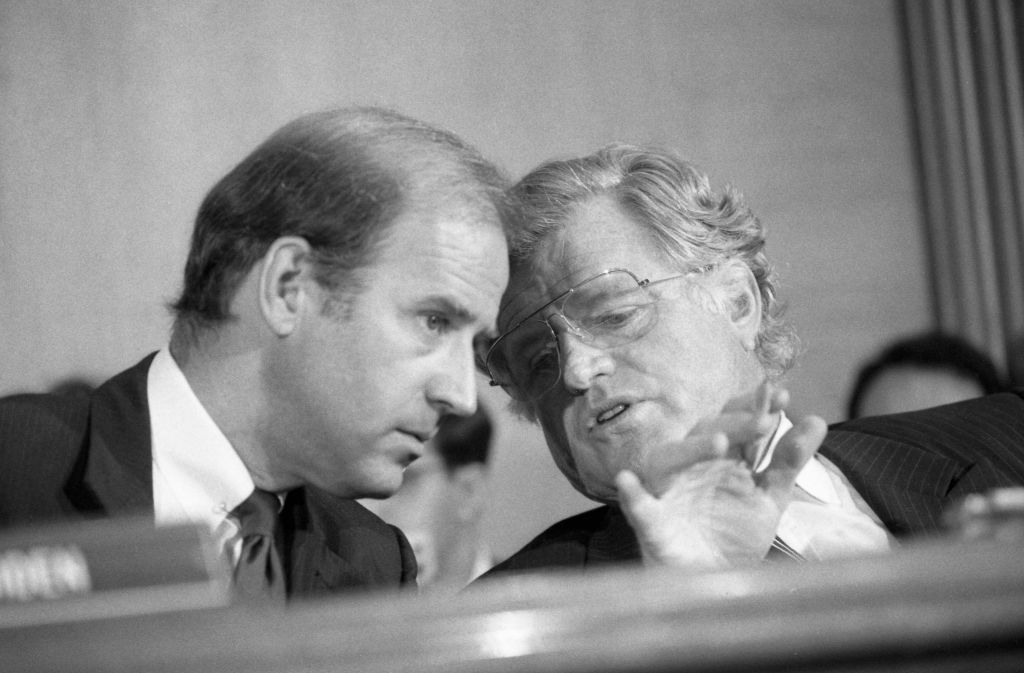
A great early bombshell, 45 years ago, was a sustained treatment of the sexual behavior of Sen. Ted Kennedy, then a progressive presidential hopeful planning a primary run against the unpopular Democratic president Jimmy Carter. The essay was “Kennedy’s Woman Problem/Women’s Kennedy Problem.” It was, the internet tells me, originally solicited by The New Republic, but dropped before publication and appeared in The Washington Monthly in December of 1979.
In the piece, Lessard plain spoken-edly and clear-eyedly examined what was then known about Kennedy’s near-constant and fleeting sexual “dalliances.” She insisted the reader take them seriously, as a potential index of character, as at least raising legitimate questions about his ability to work with women on grounds of equality.
Lessard’s most extraordinary and sustained work in this vein is the beautiful and shattering The Architect of Desire: Beauty and Danger in the Stanford White Family. The book is part family history, part memoir, part meditation on the relationship between place and self, plus a study of one of the great but terrible scandals of the 20th century, all shot through with sex and celebrity.
The architect Stanford White was Lessard’s almost unavoidably remembered forebear. White’s firm (McKim, Mead and White) catered to the super-rich of his day—so much so and so iconically that White is a recurring character in the hit HBO serial The Gilded Age. He was the Ted Kennedy of his day, if not the Epstein: a famous and rich man, forever on the sexual prowl, whose wealth and fame did not incline him to limits.
“Perhaps,” Lessard writes in Architect, “because it was a story that reverberated right into conditions in my own life … The mere mention of my great-grandfather—especially in public, unexpectedly—could jolt my system, disorienting me, blowing out my circuits with a horrible, smoking mixture of pride and shame.”
With a group of friends, the married White in 1887 founded a “Sewer Club,” at which they could indulge their “lower” impulses, drinking and engaging in fleeting sexual affairs with women who had less social and financial capital than they had.
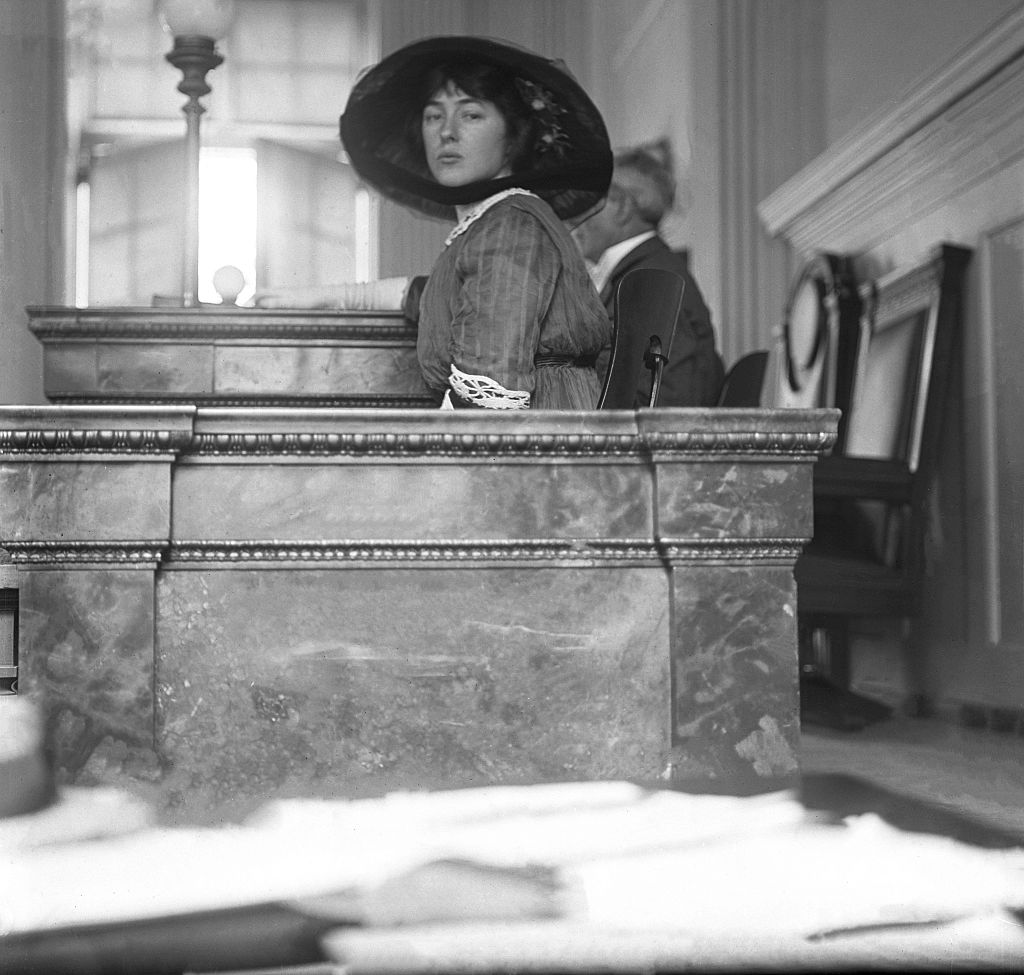
When he was 46, White became infatuated with the 16-year-old model Evelyn Nesbit. He became close to her, and won the acquiescence of her mother, by spending money on them. According to the record in his murderer’s trial, White raped Nesbit when she was drunk and unconscious. (For a quick primer, see the Library of Congress’ study guide.)
Nesbit ultimately married another wealthy (but younger and available) man, Harry Thaw. Thaw became obsessed with White, and with the idea of his wife’s defilement at the hands of this libertine grandee of New York City. He shot the famous architect at point blank and was acquitted for the deed after two trials (in the first, the jury deadlocked) and almost two years of salacious, wall-to-wall coverage of White, his circle, the sexual mores of the rich and famous, the trials and tribulations of young working girls or women and the rot at the heart of it all.
Thaw’s behavior was excused on grounds of insanity. He may indeed have been mentally unwell. However, his defense was an exercise in effective storytelling. His acquittal was more a move toward justice for aggrieved ordinary men and, to a lesser degree, exploited women and girls, than it was an assessment of Thaw’s mental fitness.
Suzannah Lessard’s work gained gravity from the certainty at the heart of it, that the people in the famous American story were real, that their crimes and moral lapses were discrete occurrences—money taken from the billfold to get Nesbit’s mother out of town for long enough to enact the rape, the blood on the sheets, the generations that followed, including Lessard’s own generation, keeping secrets, making new ones.
The “Stanford White affair,” like our own proliferating Epstein-isms, may have become a metaphor, and especially a metaphor for vast inequalities of wealth in a society whose government lagged far behind the destructive capacities of its new capitalists. But it was real first. And what it was real about was the priority of men’s access to young women’s, and girls’, bodies.
Things have changed. As weird and oblique to feminism as they may be, the Republican women who forced the Epstein document release are evidence of change over time from the Stanford White era. As retrograde as their politics may be in most respects, these legislators have no analogue from the “Gilded Age.”
Liberals and Democrats today do not rush to defend Epstein, or famous Democrats like Bill Clinton, who appear to have been associated with him—as they once would have to silence criticism of Ted Kennedy or Clinton himself.
Theorist Juliet Mitchell described the move toward women’s emancipation as “the longest revolution.” A feminist must rejoice in the promise of justice for any woman, and acknowledge even unsatisfying evidence of that old arc of the moral universe bending the right way. But she/they can also acknowledge that the revolution’s end remains a distant shore today.