
In a year marked by democratic backsliding, cultural reckoning and organized resistance, these feminists reshaped power, through law, leadership, art and collective courage.


More Than A Magazine, A Movement

In a year marked by democratic backsliding, cultural reckoning and organized resistance, these feminists reshaped power, through law, leadership, art and collective courage.
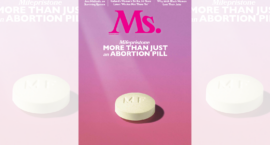
Mifepristone has shown potential to treat a striking range of diseases and conditions, some life-threatening: fibroids, breast cancer, depression, endometriosis, Gulf War illness and maybe even other autoimmune diseases, such as chronic fatigue syndrome and multiple sclerosis. Research also suggests that mifepristone may help prevent some forms of breast cancer and can serve as an effective weekly contraceptive without the side effects of hormonal birth control.
Yet despite the drug’s promise, its development has been repeatedly stymied by abortion opponents who fear wider availability would weaken their attempts to suppress abortion access.
The result? Women are left in needless pain and subject to invasive and unnecessary surgical procedures like hysterectomies.
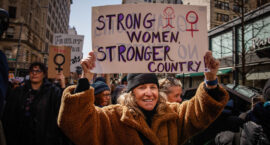
When I started writing for The Contrarian, a funny-not-funny inside joke was whether there would be enough fodder for a weekly democracy column that overtly centers gender. I think you already know the punchline. Suffice it to say, I did not miss a single Wednesday in all of 2025.
For my final entry of the year, we thought it worthwhile to offer a snapshot—a year’s worth of reporting on the depth of damage this administration has wreaked on women’s health, with real-time Contrarian reporting noted.

Congressional discussions on extending the Affordable Care Act (ACA) tax credits, which are set to expire Dec. 31, remain deadlocked as Congress begins its winter recess. Now, millions will see their premiums increase as a result: Payments will more than double on average—some even quadrupling—for enrollees who were eligible for the tax credits.
Without the extension, more and more ACA marketplace enrollees will drop their increasingly costly health insurance plans. This comes at a time when the ACA is more popular than ever—recent polls show that across the political spectrum, three quarters of voters support extending the tax credits.
Could the administration’s latest attack on transgender young people be the administration’s way of deflecting attention from the disaster unfolding in real time for millions of families in need of healthcare?
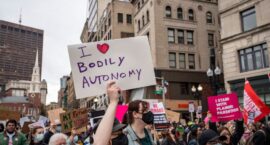
Despite many states imposing sweeping abortion bans after Dobbs, more Americans are having abortions, not fewer, according to the Society of Family Planning’s latest #WeCount report.
“Abortion bans don’t stop people from needing and pursuing essential abortion care,” said Alison Norris, M.D., Ph.D., professor at The Ohio State University’s College of Public Health and #WeCount co-chair.
Despite these increases, Ushma Upadhyay, professor and fellow #WeCount co-chair, warned that unwarranted attacks on telehealth abortion may restrict access in the future. “This care is under assault by abortion opponents’ relentless attacks on mifepristone and telehealth—even though medication abortion is backed by a 25-year track record of safety and gold-standard science, and research shows that telehealth abortion is just as safe and effective as in-person care.”

On Dec. 2, the U.S. Supreme Court heard oral arguments in First Choice Women’s Resource Centers v. Platkin, an unregulated pregnancy clinic’s constitutional challenge to the New Jersey attorney general’s subpoena for information about its operations, including donor records.
Despite being awash in revenue, and serial reports of fraud, waste and illegal use of taxpayer funds, these antiabortion clinics are positioning to realize a long-term goal: to “replace” Planned Parenthood and Title X programs and secure federal taxpayer funds to advance an agenda that promotes childbirth and undermines evidence-based healthcare.
As right-wing politicians decimate the reproductive health delivery system for low-income and uninsured Americans, the UPC industry is ramping up the narrative that their unregulated pregnancy clinics are the answer to the maternal healthcare deserts their policies have created.
Most media observers are predicting the Court will rule for the crisis pregnancy center, First Choice. If it does, unregulated pregnancy clinics nationwide will be further emboldened to resist any state oversight, including of their medical services. A bold, innovative, multi-front action by reproductive justice advocates, public health professionals and pro-choice officials is the only way we ensure they can’t succeed.

Birth control is the single most powerful tool for women’s economic mobility and autonomy in modern history. It changed everything: When women could plan if, when and with whom they wanted to have children, college enrollment soared, dropout rates fell and poverty rates declined. The ability to access contraception has been directly tied to women’s ability to stay in school, build careers and make decisions about their own futures.
So why, in 2025, are we finding ourselves in a messaging war on birth control?

Abortion pills are a critical option for people seeking to end a pregnancy, especially those living in U.S. states with abortion bans who cannot travel out of state for care. In 2023, medication abortion accounted for 63 percent of all clinician-provided abortions in states without total bans.
Given the pivotal role of these medications in preserving abortion access, antiabortion policymakers and advocates are resorting to increasingly unscientific, unconventional tactics to spread mis- and disinformation about medication abortion and about mifepristone, one of two drugs used in most medication abortions in the United States.
In a disturbing new strategy, antiabortion policymakers are attempting to weaponize environmental laws and regulations, citing false claims that medication abortion pollutes U.S. waterways and drinking water.

The feminist telehealth provider Women Help Women is redesigning how abortion pills are packaged to reflect what users actually need: a combination pack that includes one mifepristone tablet and eight misoprostol tablets for use up to 12 weeks of pregnancy.
“It’s a huge revolution of who actually gets to decide when, how and with the support of whom they can have an abortion and until when,” said Women Help Women coexecutive director Kinga Jelinska. “It centers the needs of users rather than institutions or markets. The underlying notion is that abortion can be friendly, and abortion can be easy.”
Self-managed abortion is disruptive. We were told that abortion is a difficult decision; that it has to be difficult to access, and that only doctors control it. Self-managed abortion subverts that,” said Lucía Berro Pizzarossa, fellow coexecutive founder.

At the age of 15, Charlotte Isenberg took to social media to process complicated feelings about a miscarriage after alleged sexual abuse. That was what first brought her to the attention of antiabortion groups.
“Almost immediately, anti-abortion actors threaded a narrative for me between my grief, my miscarriage and anti-abortion sentiment. I clung to it with desperation,” Isenberg wrote.
Feeling isolated from peers due to both her traumatic experiences and the COVID-19 pandemic, Isenberg found a sense of belonging in these online spaces.
But in May 2024, at age 20, Isenberg says her birth control failed, and she became pregnant for the second time. The timing was devastating: She was unemployed, without stable housing or transportation, and preparing to relocate for college—the first in her family to access higher education.
When she couldn’t find adequate support for her unplanned pregnancy, Isenberg scheduled an appointment at her local Planned Parenthood for an abortion consultation, unsure of what she would ultimately decide. Another prominent antiabortion activist, one of Isenberg’s best friends in the movement, found out about her appointment; she and other members of the group intervened aggressively.
Despite this pressure, Isenberg was able to make the decision that was best for her and her body. Since her own abortion, she’s become a reproductive freedom activist, educating others about extremist antiabortion tactics and promoting systemic protections for people navigating reproductive healthcare.