


By repeating junk science and omitting key context, the Times lent legitimacy to antiabortion activists’ latest misinformation campaign.

For the last three years, Students for Life of America (SFLA) has sought to use environmental concerns to attack abortion rights, claiming—without scientific evidence—that the medication mifepristone contaminates U.S. water supplies and threatens wildlife, the environment and potentially human health.
A recent New York Times article amplified this antiabortion effort, presenting these claims without substantial context.
With over 80 full-time staff and a budget of over $17 million in 2024, SFLA has been building the groundwork for this stigmatizing strategy since 2022, when they petitioned the FDA to require any medical provider who prescribes abortion pills to tell patients to bag up their blood and return it to the clinician to be disposed of as medical waste rather than flushed down the toilet. SFLA claimed that the blood contained mifepristone and “fetal remains,” which were contaminating water supplies in ways that could harm wildlife and potentially humans.
The article does not include interviews with anyone informed about the politics behind the campaign or the science of mifepristone in wastewater. Only a brief mention—seven paragraphs in—notes that environmental experts have dismissed SFLA’s claims, before returning to treating the claims as a legitimate concern.
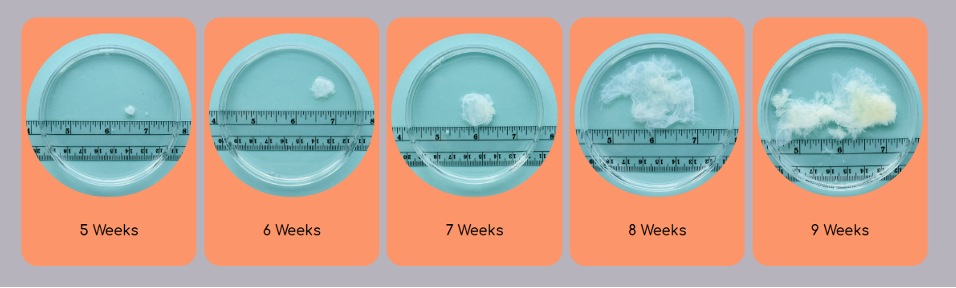
The piece repeats the antiabortion talking point that mifepristone results in “fetal tissue” entering the wastewater system. Abortion pills are most often used during early pregnancy before a fetus forms, which is not until the end of the 10th week of pregnancy—the FDA’s recommended limit for using abortion pills.
The article does not analyze how SFLA’s environmental claims aim to stigmatize abortion and divide the left. Instead, it repeats SFLA’s unsupported claims multiple times, spreading antiabortion rhetoric.
The MYA Network (short for “My Abortion Network”) shows what the products of conception after first-trimester abortions look like in their Issue of Tissue Project. A fetus is not present during the first nine weeks of pregnancy.
The article does not analyze how SFLA’s environmental claims aim to stigmatize abortion and divide the left. Instead, it repeats SFLA’s unsupported claims multiple times, spreading antiabortion rhetoric.
Coverage of reproductive rights stories often includes counter-perspectives, but this article does not.
The article quotes SFLA on “abortion pollution” and Sen. James Lankford (R-Okla.) on “chemical abortion”—misleading language used to stigmatize mifepristone and suggest it is dangerous. The article does not include activists, lawmakers or scientists who could provide context on whether “abortion pollution” has any basis in reality.
Not explained is that there is no evidence that the trace amounts of mifepristone that could possibly get into wastewater are harmful to humans, animals or the environment. Any trace amounts bind to solid waste and are removed by standard wastewater treatment systems before they can reach rivers and streams.
“There is absolutely no evidence that this is an environmental issue,” said Nathan Donley, the environmental health science director for the Center for Biological Diversity. “Pharmaceutical waste can be a big issue when we’re talking about widely used drugs, but to somehow point to mifepristone as a bad actor here is completely disingenuous.”
Jack Vanden Heuvel, a molecular toxicologist at Pennsylvania State University, agreed: “Most wastewater treatment plants are very effective at getting rid of any mifepristone that is there.” He described SFLA’s position as “a pretty weakly supported argument.”

The article also does not mention the FDA findings on the SFLA petition.
In January 2025, the FDA rejected SFLA’s petition on the grounds that the organization “provides no evidence showing that bodily fluid from patients who have used mifepristone (a one-time, single-dose product) is causing harm to the nation’s aquatic environment.” The FDA concluded that “the petition offers only conjecture that remnants of mifepristone in the nation’s water system are causing unknown harm to citizens and animals alike.”
The article also suggests that a test could be developed to identify an individual house where someone who had used abortion pills lives, potentially leading to widespread criminal prosecutions.
Now that the Trump administration controls the FDA, SFLA and 25 Republican members of Congress, led by Sen. Lankford, have renewed the request. In addition, lawmakers in multiple states, including Texas, Idaho, Arizona and Maine, have introduced so-called “clean water” legislation to do just this. Their goal is to shame and stigmatize people who have abortions.
The article also suggests that a test could be developed to identify an individual house where someone who had used abortion pills lives, potentially leading to widespread criminal prosecutions. In this way, it inadvertently amplifies the antiabortion movement’s scare tactics.
SFLA’s vice president of media and policy Kristi Hamrick is quoted stating that the organization is truly concerned about the environment and not trying to use wastewater testing to trace mifepristone use back to particular women. No counter-perspective is offered.
In fact, SFLA has supported laws that have led to the criminal prosecution of pregnant women, and Hamrick has admitted that she does not care about the environment at an SFLA conference last January: “Environmental law has teeth. It already exists. And, frankly, I’m for using the devil’s own tools against them.”
Likening herself to Erin Brockovich—the environmental activist who exposed carcinogens in the groundwater in California and won large settlements for the victims—Hamrick crowed, “There’s the potential for hundreds of billions of dollars in damages.”
Without offering an opposing perspective, the article ends with the first line of Sen. Lankford’s recent letter to the EPA: “We commend this administration’s dedication to protecting life and safeguarding public health”—once again uncritically repeating antiabortion talking points.