
As 2025 comes to a close, we’re taking a moment to honor the wins—large and small—that reminded us progress is still possible. Here are a few feminist victories worth celebrating.


More Than A Magazine, A Movement

Abortion is an essential healthcare service. Abortion access is varied across the world and throughout the United States due to anti-abortion legislation. Access is often dependent on social factors such as income, race, geographic region and citizenship status.
As 2025 comes to a close, we’re taking a moment to honor the wins—large and small—that reminded us progress is still possible. Here are a few feminist victories worth celebrating.

In a year marked by democratic backsliding, cultural reckoning and organized resistance, these feminists reshaped power, through law, leadership, art and collective courage.
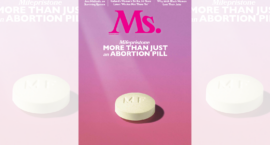
Mifepristone has shown potential to treat a striking range of diseases and conditions, some life-threatening: fibroids, breast cancer, depression, endometriosis, Gulf War illness and maybe even other autoimmune diseases, such as chronic fatigue syndrome and multiple sclerosis. Research also suggests that mifepristone may help prevent some forms of breast cancer and can serve as an effective weekly contraceptive without the side effects of hormonal birth control.
Yet despite the drug’s promise, its development has been repeatedly stymied by abortion opponents who fear wider availability would weaken their attempts to suppress abortion access.
The result? Women are left in needless pain and subject to invasive and unnecessary surgical procedures like hysterectomies.
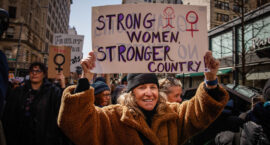
When I started writing for The Contrarian, a funny-not-funny inside joke was whether there would be enough fodder for a weekly democracy column that overtly centers gender. I think you already know the punchline. Suffice it to say, I did not miss a single Wednesday in all of 2025.
For my final entry of the year, we thought it worthwhile to offer a snapshot—a year’s worth of reporting on the depth of damage this administration has wreaked on women’s health, with real-time Contrarian reporting noted.

A collection of this year’s most inspiring and infuriating things said by and about women. Some quotes hit like a shot, others a palate cleanser. Here they are in alternating fashion.
“Let me just tell you, you are an obnoxious—a terrible, actually a terrible reporter.”
“Yes, this work will break your heart. Some days, it will exhaust you, and still, you must continue, because here’s what the research ultimately shows: When younger people lead, democracy doesn’t just survive, it thrives.”
“We are initiated into a sisterhood. We’re in a sorority that none of us asked to join, but we all stand here today, stronger together, because our collective voice is powerful.”

Congressional discussions on extending the Affordable Care Act (ACA) tax credits, which are set to expire Dec. 31, remain deadlocked as Congress begins its winter recess. Now, millions will see their premiums increase as a result: Payments will more than double on average—some even quadrupling—for enrollees who were eligible for the tax credits.
Without the extension, more and more ACA marketplace enrollees will drop their increasingly costly health insurance plans. This comes at a time when the ACA is more popular than ever—recent polls show that across the political spectrum, three quarters of voters support extending the tax credits.
Could the administration’s latest attack on transgender young people be the administration’s way of deflecting attention from the disaster unfolding in real time for millions of families in need of healthcare?
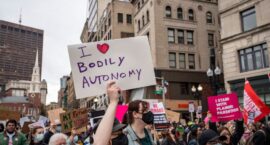
Despite many states imposing sweeping abortion bans after Dobbs, more Americans are having abortions, not fewer, according to the Society of Family Planning’s latest #WeCount report.
“Abortion bans don’t stop people from needing and pursuing essential abortion care,” said Alison Norris, M.D., Ph.D., professor at The Ohio State University’s College of Public Health and #WeCount co-chair.
Despite these increases, Ushma Upadhyay, professor and fellow #WeCount co-chair, warned that unwarranted attacks on telehealth abortion may restrict access in the future. “This care is under assault by abortion opponents’ relentless attacks on mifepristone and telehealth—even though medication abortion is backed by a 25-year track record of safety and gold-standard science, and research shows that telehealth abortion is just as safe and effective as in-person care.”

On Dec. 2, the U.S. Supreme Court heard oral arguments in First Choice Women’s Resource Centers v. Platkin, an unregulated pregnancy clinic’s constitutional challenge to the New Jersey attorney general’s subpoena for information about its operations, including donor records.
Despite being awash in revenue, and serial reports of fraud, waste and illegal use of taxpayer funds, these antiabortion clinics are positioning to realize a long-term goal: to “replace” Planned Parenthood and Title X programs and secure federal taxpayer funds to advance an agenda that promotes childbirth and undermines evidence-based healthcare.
As right-wing politicians decimate the reproductive health delivery system for low-income and uninsured Americans, the UPC industry is ramping up the narrative that their unregulated pregnancy clinics are the answer to the maternal healthcare deserts their policies have created.
Most media observers are predicting the Court will rule for the crisis pregnancy center, First Choice. If it does, unregulated pregnancy clinics nationwide will be further emboldened to resist any state oversight, including of their medical services. A bold, innovative, multi-front action by reproductive justice advocates, public health professionals and pro-choice officials is the only way we ensure they can’t succeed.
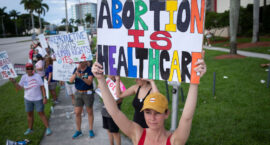
Texas launched a lawsuit against the U.S. Food and Drug Administration last week over the agency’s approval of mifepristone, marking the state’s latest effort to crack down on access to abortion pills.
Joined by Florida, Texas Attorney General Ken Paxton filed the case on Dec. 9 in federal court in Wichita Falls. The two states argued in a 120-page complaint that the FDA did not properly evaluate mifepristone’s safety and effectiveness when approving the drug in 2000 and its subsequent generic versions. They also challenged the agency’s moves that expanded access to the pills, including the ability to dispense them by mail.
Abortion access advocates have blasted the lawsuit.
“If they succeed in restricting access to mifepristone, abortion access will be devastated across the country, even in states where abortion remains legal,” Shellie Hayes-McMahon, executive director of Planned Parenthood Advocates of Texas. “This lawsuit is not about safety or healthcare; it is about control. And nothing short of full control over our bodies will satisfy them.”

Abortion pills are a critical option for people seeking to end a pregnancy, especially those living in U.S. states with abortion bans who cannot travel out of state for care. In 2023, medication abortion accounted for 63 percent of all clinician-provided abortions in states without total bans.
Given the pivotal role of these medications in preserving abortion access, antiabortion policymakers and advocates are resorting to increasingly unscientific, unconventional tactics to spread mis- and disinformation about medication abortion and about mifepristone, one of two drugs used in most medication abortions in the United States.
In a disturbing new strategy, antiabortion policymakers are attempting to weaponize environmental laws and regulations, citing false claims that medication abortion pollutes U.S. waterways and drinking water.