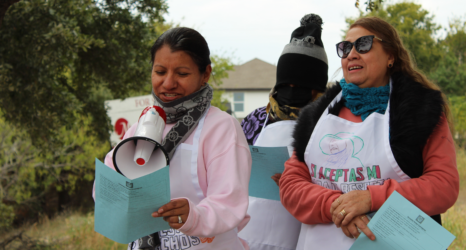


One mom’s question—“How can I be making less and getting less help?”—reveals how the safety net works against the people who need it most.
Front & Center amplifies the voices of Black women navigating poverty—highlighting their struggles, resilience and dreams as they care for their families, build careers and challenge systems not built for their success. Now in its fourth year, Front & Center is a collaboration between Ms. and Springboard to Opportunities, a nonprofit based in Jackson, Miss., working alongside residents of federally subsidized housing as they pursue their goals. The first-person accounts in this series are available for reprint. Find additional guidelines at the end of this story.
My name is Nicole and I’m 31 years old. Right now, it’s just me and my daughter Kylie—she’s 10, incredibly smart and was accepted into a special arts track at her school. Kylie is everything to me. She’s bright, loves to read, draw and she’s learning to play piano—she knows three or four songs already. As her mom, I spoil her because she works so hard, and watching her become her own person brings me so much joy.
My ideal future is one where we aren’t living paycheck to paycheck. … I want more for Kylie and me.
I work two jobs to make ends meet. I dispatch for truck drivers, which I’m able to do from home. That job is nearly full time, about 36 hours a week. On top of that, I’m a nurse at a hospital. Those shifts are 12 hours, but they’re not guaranteed. I work both jobs—not by choice but out of necessity.
Budgeting is a constant struggle because you can’t budget money you don’t have, right? I talk to my sister and have also met with a therapist about the stress that comes with that. Some weeks, it feels like I’m just working to survive.
Even with the support from subsidized housing, it feels like it’s never enough, especially as a single mom, or any single parent. (I know there are men out there too raising kids by themselves.) I’m always exhausted. There’s always something new to pay for when you have a child—clothes, food, school needs—plus keeping the car working and the lights on. People sometimes think getting help means you don’t have real bills, but that’s not true. It all adds up.
I love caring for people. If I could have any job, I’d want to open a facility—maybe not quite a nursing home, but a place where I can help people who need it. Sometimes I look at abandoned hotels and think how they could be turned into housing for people experiencing homelessness. My dream is to put my passion for helping others to work in a business I build myself, supporting people in my community.
My ideal future is one where we aren’t living paycheck to paycheck—where I can pay all our bills, provide stability, and even take a trip on the weekends for fun, just to enjoy life together. I want more for Kylie and me.
Getting support from government programs like SNAP and Medicaid isn’t easy, either. I’ve had my share of headaches with paperwork and eligibility rules. It can feel like you have to jump through endless hoops, and the rules don’t always make sense.
A while back, my orientation pay at my job got counted as regular income, and it lowered my food stamps when I actually needed them more. I told them, “How can I be making less and also getting less help?” And they said “well even if it’s just a one-time payment, we count it.” So I tried to speak to a supervisor, but they kept telling me to talk to someone else, had me calling all these different offices. The whole process ends up taking time and energy when I’m already stretched thin.
I’ve participated in several Springboard to Opportunities programs—we go way back! I moved into subsidized housing around 2015, when Kylie was born, and I think I’ve been involved with Springboard since 2016. The fellowships and programs have helped me grow so much. I used to be shy, but the workshops encouraged me to speak up and build bonds with other mothers. Some of the strongest women I know are in Springboard programs. They inspire me, and I’m proud to count myself among them. The education, volunteering and resources have been invaluable, and I always try to give back and volunteer when I can because I love the sense of community.
I was part of the very first round of Magnolia Mother’s Trust, and it taught me a lot. The extra support from the Trust came at a time when my car was broken down, and it helped me get it fixed and cover basic bills. But it was about more than the money—it also gave me the positivity and hope that comes from being around people who want to see me succeed.
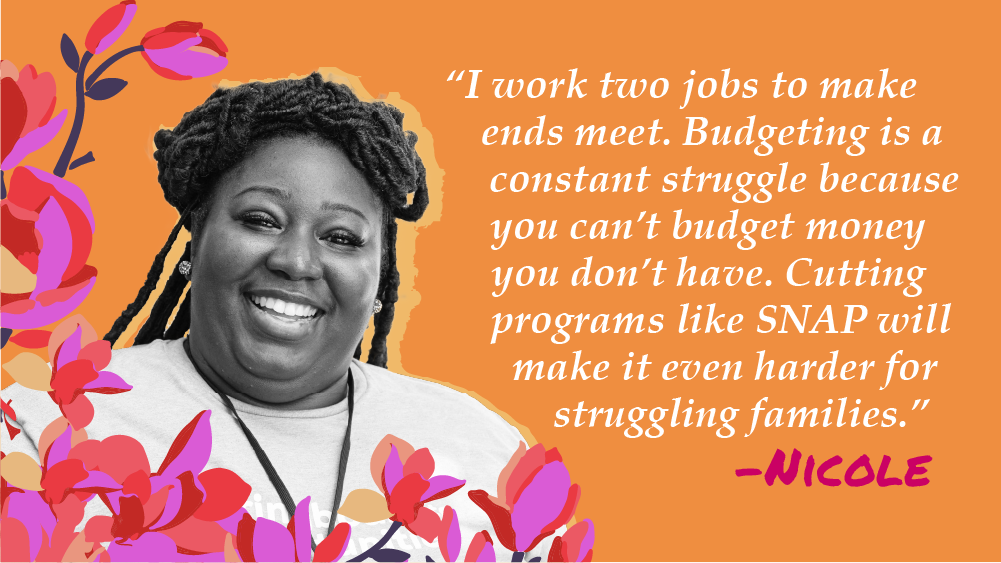
If there’s one thing I want people to know about my life and what others in a similar position are also going through, it’s that cutting programs like SNAP won’t just hurt people like me; it’s going to make it even harder for struggling families to get by. Most of us aren’t getting much help as it is, but it still matters. If that little bit is taken away, people will be forced to do whatever it takes to survive.
Getting support from government programs like SNAP and Medicaid isn’t easy, either. … It can feel like you have to jump through endless hoops, and the rules don’t always make sense.
I’m finding joy right now in my daughter, and my community. I met up with some other moms after a Springboard meeting a few days ago and we all went out to McDonald’s for ice cream and just had a really great talk. One of the moms said we should start doing it once a month, which was so nice. Through it all, I feel stronger and more outgoing than ever. I hope to keep growing, keep leading by example and someday help others as much as Springboard has helped me.
Front and Center pieces are free to republish, under the following guidelines:
- At the top of your reprint, include a line that reads: “Front and Center is a series of op-eds published by Ms. magazine and created in partnership with Springboard to Opportunities and Magnolia Mother’s Trust.“
- You may also republish the photographs included in this story.
- If you share republished stories on social media, we’d appreciate being tagged in your posts. You can find Ms. on Twitter @MsMagazine, on Instagram @ms_magazine and on Facebook. Springboard to Opportunities is on Twitter @SpringboardToOp, on Instagram @springboard_to and on Facebook.
Have questions on the series? Read more here, and direct specific questions to Katie Fleischer at kfleischer@msmagazine.com.