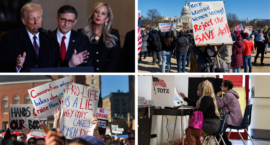
Explore the 30 most popular articles published this year on MsMagazine.com—the articles feminists most clicked, shared, studied, bookmarked and passed out at marches.


More Than A Magazine, A Movement

Black women experience a unique intersection of patriarchal and white supremacist oppression, leading to statistics like disproportionate maternal mortality in the U.S. and foundational feminist theory like the writing of Audre Lorde. Black women are not a monolith, however, and include women from all around the world who are a part of the African diaspora. They have often led social movements for a wide variety of causes because of the intersectional oppressive structures on their lives.
Explore the 30 most popular articles published this year on MsMagazine.com—the articles feminists most clicked, shared, studied, bookmarked and passed out at marches.

On the day bell hooks became an ancestor, four years ago today, my beloved friend, comrade and co-conspirator Black feminist sociologist Shawn McGuffey and I were consoling one another over text when he wrote, “We should do something.” “Say less,” I replied.
We had institutional support from Northeastern University at a time when universities and other institutions were publicly and ceremoniously committing to funding DEI related initiatives in the tidal wave of so-called racial reckoning that occurred in the aftermath of George Floyd’s death. The first symposium took place two months later on a cold and clear February morning in 2022. This annual gathering became an important tradition that we looked forward to each year.
This week, we mark four years since the woman born Gloria Jean Watkins, a Black feminist writer, academic, professor and activist became an ancestor. But in 2026, there will be no bell hooks symposium at my university. Due to university wide fiscal austerity, we will not mark the anniversary this year in any official way. It is a tremendous loss, for our students and for our community locally, nationally and internationally.
As I grappled with my own grief over this loss, I had to also reflect deeply about what it means to be a Black feminist scholar in the academy today.
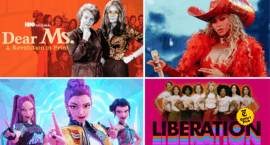
Another year of feminist struggles, another year of feminist triumphs. Our pop culture pushed back and provided many glimpses into feminist resistance throughout the culture.
This year’s top feminist moments reveal how artists, storytellers and creators confronted regressive politics with imagination, joy, righteous anger and expansive visions of humanity.
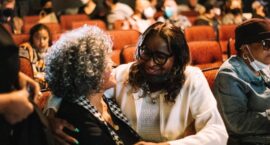
The Transgender Gender-Variant & Intersex Justice Project (TGIJP) has never had it easy. Founded in 2004 by Alexander L. Lee, TGIJP’s mission was simple enough on paper: Provide legal services to incarcerated transgender, gender-variant and intersex Californians.
How are formerly incarcerated Black and brown transgender, gender-variant and intersex people managing to do this work in the nightmare that is 2025?
The answer is simple: We take care of ourselves, and we take care of each other, just like we always have.
(This essay is part of a collection presented by Ms. and the Groundswell Fund highlighting the work of Groundswell partners advancing inclusive democracy.)
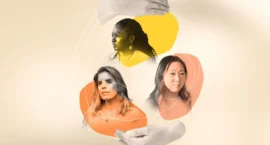
The U.S. loses over 20,000 babies to stillbirth each year, with many preventable. Across the country, pregnant women say their concerns are dismissed, with devastating consequences for maternal and fetal health. Yet stillbirth remains largely invisible in policy and public discourse, and families are left to deal with these tragic and costly losses with little support.
A new documentary from ProPublica, Before a Breath—based on the outlet’s Pulitzer Prize finalist reporting—follows three mothers who turn their grief from stillbirth into advocacy for safer pregnancies and better outcomes for expecting parents.
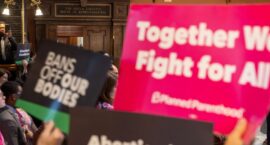
We have to talk about South Carolina.
Last week, what could have become the most punitive abortion law in the U.S., SB 323, failed in the South Carolina Senate. The bill proposed banning abortion in almost all circumstances, criminalizing people who sought abortion care, and removed any exceptions for rape, incest or fetal anomaly currently written into the state’s already strict six-week ban.
The defeat of SB 323 is a victory that was won by dedicated and fierce advocates from across the state and across the country. But South Carolina has been actively engaged in policing the bodies of pregnant women, and in criminalizing pregnancy, for decades.
The prosecutorial “hold my beer” approach to criminalizing abortion shows us not only just broken the criminal legal system is, but also, just how little regard they have for the humanity of people with the capacity for pregnancy.
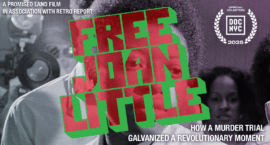
A new documentary short chronicles Little’s groundbreaking case—and her historic victory as the first U.S. woman acquitted for using deadly force to resist sexual assault.
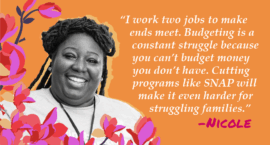
Front & Center amplifies the voices of Black women navigating poverty—highlighting their struggles, resilience and dreams as they care for their families, build careers and challenge systems not built for their success. Now in its fourth year, Front & Center is a collaboration between Ms. and Springboard to Opportunities, a nonprofit based in Jackson, Miss., working alongside residents of federally subsidized housing as they pursue their goals.
Nicole is a single mother working two jobs. She was a part of the first round of Magnolia Mother’s Trust (MMT), where she received one year of guaranteed income. MMT has helped more than 500 mothers since it began in 2018.
“My ideal future is one where we aren’t living paycheck to paycheck—where I can pay all our bills, provide stability, and even take a trip on the weekends for fun, just to enjoy life together. I want more for Kylie and me.”
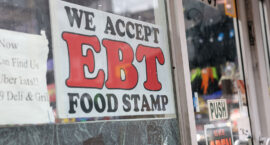
When policy proposals like The One Big Beautiful Bill Act and the Trump administration’s recent attempt to partially suspend food-stamp payments threaten the Supplemental Nutrition Assistance Program (SNAP), we must acknowledge that these decisions are not about fiscal responsibility. They are an ideological manifestation of historical racism and sexism that inevitably punishes Black and brown families and undermines the stability of our entire society.
In fact, SNAP recipients are 45 percent less likely to experience food insecurity, demonstrating that SNAP is one of the most effective anti-poverty programs we have in the U.S.
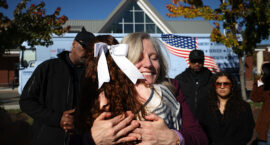
Tuesday’s election results allow us to recalibrate with bold vision.
As the political pundits do their thing across the airwaves, here is yet another hot take on it all—feminist style.