


Amid a record federal shutdown, millions of families—disproportionately Black and brown women-led households—face hunger, as political leaders use food assistance as a weapon of control and economic coercion.
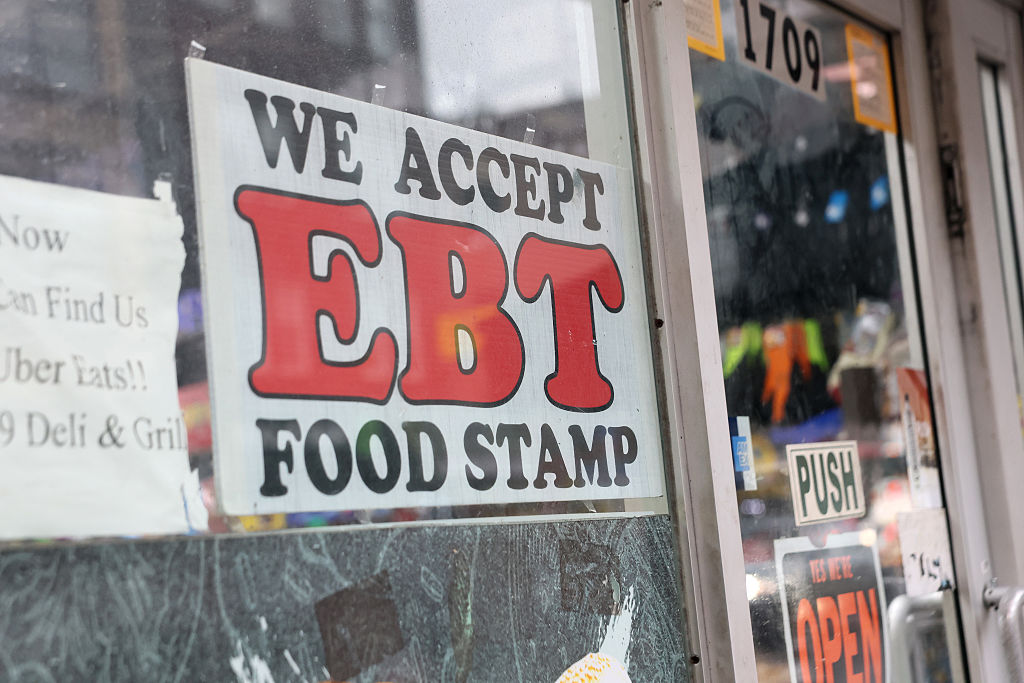
When policy proposals like The One Big Beautiful Bill Act and the Trump administration’s recent attempt to partially suspend food-stamp payments threaten the Supplemental Nutrition Assistance Program (SNAP), we must acknowledge that these decisions are not about fiscal responsibility. They are an ideological manifestation of historical racism and sexism that inevitably punishes Black and brown families and undermines the stability of our entire society.
As we entered our sixth week of the federal shutdown, the U.S. Department of Agriculture announced that it could only fund a fraction of SNAP benefits for November, citing budget shortfalls. That claim was swiftly challenged in courts.
On Nov. 6, a federal judge in Rhode Island ordered the Trump administration to fully fund SNAP, criticizing its delay as politically motivated and warning that families across the U.S. would be at risk of hunger. The Justice Department’s immediate appeal left the program in a limbo.
Hunger has once again become a political weapon.
America’s Long History of Using Hunger to Force People Into Low-Wage Labor
The tradition begins with the country’s “founding ideals.”
Jeffersonian democracy, with its vision of limited government involvement, enshrined independence and productivity as the highest civic virtues. Freedom was defined by one’s ability to provide—a standard that excluded enslaved people, Indigenous communities and women. The ideal of rugged individualism and meritocracy became the moral framework and fabric through which poverty in the U.S. would later be judged, dictating who would be deserving of receiving social services from the federal government.
That philosophy still shapes U.S. social policies today, despite the legacy of the New Deal, marking a slight departure from the Jeffersonian democracy ideology.
… work requirements do not steer participants towards long-term employment; instead, their main effect is to reduce the number of eligible individuals, which in turn increases food insecurity.
When safety net programs were introduced during the New Deal Era, they primarily benefited white women who were viewed sympathetically by lawmakers, often enabling them to stay home and raise the next generation of citizens. But as the demographics shifted mid-century to include greater numbers of Black and brown women, public perception curdled. Suddenly, assistance morphed from government duty into a “windfall” for “underserving freeloaders,” fueled by the racial trope of the “welfare queen.”
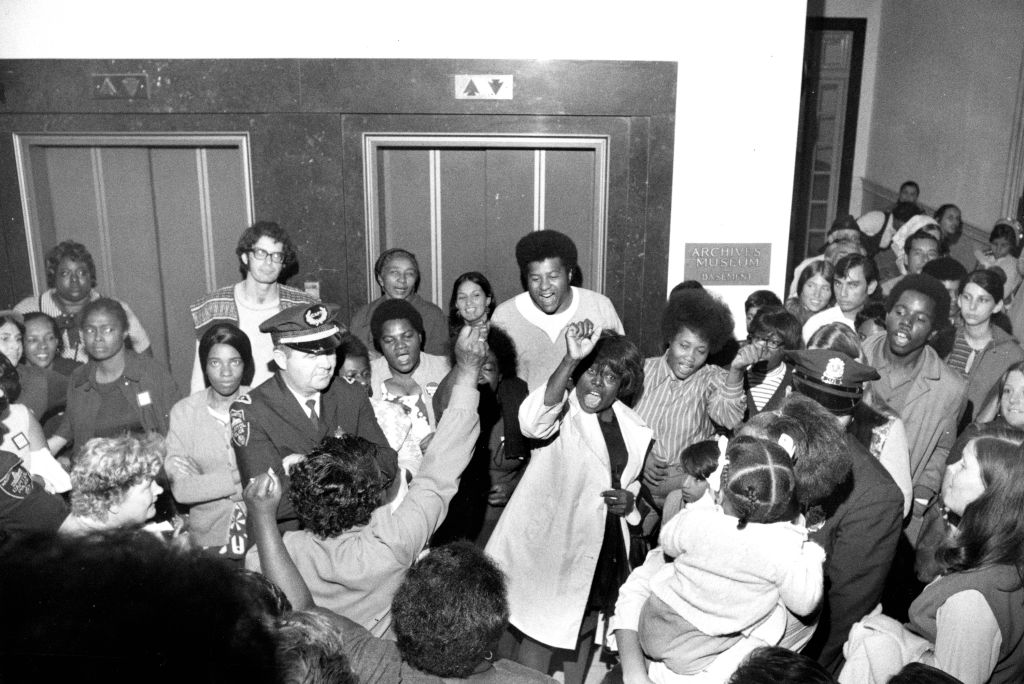
This transformation ushered in punitive work requirements through the Personal Responsibility and Work Opportunity Reconciliation Act (PRWORA) in programs like TANF and SNAP, using hunger as leverage to force people into low-wage labor, a tactic that carries the legacy of slavery’s coercion and control. Today, work requirements do not steer participants towards long-term employment; instead, their main effect is to reduce the number of eligible individuals, which in turn increases food insecurity.
This practice disproportionally harms people of color, who are overrepresented among those who become ineligible due to not meeting work requirement criteria. Enforcing these requirements while historically marginalized populations experience food insecurity at rates far higher than the national average perpetuates a cycle of inequities, marking a serious public health crisis.
Cutting SNAP benefits tells mothers doing the labor of survival that their hunger is a fair price for their poverty.
According to the 2024 USDA report, 7.3 million of all SNAP participating households had children, and 4.6 million were headed by a single adult. While Black people constitute almost 13 percent of the total U.S. population, they are the largest overrepresentation of any ethnic/racial group in SNAP benefits, constituting more than a quarter of all SNAP recipients.
The attempt to restrict access to basic nutrition by tightening eligibility and slashing SNAP benefits is fundamentally an issue of feminist and reproductive justice. Work requirements implicitly devalue the vital, uncompensated domestic labor like childcare, elder care and home maintenance, traditionally performed by women. For new mothers receiving assistance these requirements often impose a cruel, legally enforced choice: either secure food assistance by working outside the home or remain home doing unpaid domestic work. Cutting SNAP benefits tells mothers doing the labor of survival that their hunger is a fair price for their poverty.
The health consequences of such legal decisions are severe. Food insecurity is directly linked to chronic illnesses and worse mental and maternal health outcomes, which are all conditions that disproportionally affect Black and brown women. In the U.S., Black women are three times more likely to die from pregnancy related complications. Food insecurity in pregnancy is associated with higher rates of pregnancy complications such as gestational diabetes, preeclampsia and preterm birth—all of which are risk factors of maternal mortality, according to a study published in JAMA. Individuals who received food assistance during pregnancy were shown to have less perinatal complications, illustrating the success of SNAP.
In fact, SNAP recipients are 45 percent less likely to experience food insecurity, demonstrating that SNAP is one of the most effective anti-poverty programs we have in the U.S.
For every dollar of SNAP benefits cut from families with children, communities incur an economic loss ranging between $14 and $20.
The policy push to cut SNAP is economically self-defeating. Taking food assistance away from families does the opposite of promoting well-being, leading to substantial long-term economic and societal costs. Cuts reduce long-term health and future earnings of children who were SNAP recipients and necessitates increased expenditures on healthcare, child protective services and the criminal legal system.
Revoking SNAP also impacts local economy. For every dollar of SNAP benefits cut from families with children, communities incur an economic loss ranging between $14 and $20. The purported financial savings from cutting these essential benefits are grossly overshadowed by the future burden placed on taxpayers due to worsened social outcomes.
Feminist and racial justice movements have long argued that true freedom must ensure the presence of security, care and dignity. The reproductive justice framework, which was coined by a group of Black women activists in the 1990s, reframed the right to have or not have children and to raise children in safe, health environments as fundamental to liberty. By that measure, SNAP cuts are a form of reproductive control. They deny women, especially women of color, the material conditions necessary to sustain family life.
Budgets are moral documents. They reveal whose health and humanity we recognize and value. The necessity of a federal judge ordering the administration to fully fund SNAP after officials were accused of trying to ‘punish’ poor Americans demonstrates how aggressively these moral documents can be weaponized. As New York Attorney General Letitia James states regarding the intervention, “it is outrageous that it took a lawsuit to make the federal government feed its own people.” If we want a democracy worthy of the name, we must reject policies that perpetuate racial injustice, undermine the role of mothers, and actively sabotage the economic future of our communities.