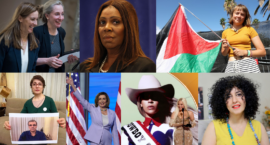
In a year marked by democratic backsliding, cultural reckoning and organized resistance, these feminists reshaped power, through law, leadership, art and collective courage.


More Than A Magazine, A Movement

Nancy Pelosi served as the 52nd speaker of the United States House of Representatives from 2007 to 2011 and again from 2019 to 2023. A member of the Democratic Party, she was the first woman elected as U.S. House Speaker and the first woman to lead a major political party in either chamber of Congress, leading the House Democrats from 2003 to 2023.
In a year marked by democratic backsliding, cultural reckoning and organized resistance, these feminists reshaped power, through law, leadership, art and collective courage.

In the middle of an accelerating democratic crisis, and a year defined by sweeping attacks on women’s rights, the Feminist Majority Foundation, publisher of Ms. magazine, gathered in Los Angeles to honor some of the most formidable leaders on the front lines of resistance. At the Nov. 18 Global Women’s Rights Awards, journalists, lawyers, artists, organizers, litigators, community activists and movement strategists came together to celebrate what I call the “essential trifecta” for defeating authoritarianism: the law, the press and culture.
We recognized The Contrarian’s Jennifer Rubin and Norm Eisen for building an independent media platform willing to call out authoritarianism plainly; Democracy Forward president and CEO Skye Perryman for her organization’s record-breaking wave of legal challenges against the Trump administration; and the creative team behind the Broadway hit Liberation—playwright Bess Wohl, director Whitney White, and former Ms. writer and editor Lisa Cronin Wohl—for reminding audiences that storytelling is itself a democratic act.
“The number one tool that autocratic actors use to try to consolidate power and take away power from the people, is to convince people that they have no power,” said Perryman. “Their toolbox is one of isolation. They want you to feel alone.”
“I grew up miles from here, family hamburger stand,” said Eisen, “and now to be here, to have this opportunity with my colleagues to fight for this democracy that took my country, and my parents. … When my mother was living, she loved to say the Nazis took us out of Czechoslovakia on cattle cars, and my son flew back on Air Force One. So, how can I not be hopeful?”

In every issue of Ms., we track research on our progress in the fight for equality, catalogue can’t-miss quotes from feminist voices and keep tabs on the feminist movement’s many milestones. We’re Keeping Score online, too—in this biweekly roundup.
This week:
—Democratic candidates won elections across the country.
—At Crooked Con last week, Rep. Pramila Jayapal (D-Wash.) laid out her priorities for when Democrats regain power in Congress: “We’ve got to fix the Voting Rights Act, we have to deal with the money in politics, we have to deal with the Supreme Court and we need immigration reform.”
—ICE targeted childcare workers and is accused of inhumane detention conditions.
—Nancy Pelosi announced her retirement in 2027.
—Trump’s approval ratings continue to fall, a year out from the 2026 midterms.
—Many popular lubricants aren’t safe for vaginal health.
… and more.

Weekend Reading for Women’s Representation is a compilation of stories about women’s representation in politics, sports and entertainment, judicial offices and the private sector—with a little gardening mixed in!
This week:
—Elections in Virginia and New Jersey make history for women’s representation in the U.S.
—Speaker Nancy Pelosi announces she will not seek reelection, marking the close to one of the most consequential careers in modern American politics.
—New York City Mayor-elect Zohran Mamdani announces his transition team will be led entirely by women.
… and more.
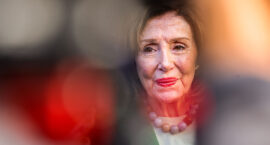
Pelosi has always been a staunch feminist and a tireless advocate for women’s equality and the rights and freedoms of all Americans. Her fierce determination, her discipline, and her ability to find a way forward when every path seemed blocked, will be hard to match. “Organize, don’t agonize” wasn’t just her mantra—it was her method.
She will be remembered for many things: shepherding the Affordable Care Act into law, standing firm against Trumpism, pushing for ERA ratification, and proving—time and again—that women can wield power with both strength and grace. But what stands out most to me is her unwavering belief in women themselves. “Be not afraid,” she told women and girls everywhere. “Be ready for whatever opportunities come along, and know how important your contribution is, because when women succeed, everyone succeeds.” Quite simply, Nancy Pelosi showed us what leadership looks like.
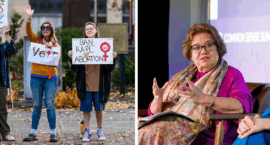
Pollster and leading Democratic strategist Celinda Lake has been examining the data on women and feminist voters for decades. I talked to her about what Americans really want. (Spoiler alert: It’s not Project 2025.)
“People think that feminism is a dirty word. In fact, it’s a very strong word. Particularly for progressives and Democrats—feminism is highly correlated with voting for Democrats. Half of Independents consider themselves feminists; when you describe it, a third of Republicans and 83 percent of Democrats do. Our voters consider themselves feminists. It is a very quiet movement out there that is really underestimated. …
“Feminist issues, however we define them, are doing quite well. What we don’t have is we don’t have enough of them out front. We don’t have enough leaders taking them on.”

In the first episode of the Ms. Studios podcast Looking Back, Moving Forward, Richie Terrell talked to Ms. consulting editor Carmen Rios about the vision of democracy she’s inspired by, practical strategies for advancing gender balance in politics, and what she considers the “gold standard” for equitable voting.
“It’s no coincidence that the 50 top countries for women’s representation all have either a form of gender quotas, legislative or party-based, or constitutional, or they have a proportional voting system.”
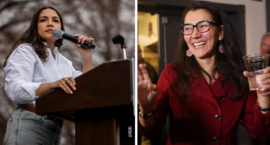
Weekend Reading for Women’s Representation is a compilation of stories about women’s representation.
This week: Hillary Clinton and Kamala Harris did not lose to Donald Trump because they were women; Maine Secretary of State Shenna Bellows announces run for governor; it’s looking increasingly likely that a woman may be elected in 2026 in Alaska; women will disproportionately feel the effect of Trump’s tariffs; and more.
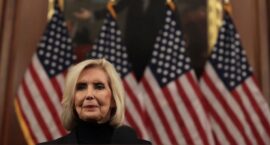
Lilly Ledbetter, an equal pay activist whose legal fight against her employer led to the Lilly Ledbetter Fair Pay Act, died this weekend. She was 86.
“One of the next steps in reaching pay equity is the Paycheck Fairness Act—a bill that would amend the Equal Pay Act of 1963 to give workers stronger enforcement tools and remedies to help close the pay gap between men and women once and for all,” wrote Ledbetter in an op-ed for Ms. in January. “But things have been frustratingly stagnant in Congress.”
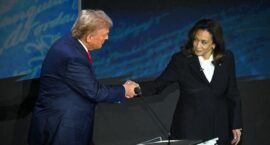
Republican Donald Trump and Democrat Kamala Harris had their first and only debate on Tuesday night in Philadelphia. According to CNN, Trump spoke for about 42 minutes and 52 seconds, while Harris spoke for 37 minutes and 36 seconds. Trump spoke 39 times to Harris’ 23 times.
Here’s what each candidate said on some of the issues feminists care about—including access to abortion and other reproductive healthcare, the Affordable Care Act, childcare, immigration, racial unity and the economy.