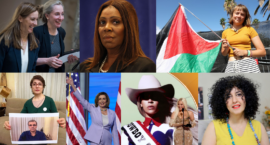
In a year marked by democratic backsliding, cultural reckoning and organized resistance, these feminists reshaped power, through law, leadership, art and collective courage.


More Than A Magazine, A Movement

In a year marked by democratic backsliding, cultural reckoning and organized resistance, these feminists reshaped power, through law, leadership, art and collective courage.

In the middle of an accelerating democratic crisis, and a year defined by sweeping attacks on women’s rights, the Feminist Majority Foundation, publisher of Ms. magazine, gathered in Los Angeles to honor some of the most formidable leaders on the front lines of resistance. At the Nov. 18 Global Women’s Rights Awards, journalists, lawyers, artists, organizers, litigators, community activists and movement strategists came together to celebrate what I call the “essential trifecta” for defeating authoritarianism: the law, the press and culture.
We recognized The Contrarian’s Jennifer Rubin and Norm Eisen for building an independent media platform willing to call out authoritarianism plainly; Democracy Forward president and CEO Skye Perryman for her organization’s record-breaking wave of legal challenges against the Trump administration; and the creative team behind the Broadway hit Liberation—playwright Bess Wohl, director Whitney White, and former Ms. writer and editor Lisa Cronin Wohl—for reminding audiences that storytelling is itself a democratic act.
“The number one tool that autocratic actors use to try to consolidate power and take away power from the people, is to convince people that they have no power,” said Perryman. “Their toolbox is one of isolation. They want you to feel alone.”
“I grew up miles from here, family hamburger stand,” said Eisen, “and now to be here, to have this opportunity with my colleagues to fight for this democracy that took my country, and my parents. … When my mother was living, she loved to say the Nazis took us out of Czechoslovakia on cattle cars, and my son flew back on Air Force One. So, how can I not be hopeful?”
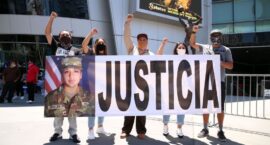
Secretary of Defense Pete Hegseth recently vowed to enforce “tough” new rules of engagement for the U.S. military, declaring there would be “no more walking on eggshells.” Critics say his rhetoric risks normalizing aggression and sexual violence both within the ranks and in combat.
Hegseth, a member of a Christian nationalist church that promotes patriarchy, also called for past infractions by so-called “tough” leaders to be expunged. Sexual assault in the military remains pervasive: the Department of Defense reported 8,195 cases in 2024, and estimates suggest nearly a quarter of active-duty women experience sexual assault during their service.
Historically, rape has been used as a weapon of war, from ancient Israel to World War II, and it continues today in conflicts abroad and at home. Experts warn that leadership matters—policies and rhetoric that prioritize violent masculinity put survivors at serious risk.

Under current New York law, if someone was drinking by choice when they were assaulted, prosecutors can decide not to pursue the case. This law provides prosecutors with an out when it comes to sexual assault, and statistics show they take it. In 2019, prosecutors dropped nearly half of all sexual assault cases in the Manhattan district attorney’s office. A bill proposed in the state legislature is looking to make it harder for prosecutors to throw out sexual assault and rape cases by prohibiting the use of intoxication of the victim as a defense.
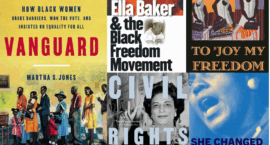
While writing my new book about the contributions Black women have made in the global struggle for human rights, I was humbled to see, over and over, how many of these women did not come from rich families, or hold positions of great power, or even have all that much education. But they did the hard and dangerous work required, day in and day out, because they believed in equal rights for everyone, around the world.
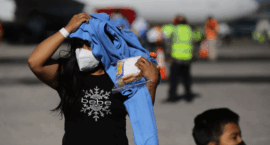
The Departments of Homeland Security, as well as Health and Human Services, hit a new low over Labor Day weekend: Government officials ordered the deportation of over 600 Guatemalan children in the middle of the night.
Fortunately, a federal judge quickly acted to block the removals, at least for now—but the events that unfolded between Aug. 29 and Aug. 31 are a sobering indictment of all that is wrong with Trump’s campaign against immigrants. In a single night, the Trump administration may have permanently scarred children who were just beginning to feel like they had found a safe place, far away from the danger and threats they had fled.
Their terror and confusion is captured in the affidavits children and witnesses filed with the court over the next few days. One boy described how shelter staff woke him at 2 in the morning, telling him he would be leaving in a few hours; he had no time to wash his face or brush his teeth but had to gather his things and go. For a minute, he just sat there, staring into space, unable to fathom what going back to Guatemala might mean. Another child became so scared that she vomited.
Many worried whether their parents or relatives could even answer the phone at such an hour or be ready to receive them. Some asked in trembling voices, “¿Me van a mandar a otro albergue en Guatemala?” “Are they going to send me to another shelter in Guatemala?”

This fall marks 20 years since Hurricane Katrina devastated New Orleans and the Gulf Coast, leaving more than 1,800 people dead and hundreds of thousands displaced. Katrina was not just a natural disaster—it was a political, legal and public health catastrophe that exposed deep inequities in the United States. Women, low-income communities and communities of color were hit hardest, and the failures of government response left lasting scars that continue to shape policy and memory today.
To reflect on these legacies, Georgetown University will host a three-day symposium, “Memory, Medicine and Law: Reflecting on the 20th Anniversary of Hurricane Katrina,” from Sept. 11-13, 2025, at its Capitol Campus and adjoining Law Center, located at 125 E Street NW in Washington, D.C.
The symposium is free and open to the public, but registration is required.
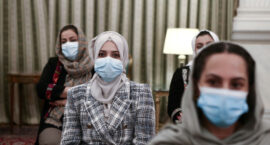
When the Taliban regained control of Afghanistan in August 2021, one of their earliest, most devastating acts was to remove all women judges from their positions. These courageous women, educated in their own country and possessing many years of experience adjudicating complex and sensitive cases, were abruptly stripped of their roles and authority.
Although the global spotlight has dimmed, the danger remains real and immediate. These judges, still known and targeted by the Taliban, face grave risks. The international community must not let them fall through the cracks.
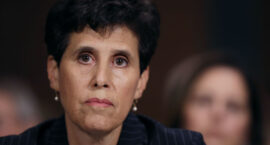
In the latest episode of Looking Back, Moving Forward, “the feared attorney of the #MeToo movement” assesses the legal landscape facing survivors—and how activists can continue to hold people in power accountable.
Listen to the latest episode of Looking Back, Moving Forward, “How Feminists are Breaking the Cycle of Gender-Based Violence and Harassment (with Ellen Sweet, Jane Caputi, Vanessa Tyson, Victoria Nourse, and Debra Katz)” on Spotify, Apple Podcasts or wherever you get your podcasts.

At least 27 women have accused President Donald Trump of sexual misconduct, with allegations ranging from harassment to sexual assault and rape. Trump has denied every charge, often dismissing the accusing women by claiming he’d never met them—or suggesting they weren’t attractive enough for him to assault.
In 2019, during Trump’s first term, author, journalist and longtime Elle magazine advice columnist E. Jean Carroll came forward with the allegation that Trump sexually assaulted her in a Bergdorf department store’s dressing room in New York City in the mid 1990s. As usual, Trump denied the allegations, prompting Carroll to sue him for defamation as well as battery under New York’s Adult Survivors Act.
But the jury believed Carroll. In 2023, she won the lawsuit.