In Norfolk, Va., Parents and Community Members Took Children’s Education and Safety Into Their Own Hands

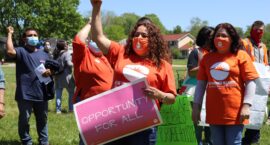
In Norfolk, Va., parents were worried about their children’s safety while getting off school buses, after noticing an uptick in gun violence that coincided with school dismissal times. In response, community members—organized by nonprofit advocacy group New Virginia Majority—launched the “Take Back the Bus Stop” campaign, petitioning for emergency call boxes and mobilizing neighbors to show up in force. In the Calvert Square and Young Terrace neighborhoods, organizers and residents were physically present at bus stops each afternoon—greeting students as they arrived home and helping to deter violence through collective care and visibility.

(This essay is part of a collection presented by Ms. and the Groundswell Fund highlighting the work of Groundswell partners advancing inclusive democracy.)

Two Mass Shootings, Two Countries—and Two Very Different Responses

On Dec. 14, 2025, two tragedies unfolded on opposite sides of the world—each marked by gun violence and grief, yet met with starkly different national responses.

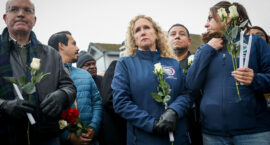
On the first night of Hanukkah, a gathering on Bondi Beach in Sydney, turned into horror when a father and son opened fire during a “Hanukkah by the Sea” celebration, killing 15 people and wounding 40 in what Australian authorities called an antisemitic terrorist attack. 

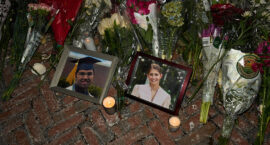
The day before in Providence, R.I., a shooter opened fire at Brown University during finals, killing two students and wounding nine.

These shootings—one at a beloved public beach, the other on an Ivy League campus—expose not only shared grief but radically different understandings of responsibility.

My Daughter Was in the Mass Shooting at Brown, and I Wasn’t Trained for What to Do

The text, from a fellow ER doctor and former Brown University faculty member, arrived at 4:27 p.m. on Saturday: “Active shooter near Brown engineering building? Is Hannah ok?” Within seconds, I looked on my phone for my daughter’s location—she was on campus in Friedman Hall. I texted her. It was real. There was an active shooter. She was hiding in a bathroom with her four best friends. For the next 24 hours, I lived every parent’s nightmare while learning hard lessons about a reality even I was not trained for.

As an emergency medicine physician with over 20 years of experience, I’ve operated from positions of information and authority in mass casualties before. This weekend, I had neither. I was simply a mother trying to keep my daughter safe from 150 miles away, armed only with a phone and whatever guidance I could piece together. I want to share what I learned, because on Saturday, thousands of students were in lockdown texting their anxious parents, and I realized how unprepared we are for this side of the experience.

Following Tragic D.C. Shooting, Afghan Allies Face a New Wave of Enforcement and Fear

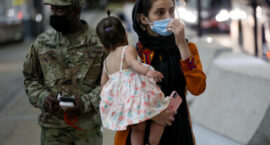
The shooting in Washington, D.C., that left one National Guard member dead and another critically wounded on Nov. 26 quickly became a major focus of U.S. media. In the days since the shooting, the national conversation has focused almost entirely on the suspect’s identity as an Afghan refugee. Yet those who knew him describe a man who appeared to be struggling long before he drove across the country to Washington, D.C. One volunteer who worked closely with his family said he became increasingly withdrawn, isolated and overwhelmed by the challenges of resettlement. They noted that his behavior reflected profound distress, not radicalization or hostility toward the United States.

Despite these documented struggles, the current administration immediately cast the shooting as a failure of vetting by the Biden administration and threatened to punish an entire community for the crime of one individual. That framing ignores the basic fact that the suspect had been vetted repeatedly. It also ignores the testimony of those who interacted with him in the U.S. and saw no signs of ideological motivation.

Internal directives show ICE has begun targeting more than 1,800 Afghans with past deportation orders and is tracking arrests and removals in daily reports. Officials are also reassessing Afghan vetting programs created after the 2021 withdrawal, despite the fact that the suspect himself was granted asylum during the Trump administration after already receiving extensive screening.

The policies signal a retreat from those commitments and send a dangerous message to future partners: Support for the United States may not translate to safety once U.S. needs are met.

The tragedy in Washington stands as a devastating loss. It deserves a full investigation and a clear accounting of what shaped the suspect’s unraveling. But it must not be used to justify policies that abandon allies, ignore humanitarian obligations and dehumanize an entire community.


Police Officer Domestic Violence Is A Crisis. It’s Time for States to Take Action.

Domestic violence by police officers is a nationwide scourge. While the actual number of cases that happen every year is unknown, it’s likely in the tens of thousands. Police officers in almost every state have been charged with domestic violence since the start of 2025. Such figures demonstrate that police officer domestic violence is a structural failure, not the isolated misconduct of ‘a few bad apples.’

These numbers become even more sobering in light of police officer-abusers’ training and responsibilities, which makes them uniquely dangerous, and extremely undertrained: Less than 2 percent of police academy training time is spent on domestic violence response, while 17 percent is spent on weapons and defensive training.

Officer-abusers and their victims make clear that something is deeply wrong in our domestic violence support system. For now, we don’t understand the depth of that dysfunction, but we can be certain that more funding, better policy and less criminalization will help drive a better future.

Making the Invisible Visible: How Misogyny Is Driving Rising Political Violence

We have seen a rise in political assassinations and assassination attempts, along with violent extremist attacks that have ticked upward for years. Mass casualty plots in the U.S. have increased by over 2,000 percent since the 1990s, leading to the deaths or grievous injury of thousands of people in shootings at schools, grocery stores, theaters, parades, concerts, houses of worship and more.

In the search for explanations, the public and policy discourse is most often swept up in heated debates about far-left or far-right ideologies.

But the data shows that the biggest and clearest predictor of mass shootings, across ideologies, sits somewhere else: in rising gendered grievances, patriarchal backlash, and the perpetrators’ histories of gender-based violence and misogyny.

America Is an Increasingly Dangerous Place for Women and Girls 

In America’s hyper-macho, gun-drenched culture, growing up female has never been safe. But under the Trump administration, America is becoming a much more dangerous place for women and girls.

America is dangerous for women and girls because our leaders choose to make it so. The Trump administration has already begun blocking access to abortion and Medicaid coverage for reproductive health, as well as targeting the rights of pregnant people within the 2023 Pregnant Workers Fairness Act.

Already, the macho culture of the U.S. has steadily made women’s safety in the nation decline. Around 41 percent of women in the U.S. have experienced sexual violence, while a third of women reported severe assault by a husband or boyfriend. The normalization of gun violence and violent pornography have also run rampant across the country, making America more dangerous day by day.

Keeping Score: Trump’s Dangerous Claims About Tylenol; Government Shutdown Begins; Diddy’s Four-Year Sentence

In every issue of Ms., we track research on our progress in the fight for equality, catalogue can’t-miss quotes from feminist voices and keep tabs on the feminist movement’s many milestones. We’re Keeping Score online, too—in this biweekly roundup.

This week:
—Doctors push back against Trump’s dangerous claims that Tylenol in pregnancy increases the risk of autism.
—The U.S. entered a government shutdown, affecting millions of federal workers.
—Sean “Diddy” Combs was sentenced to four years in prison.
—Zoologist and anthropologist Jane Goodall died at age 91.
—University of California students and faculty are suing the Trump administration for violating free speech rights.
—Student activists are stepping up to get around birth control bans on campus.
—Louisiana admits non-citizens voting is not a systemic problem.
—The ACLU and religious freedom organizations are suing to block 14 more Texas school districts from implementing a law requiring classrooms to display Ten Commandments posters.

… and more.

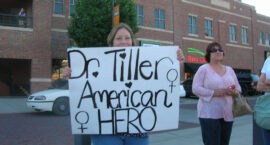
The Long Shadow of Dr. George Tiller: Abortion Providers Under Attack [Part 2 of 4]

Julie Burkhart has spent decades on the frontlines of abortion care—from witnessing the “Summer of Mercy” blockades in Wichita to reopening a clinic after her mentor, Dr. George Tiller, was assassinated in 2009. In 2022, before she could open a new clinic in Wyoming, an arsonist burned it down. “It’s definitely more of an unsettling time,” Burkhart told Ms.

The threats extend beyond firebombs. In Pennsylvania this summer, antiabortion activists staged a Red Rose Rescue invasion, disrupting care with fake IDs, “holy water,” and “tickets to heaven.” Several participants had been pardoned by Trump months earlier. Advocates say such incidents show a growing pattern: emboldened extremists traveling across state lines to terrorize clinics.

The Kirk Assassination Exposes Media’s Reluctance to Confront Violent Masculinity

The assassination of Charlie Kirk is a major sociocultural event and media spectacle that has generated a tremendous amount of media commentary and social media discourse. 

Unfortunately, much of the analysis suffers from the same blind spot that typically characterizes media narratives about violence: It is de-gendered.

Imagine if women committed the overwhelming majority of political violence, and over 98 percent of mass shootings. Would anyone commenting about the latest violent incident talk about the “shooter,” and fail to mention it’s a woman, and seek to explore the ways in which cultural ideas about femininity might factor in?