
As 2025 comes to a close, we’re taking a moment to honor the wins—large and small—that reminded us progress is still possible. Here are a few feminist victories worth celebrating.


More Than A Magazine, A Movement

As 2025 comes to a close, we’re taking a moment to honor the wins—large and small—that reminded us progress is still possible. Here are a few feminist victories worth celebrating.
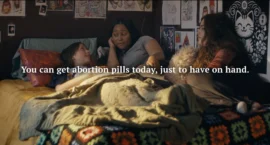
The grassroots abortion-stigma-busting juggernaut Shout Your Abortion has released two new powerful public service announcements urging people across the U.S. to order abortion pills in advance to have on hand, in case they have an unwanted pregnancy.
Made by Detroit-based filmmaker Na Forest Lim, the short films follow two women—a teenager named Dani and a single mother in her 30s named Poppy—who find out they are pregnant and use abortion pills at home, supported by friends and family.
Both of the main characters have easy access to abortion pills: Dani’s friend arrives with pills in her backpack, and Poppy keeps a pack tucked away in her top dresser drawer.
Building on that vision of easy access, the Dani PSA shows what it looks like when abortion pills are already part of teenagers’ lives and a pregnancy never has the chance to become a crisis.

Bodily autonomy shouldn’t vanish with a positive pregnancy test—yet in Michigan, it can.
On Oct. 23, a coalition of Michigan women, physicians and patient advocates filed a lawsuit, Koskenojo v. Whitner, challenging the constitutionality of Michigan’s pregnancy-exclusion law that forces life support on pregnant women by denying incapacitated pregnant patients the right to refuse life-sustaining treatment. The case relies on a voter-approved 2022 constitutional amendment that explicitly protects “the right to make and effectuate decisions about all matters relating to pregnancy.”
One plaintiff—Nikki Sapiro Vinckier of Birmingham, Mich.—explained her objections to Michigan’s pregnancy exclusion law. “As a woman and a mother, it’s infuriating to know that my body can still be regulated more than it’s respected. As a trained OB-GYN physician assistant, I know this law protects no one—it only punishes those who can get pregnant. The pregnancy exclusion clause isn’t about safety or care. It’s about control. There is no place for a law that discriminates against pregnant people in a state that claims to trust women.”
When Crystal FitzSimons became president of the 55-year-old, Washington, D.C.-based Food Research and Action Center (FRAC) in May, she anticipated attacks on federal food and nutrition programs. But she calls what has unfolded unprecedented, and makes clear that unless Congress changes course and passes the Restoring Food Security for American Families and Farmers Act of 2025, millions of U.S. residents will lose some or all of the benefits they’re receiving through the Supplemental Nutrition Assistance Program, better known as SNAP.
Other pending changes that FitzSimons is expecting will take the shape of denying SNAP to the few immigrants who were previously eligible for benefits, such as asylum seekers, refugees and international survivors of domestic violence.
“We are working at the state and federal levels and are collecting stories of different people who will be directly impacted by the cuts—the grandmother who relies on SNAP and helps watch her grandchildren while her daughter is at work; disabled people who use SNAP to support their independence; and older adults who are no longer able to work. We share their stories because we know that the real experiences of real people are critical in helping lawmakers and others understand who benefits from SNAP.”
“Every dollar spent on SNAP generates up to $1.80 in economic activity at the community level during economic downturns.”
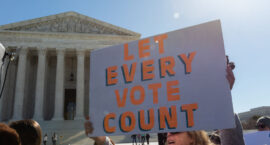
Here are six things to know about partisan gerrymandering and how it impacts our democracy:
1. Gerrymandering is deeply undemocratic.
2. There are multiple ways to gerrymander.
3. Gerrymandering has a real impact on the balance of power in Congress and many state legislatures.
4. Gerrymandering affects all Americans, but its most significant costs are borne by communities of color.
5. Gerrymandering is getting worse.
6. Federal reform can help counter gerrymandering—so Congress needs to act.

On Thursday nights, I walk a few blocks along my neighborhood’s cracked sidewalks to The People’s Market. SNAP is the glue that holds The People’s Market together, where most of the vendors are recipients selling at the market to supplement their incomes.
We’ve long known that the U.S. food system is upside-down. Instead of trying to fix this broken system, Congress is punishing the victims of its malfunctioning and is slashing SNAP to enact tax cuts for the rich.

In a year full of losses for reproductive rights, last month brought some good news out of Michigan: On May 13, a Michigan court sided with the Northland Family Planning Centers clinic, which sued the state, arguing that Michigan’s abortion restrictions made it unnecessarily cumbersome for patients to access care.
The Michigan Court of Claims struck down three major abortion restrictions in May’s decision… but left a fourth requirement forcing abortion providers to screen patients for abortion “coercion,” which creates another delay before a patient can receive care. On Tuesday, June 3, Michigan Attorney General Dana Nessel filed a motion challenging the court’s decision to retain this final abortion restriction even after getting rid of the others.

The ongoing decimation of the federal funding landscape brings some good(ish) news for women: the role of state legislatures in stepping up to help improve and advance the health of menopausal women.
Thus far, 13 states—a record one in four—have introduced more than 20 bills focused on menopause care, proposing changes that could permanently reshape insurance coverage and educational and health care resources. Public officials in Michigan, Illinois and West Virginia announced support for menopause reforms. Michigan Gov. Gretchen Whitmer recently hosted a roundtable for leaders and a statewide listening tour. The latest slate of bills—introduced in red and blue states alike—would bolster workplace supports and dedicate resources to public education. The bills are being proposed at such a fast clip that menopause was named on a “Ones To Watch: Legislation Landscape for 2025” list.

In every issue of Ms., we track research on our progress in the fight for equality, catalogue can’t-miss quotes from feminist voices and keep tabs on the feminist movement’s many milestones. We’re Keeping Score online, too—in this biweekly roundup.
This week’s special post-election edition is tracking the 2024 election’s bright spots, feminist victories and a full rundown of the challenges and dangers we now face.