‘Not Just About Abortion’: Amidst Federal Attacks on Planned Parenthood, Georgia Clinics Fight Maternal Mortality and Postpartum Neglect

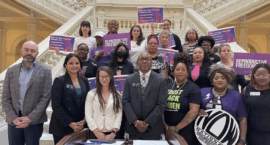
Amidst the federal attacks on Planned Parenthood, there are many independent clinics—especially those in southern states facing heightened restrictions—fighting to provide expanded care, beyond abortion access.

“We are just as interested and focused on people having healthy, safe, joyous birth outcomes as we are on people’s ability to have safe terminations of pregnancy,” said Kwajelyn Jackson, the executive director of The Feminist Center Georgia Initiative.

Ms. Global: Starvation’s Effects on Women in Gaza, Gisele Pelicot Awarded France’s Legion of Honor, Taliban Enforces Dress Laws for Women, and More

The U.S. ranks as the 19th most dangerous country for women, 11th in maternal mortality, 30th in closing the gender pay gap, 75th in women’s political representation, and painfully lacks paid family leave and equal access to health care. But Ms. has always understood: Feminist movements around the world hold answers to some of the U.S.’s most intractable problems. Ms. Global is taking note of feminists worldwide.

This week: News from Gaza, Thailand, Canada, and more.

Investing in Inclusion: How DEI Initiatives Uplift Both Companies and Consumers

In mid-May, Verizon followed the course of over a dozen major U.S. companies in rolling back their diversity, equity and inclusion practices—eliminating DEI from key tenets of their operations, including erasing DEI references from training material, ending bonuses and goals related to increasing the percentage of women and minority workers, and downsizing their human resources department.

However, companies like Verizon are part of the private sector—executive orders do not directly apply to them, meaning, they have no obligation to roll back on DEI. 

The Problem With Sabrina Carpenter’s Album Cover Is Not Sex—It’s Violence 

The real discomfort with Carpenter’s controversial cover isn’t about sexual provocation. It’s about normalizing images of violence against women.

Policing women’s sexual choices should never be the goal of this discourse. Our personal sex lives are rich with context, and I hope that most people who enthusiastically interact with violent sexual acts, such as choking or hair-pulling, have felt comfortable enough with their partner to talk them through and have a truly consensual experience.

But we can monitor the way we speak about sex—especially expressions that lack that personal context, like album covers—and our tendencies as feminists to defend them in any light, no matter how troubling, for fear of restricting women as opposed to liberating them. 

We do not need to be OK with violence. Each of us has the personal autonomy to consider it, be conscious of it, oppose it, or even play with it. But when we look at an image of a woman having her hair pulled like the leash of a dog, it is only human—and important—that we feel uncomfortable.

Ms. Global: Climate Change Linked to Increases in Cancer for Women, U.K. Parliament Votes to Decriminalize Later Abortions, and More

The U.S. ranks as the 19th most dangerous country for women, 11th in maternal mortality, 30th in closing the gender pay gap, 75th in women’s political representation, and painfully lacks paid family leave and equal access to health care. But Ms. has always understood: Feminist movements around the world hold answers to some of the U.S.’s most intractable problems. Ms. Global is taking note of feminists worldwide.

This week: News from Nigeria, South Australia, Canada, and more.

Moms and Caregivers Protest Proposed Medicaid, SNAP Cuts Amidst Disapproval for Budget Reconciliation Bill Measures

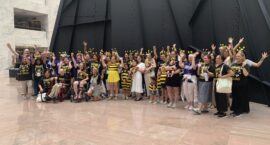
A crowd of mothers, caregivers and children dressed as bees entered the Hart Senate Office building on Wednesday morning to call out Republican senators, who are rushing a budget reconciliation bill that would drastically reduce the number of people eligible for Medicaid and the Supplemental Nutrition Assistance Program (SNAP).

In addition to its Medicaid and SNAP cuts, MomsRising members in attendance on June 25 said they were concerned about the bill’s immigration provisions (it aggressively funds ICE), its impact on education, its reproductive healthcare cuts and its decimation of gun control measures.

Sex Sells … Even in the Soap Aisle: What Does Sydney Sweeney’s ‘Bathwater Soap’ Say About Our Porn-Dominant Culture?

“I need your thoughts on this.” Attached to this urgent text was a link my friend had forwarded to me: An article by Elizabeth Gulino titled, “You Can Buy Sydney Sweeney’s Bathwater Now.”

Upon my first glance at the article, I found myself instinctually grasping for some feminist argument of the campaign, which Sweeney claimed to be fulfilling her fans’ persistent and frankly invasive requests for her bathwater. However, the way our commercial society and the broader marketplace are structured encourages women to market themselves towards those often degrading desires and enables men to continue acting as if treating women as objects is acceptable. And the solution is not restructuring what we construe as feminism, but rather, resisting the urge to accommodate one’s power to what seems like inevitable exploitation.

Defending bathwater products in the name of feminism will not lead us to the kind of liberation we could want for ourselves.

‘What About Me?’: Bringing Women’s Well-Being to the Forefront of Motherhood

Earlier this month, I attended a “power breakfast” hosted by the Chamber of Mothers, an organization and movement driving national support for mothers. I was shocked and frankly disillusioned by how much basic maternal healthcare was emphasized as an area of desperate need.  

The way the U.S. understands, or refuses to understand, maternal health makes even asking for care a baffling proposition. Dawn Huckelbridge, founder of Paid Leave for All, recounted the moment she truly became “fired up and fed up” after giving birth to her first child. Huckelbridge was prepared in every sense: She had a supportive partner, health insurance and parents who could help her out. Upon delivering her baby, what she recalls as a traumatic experience for her mind and body, she was given even more resources for the baby: diapers, blankets, instructive care literature. 

And when she asked her doctor, “Well, what about me? What do I have to do to take care of my body?” he replied, “Things just have a way of healing.” That was the official prescription for a mother who had been carrying a baby for 40 weeks and had only given birth a moment ago.

“I’d hate to believe that it’s because we don’t care about mothers and that we don’t want to see them in power,” said Erin Erenberg, co-founder and CEO of the Chamber of Mothers.


The Fantasy of Underconsumption: Truly Productive or a Tradwife Pipeline?

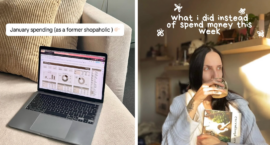
Since stumbling on “underconsumption-core,” I’ve been deep in a world of no-buy rules, budgeting spreadsheets, and influencers who turn frugality into an aesthetic. What started as a seemingly productive financial reset now feels more like a lifestyle that rewards domesticity and quiet femininity over real economic empowerment. The deeper I looked, the more it felt like a soft return to tradwife ideals.

It’s not that saving money is bad, but when frugality becomes a moral performance, especially for women, it’s worth asking who this trend really serves.