

The Supreme Court Case That Could Shield Unregulated Pregnancy Clinics From Oversight

On Dec. 2, the U.S. Supreme Court heard oral arguments in First Choice Women’s Resource Centers v. Platkin, an unregulated pregnancy clinic’s constitutional challenge to the New Jersey attorney general’s subpoena for information about its operations, including donor records. 

Despite being awash in revenue, and serial reports of fraud, waste and illegal use of taxpayer funds, these antiabortion clinics are positioning to realize a long-term goal: to “replace” Planned Parenthood and Title X programs and secure federal taxpayer funds to advance an agenda that promotes childbirth and undermines evidence-based healthcare. 

As right-wing politicians decimate the reproductive health delivery system for low-income and uninsured Americans, the UPC industry is ramping up the narrative that their unregulated pregnancy clinics are the answer to the maternal healthcare deserts their policies have created. 

Most media observers are predicting the Court will rule for the crisis pregnancy center, First Choice. If it does, unregulated pregnancy clinics nationwide will be further emboldened to resist any state oversight, including of their medical services. A bold, innovative, multi-front action by reproductive justice advocates, public health professionals and pro-choice officials is the only way we ensure they can’t succeed. 
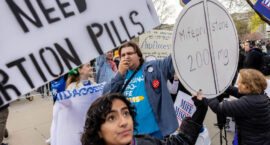
Texas and Florida Sue FDA in New Bid to Block Abortion Pill Access

Texas launched a lawsuit against the U.S. Food and Drug Administration last week over the agency’s approval of mifepristone, marking the state’s latest effort to crack down on access to abortion pills.

Joined by Florida, Texas Attorney General Ken Paxton filed the case on Dec. 9 in federal court in Wichita Falls. The two states argued in a 120-page complaint that the FDA did not properly evaluate mifepristone’s safety and effectiveness when approving the drug in 2000 and its subsequent generic versions. They also challenged the agency’s moves that expanded access to the pills, including the ability to dispense them by mail.

Abortion access advocates have blasted the lawsuit.

“If they succeed in restricting access to mifepristone, abortion access will be devastated across the country, even in states where abortion remains legal,” Shellie Hayes-McMahon, executive director of Planned Parenthood Advocates of Texas. “This lawsuit is not about safety or healthcare; it is about control. And nothing short of full control over our bodies will satisfy them.”

No, Abortion Pills Aren’t Polluting U.S. Waterways

Abortion pills are a critical option for people seeking to end a pregnancy, especially those living in U.S. states with abortion bans who cannot travel out of state for care. In 2023, medication abortion accounted for 63 percent of all clinician-provided abortions in states without total bans.

Given the pivotal role of these medications in preserving abortion access, antiabortion policymakers and advocates are resorting to increasingly unscientific, unconventional tactics to spread mis- and disinformation about medication abortion and about mifepristone, one of two drugs used in most medication abortions in the United States.

In a disturbing new strategy, antiabortion policymakers are attempting to weaponize environmental laws and regulations, citing false claims that medication abortion pollutes U.S. waterways and drinking water.

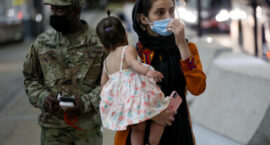
Following Tragic D.C. Shooting, Afghan Allies Face a New Wave of Enforcement and Fear

The shooting in Washington, D.C., that left one National Guard member dead and another critically wounded on Nov. 26 quickly became a major focus of U.S. media. In the days since the shooting, the national conversation has focused almost entirely on the suspect’s identity as an Afghan refugee. Yet those who knew him describe a man who appeared to be struggling long before he drove across the country to Washington, D.C. One volunteer who worked closely with his family said he became increasingly withdrawn, isolated and overwhelmed by the challenges of resettlement. They noted that his behavior reflected profound distress, not radicalization or hostility toward the United States.

Despite these documented struggles, the current administration immediately cast the shooting as a failure of vetting by the Biden administration and threatened to punish an entire community for the crime of one individual. That framing ignores the basic fact that the suspect had been vetted repeatedly. It also ignores the testimony of those who interacted with him in the U.S. and saw no signs of ideological motivation.

Internal directives show ICE has begun targeting more than 1,800 Afghans with past deportation orders and is tracking arrests and removals in daily reports. Officials are also reassessing Afghan vetting programs created after the 2021 withdrawal, despite the fact that the suspect himself was granted asylum during the Trump administration after already receiving extensive screening.

The policies signal a retreat from those commitments and send a dangerous message to future partners: Support for the United States may not translate to safety once U.S. needs are met.

The tragedy in Washington stands as a devastating loss. It deserves a full investigation and a clear accounting of what shaped the suspect’s unraveling. But it must not be used to justify policies that abandon allies, ignore humanitarian obligations and dehumanize an entire community.

bell hooks Taught Us to Imagine Freedom. Universities Are Forcing Us to Fight for It.

On the day bell hooks became an ancestor, four years ago today, my beloved friend, comrade and co-conspirator Black feminist sociologist Shawn McGuffey and I were consoling one another over text when he wrote, “We should do something.” “Say less,” I replied.

We had institutional support from Northeastern University at a time when universities and other institutions were publicly and ceremoniously committing to funding DEI related initiatives in the tidal wave of so-called racial reckoning that occurred in the aftermath of George Floyd’s death. The first symposium took place two months later on a cold and clear February morning in 2022. This annual gathering became an important tradition that we looked forward to each year.

This week, we mark four years since the woman born Gloria Jean Watkins, a Black feminist writer, academic, professor and activist became an ancestor. But in 2026, there will be no bell hooks symposium at my university. Due to university wide fiscal austerity, we will not mark the anniversary this year in any official way. It is a tremendous loss, for our students and for our community locally, nationally and internationally.

As I grappled with my own grief over this loss, I had to also reflect deeply about what it means to be a Black feminist scholar in the academy today.

Project 2026 Declares Open War on Women’s Rights

When The Heritage Foundation released its new policy blueprint for 2026 this week—an extension of the now-infamous Project 2025—it did so with the calm confidence of an institution convinced no one will stop it. The document is shorter than last year’s 900-page “Mandate for Leadership,” but no less dangerous. It is, in fact, more candid.

Project 2026 lays out a government redesigned to control women’s bodies, erase LGBTQ+ lives, dismantle civil rights protections and roll back decades of hard-won progress. Wrapped in the language of “family,” “sovereignty” and “restoring America,” it is a direct attempt to impose a narrow, rigid ideology on an entire nation.

Make no mistake: This is a plan for forced motherhood, government-policed gender and the end of women’s equality as we know it.

But Project 2026 is not destiny. It is a warning—and one we must answer with the full force of a movement that has never accepted a future written for us by someone else.

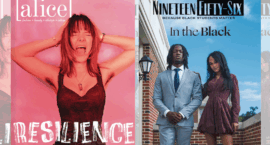
Trump’s Anti-Diversity Crusade Claims Two Campus Magazines

I recently discovered two glossy magazines published by and for young people: Alice, which focuses on fashion, beauty, personal health, wellness and lifestyle; and Nineteen Fifty-Six, which brings a Black cultural lens to coverage of news, style and the arts.

Both are student-run publications housed at the University of Alabama. And on any other day, they would make one think the future of journalism look very bright indeed. Except that the sole reason I found these magazines at all is because they are now officially suspended. Last week, campus officials announced their permanent shuttering. Yet another casualty of the Trump administration’s attacks on free speech and public higher education—all in the name of stamping out supposed diversity, equity and inclusion.