


Police Officer Domestic Violence Is A Crisis. It’s Time for States to Take Action.

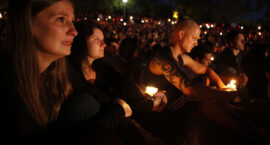
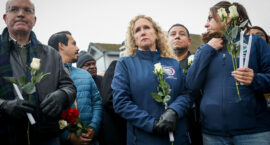
Domestic violence by police officers is a nationwide scourge. While the actual number of cases that happen every year is unknown, it’s likely in the tens of thousands. Police officers in almost every state have been charged with domestic violence since the start of 2025. Such figures demonstrate that police officer domestic violence is a structural failure, not the isolated misconduct of ‘a few bad apples.’

These numbers become even more sobering in light of police officer-abusers’ training and responsibilities, which makes them uniquely dangerous, and extremely undertrained: Less than 2 percent of police academy training time is spent on domestic violence response, while 17 percent is spent on weapons and defensive training.

Officer-abusers and their victims make clear that something is deeply wrong in our domestic violence support system. For now, we don’t understand the depth of that dysfunction, but we can be certain that more funding, better policy and less criminalization will help drive a better future.

Keeping Score: 137 Women Are Killed by Partners or Family Per Day; Bipartisan Push for Epstein Files; Trans Day of Remembrance and Native Women’s Equal Pay Day

In every issue of Ms., we track research on our progress in the fight for equality, catalogue can’t-miss quotes from feminist voices and keep tabs on the feminist movement’s many milestones. We’re Keeping Score online, too—in this biweekly roundup.

This week:
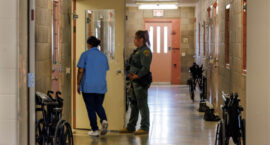
—137 women and girls are killed by intimate partners or family members every day.
—Congress votes overhwlemingly to force the Justice Department to release their Epstein files.
—Donald Trump snaps at women journalists: “Quiet, piggy” and “you are an obnoxious—a terrible, actually a terrible reporter.”
—Violence against trans women remains high.
—DACA recipients are being targeted and detained under the Trump administration.
—Higher-income college students often receive more financial support than they need, while low-income students struggle.
—Tierra Walker died from preeclampsia in Texas after being repeatedly denied an abortion.
—Viola Ford Fletcher died at age 111. She was the oldest living survivor of the 1921 Tulsa Race Massacre. 
—North Dakota’s total abortion ban was reinstated after the state’s Supreme Court reversed a temporary injunction from a lower court. There are now 13 states with total bans.

… and more.

For Women Spending the Holidays in Prison or a Shelter, You Can Make a Difference

Women and girls are the fastest growing incarcerated population in the United States today. The women now in prison are often there because of circumstances that might have put you or me there, too. 

We at Ms. magazine want women in prison to know they are seen and valued. And because domestic violence shelters can be almost as isolating as prisons—and often lack reading material, just as many prisons do—we want to support women in those shelters, too. 

For a tax-deductible donation of just $30, you can help send Ms. to a woman in prison or a domestic violence shelter for a year. And for just $10 more ($40 total), you can get a year’s worth of Ms. for yourself as well.

A Feminist Historian’s Year-End Reading and Viewing Guide

As the year winds down, I find myself returning—as I always do—to the stories, performances and ideas that have shaped my teaching and thinking. Feminism’s past is never really past; it’s a living archive we carry with us, full of unresolved questions, missteps, breakthroughs and beautiful, complicated people. This year’s reading and viewing list reflects that sensibility.

Liberation forces its contemporary narrator—and its audience—to reckon with the impossible expectations we’ve placed on small groups of women in church basements.

Molly Jong-Fast’s memoir presses on the tender, maddening ties between feminist foremothers and the daughters who grew up in their shadow.

Sarah Weinman’s study of spousal rape laws exposes just how recently the law stopped treating wives’ bodies as open territory—while showing how fiercely survivors and advocates have had to push for change that should never have been controversial.

Misogyny, Racism, Power: Connecting the Dots in the Violent Far Right

In Part 2 of the Q&A between Jackson Katz and Cynthia Miller-Idriss, the author of Man Up discusses the link of misogynists and mass shooters: “The fact that so many domestically violent extremist attacks have both gendered and racialized dimensions shows that racism and misogyny are inseparable in the minds of many perpetrators.”

Miller-Idriss explains the key role online gaming and chat spaces play within the radicalization of young men and boys.

Misogyny is no doubt threaded through nearly ever mass shooting, and feminists are used as a scapegoat for taking away men’s opportunities.

‘This Is the Blind Spot in Extremism Research’: Cynthia Miller-Idriss on Misogyny, Gender and Violence

Cynthia Miller-Idriss, director of the Polarization and Extremism Research & Innovation Lab (PERIL) at American University, makes the connection between gender policing, misogyny and far-right extremist violence, which for many years was not a connection scholars were willing to make.

Jackson Katz and Miller-Idriss discuss her book, Man Up, on misogyny, gendered violence, the MAGA movement and far-right extremism. Miller-Idriss says political violence coming from the far-right includes gender policing and exploitation.

“These aren’t just opportunistic elements of extremism—they are deliberate, organized and large-scale forms of gendered violence aimed at increasing pain and humiliation of victims, witnesses and family members. … I’m still blown away by how few people will acknowledge the connection.”

Making the Invisible Visible: How Misogyny Is Driving Rising Political Violence

We have seen a rise in political assassinations and assassination attempts, along with violent extremist attacks that have ticked upward for years. Mass casualty plots in the U.S. have increased by over 2,000 percent since the 1990s, leading to the deaths or grievous injury of thousands of people in shootings at schools, grocery stores, theaters, parades, concerts, houses of worship and more.

In the search for explanations, the public and policy discourse is most often swept up in heated debates about far-left or far-right ideologies.

But the data shows that the biggest and clearest predictor of mass shootings, across ideologies, sits somewhere else: in rising gendered grievances, patriarchal backlash, and the perpetrators’ histories of gender-based violence and misogyny.

Breaking the Silence: Zimbabwe Initiative Reaches Survivors of Violence

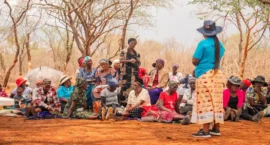
For years, Tjedza endured sexual violence at the hands of her father. Clara, an elderly woman, experienced abuse at the hands of her son. And for most of Tabeth’s married life, she bore abuse at the hands of her husband. 

These abuses—and many more like them—went unseen for far too long. Yet in rural Zimbabwe, services to support survivors of gender-based violence are often out of reach. Survivors often must travel long distances to seek help, and when they do, they risk facing stigma and blame from the very responders who are meant to protect them.  

But today, for survivors like Tjedza, Clara and Tabeth, the years of fear and silence are over. 

An initiative in Zimbabwe’s Bubi District, known as Women at the Center, is improving access to essential protection and support services—and improving the quality and delivery of these services as well. Now, when one survivor receives respectful care and protection, others are emboldened to speak out too.

“I only got the confidence to report after seeing how other survivors had received care and were in a much better place,” Tjedza shared.

“This program didn’t just save my life; it gave me back my dignity,” said Clara.

Keeping Score: Democrats Dominate Key Elections; Federal Government Reopens After 43 Days; ICE Targets Childcare Centers

In every issue of Ms., we track research on our progress in the fight for equality, catalogue can’t-miss quotes from feminist voices and keep tabs on the feminist movement’s many milestones. We’re Keeping Score online, too—in this biweekly roundup.

This week:
—Democratic candidates won elections across the country.
—At Crooked Con last week, Rep. Pramila Jayapal (D-Wash.) laid out her priorities for when Democrats regain power in Congress: “We’ve got to fix the Voting Rights Act, we have to deal with the money in politics, we have to deal with the Supreme Court and we need immigration reform.”
—ICE targeted childcare workers and is accused of inhumane detention conditions.
—Nancy Pelosi announced her retirement in 2027.
—Trump’s approval ratings continue to fall, a year out from the 2026 midterms.
—Many popular lubricants aren’t safe for vaginal health.

… and more.

A Game-Changing Approach: Providing Anonymous Hotel Check-Ins for Domestic and Sexual Violence Survivors

Safe Stays by ReloShare partners with hotels nationwide to protect survivors’ identities and expand access to secure housing.

“When guests check in, hotel staff often insist on seeing their identification and recording their full name. Because hotel staff members are not trained advocates, she said, they probably won’t be on high alert if an abuser calls or walks through the door,” said Ruth Glenn, the former chief executive and president of the National Coalition Against Domestic Violence. And “leaving is often the most dangerous time for survivors of abuse,” according to the National Domestic Violence Hotline.

Paige Allmendinger, Safe Stays by ReloShare’s chief product officer, told Ms., “First, we needed the ability for a guest to check in under a fake name, with no ID required at check-in. If the survivor’s real name isn’t tied to the reservation and an abuser calls the hotel searching for them, there won’t be any record that the survivor is in-house, giving the survivor a degree of protection at the very time they need it most.

“Second, we needed hotels to forego the usual requirement for a credit card from the guest or agency at check-in. Credit-card transactions can expose location putting survivors at risk. While social service organizations may have funding to pay for hotel stays, many have limited credit lines for upfront payment or can’t send staff in person to present a card at check-in.”