

Where ACA Premiums Could Spike Most in 2026 if Congress Lets Enhanced Tax Credits Expire

The Affordable Care Act (ACA) offers premium tax credits to help make health insurance more affordable. Under original Affordable Care Act provisions, an income cap for premium tax credits was set at 400 percent of the federal poverty level. Above that threshold, federal financial assistance was not available, creating a “subsidy cliff.”

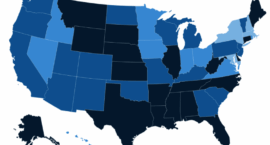
Enhanced premium tax credits expire at the end of this year. Enrollees currently receiving premium tax credits at any level of income will see their federal assistance decrease or disappear if enhanced premium tax credits expire, with an average increase of 114 percent to what enrollees pay in premiums net of tax credits.

The impact will be greatest for those whose unsubsidized premiums are highest: older Marketplace enrollees and those living in higher-premium locales.

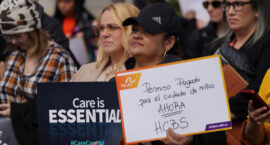
Caregiving Is Extremely Difficult in America. It Doesn’t Have to Be This Way.

For many Asian and immigrant families, caregiving is a way of life, with generations living and caring for one another under the same roof as part of daily life. My Iranian grandparents lived in a multi-unit dwelling in Tehran, where they cared for each other through illness and aging, cooking and sharing meals with their children and grandchildren in what seemed to me a seamless synchronicity. When my Pakistani grandmother emigrated from Karachi to the U.K. in the 1970s, she moved in with my uncle’s family, sharing a bedroom with her youngest grandson until she died. Now, that grandson lives in the same house with his own children and aging parents. 

However, here in the U.S., caregiving takes on a very different form, even for families raised on the belief that caring for another is simply what we do.

This FDA Decision Could Transform Menopause Care

On Monday, Nov. 10, the U.S. Department of Health and Human Services announced that the Food and Drug Administration would eliminate the “boxed labeling” requirement for estrogen products.

The “black box warning,” as it’s commonly called, is part of the fallout from a press conference that occurred more than 20 years ago, announcing the findings of the Women’s Health Initiative (WHI). It’s also been the subject of a half-century-long push and pull with the federal government.

Make no mistake, this has been a longstanding demand—it’s neither new nor MAHA-driven. Doctors and scientists have made the case for its removal since the start to no avail, arguing the data from the WHI—the largest, most expensive, and only randomized placebo-controlled study of post-menopausal women—never supported putting it there in the first place.

The FDA’s reversal of the labeling requirement is a major win for evidence-based medicine. Now it’s up to us to responsibly inform women of their choices.

One Megabill for the Megarich

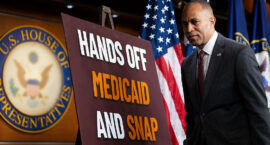
The Trump administration is calling its new budget “the most pro-family legislation ever crafted.” But for women like Bre’Jaynae Joiner, a single mother of two in Oakland, the cuts to Medicaid and SNAP threaten her family’s very survival.

Over the next decade, more than 11 million Americans—mostly women and children—are expected to lose health coverage, while deep food assistance cuts and work requirements will push even more families into crisis. Advocates call the bill a massive transfer of wealth to the rich at the expense of the poor, a policy that will shutter rural hospitals, deny essential care and worsen maternal mortality.

As Sen. Raphael Warnock puts it plainly: “If you cut $900 billion out of Medicaid, people are going to die.”

Over a Million Women Are at Risk of a Pay Cut Under a New Trump Rule

The Trump administration’s Department of Labor recently proposed a new rule that would directly take earnings away from the more than 1.5 million home care workers in the United States, more than 80 percent women, and their families.

Between 2019 and 2040, the population of adults ages 65 and older is expected to balloon from 54 million people to nearly 81 million people, comprising an estimated 22 percent of the U.S. population. That means that the direct care workforce is projected to grow at a faster rate than any other occupation over the next decade.

Menopause Finally Gets a Seat at the Table

On Thursday, July 17, the FDA held a two-hour briefing featuring political leadership and a panel of doctors to focus on menopausal hormone treatments. Among the issues addressed was a decades-old labeling requirement for estrogen products—a.k.a. the “black box warning.”

FDA commissioner Martin Makary appears willing to consider scrapping it on packaging for localized vaginal estrogen treatment. The FDA should do so: The label is inaccurate and utterly alarming.

In the case of menopause, a rare combination of bipartisan commitment and robust public attention reflect not just heightened interest among constituents, but also proof of the democratic process actually working.

‘The Feminist Agenda Is Wildly Popular’: Celinda Lake on the Political Power of Feminist Voters

Pollster and leading Democratic strategist Celinda Lake has been examining the data on women and feminist voters for decades. I talked to her about what Americans really want. (Spoiler alert: It’s not Project 2025.)

“People think that feminism is a dirty word. In fact, it’s a very strong word. Particularly for progressives and Democrats—feminism is highly correlated with voting for Democrats. Half of Independents consider themselves feminists; when you describe it, a third of Republicans and 83 percent of Democrats do. Our voters consider themselves feminists. It is a very quiet movement out there that is really underestimated. …

“Feminist issues, however we define them, are doing quite well. What we don’t have is we don’t have enough of them out front. We don’t have enough leaders taking them on.”

Historic Cuts to SNAP Deepen the War on Women

 Republicans in the House and Senate scrambled to pass legislation that will cut $184 billion from SNAP through 2034—by far the largest cut to SNAP in the program’s history—to finance tax cuts for the wealthy big businesses. They also hope to increase funding for pursuit of immigrants. 

This extremist budget will drive millions of people into poverty and hunger. It also represents a full-throated assault on women—particularly single mothers, for whom SNAP has been a lifeline.

Critical Programs for Women and Families Face Deep Cuts in House Budget Bill

A sweeping budget bill moving quickly through the House threatens to make draconian cuts to Medicaid and SNAP—two of the nation’s most vital programs for women and children.

The bill is being framed as “all or nothing” legislation by Republican leadership—a vehicle designed to pass the entire Trump agenda without needing Democratic votes. And the changes are being presented as necessary for fiscal responsibility—but here is what they won’t say out loud.

‘We Need a Gentle Anger’: The Triangle’s Raging Grannies are Protesting Injustice through Music

Founded in Canada in the 1980s, the Raging Grannies have gaggles around North America—and plenty to sing about. 

Even in a crowd of thousands, they’re instantly recognizable by sight and sound: silver-haired women wearing colorful aprons and floppy hats, brandishing cardboard signs and sheafs of lyrics, singing acerbic protest songs set to cheerful nursery tunes.