

Exploring the policies, practices and supports that allow women to heal, thrive and keep their families intact.
The road to recovery—and the right to recovery—is essential to a free and fair democracy. In honor of National Recovery Month, this installment of Women & Democracy is presented in partnership with the O’Neill Institute for National and Global Health at Georgetown Law, exploring the often unspoken intersections of addiction, recovery and gender justice while highlighting public health and policy solutions that prioritize dignity, equity, access to care and civic engagement. Alongside this companion essay collection, Ms. is releasing a multipart podcast mini-series, The Long Way Home, hosted by Dr. Michele Goodwin in conversation with leading experts on recovery. The multimedia collection, The Right to Recovery Is Essential to Democracy, amplifies critical perspectives on race and incarceration, LGBTQ experiences, maternal health and pregnancy justice, and personal storytelling.
Too often, policy outcomes are reduced to data and statistics, forgetting that the numbers represent something deeply human. When it comes to addiction, they tell a grim story.
Take my family.
Twenty-four: that’s the number of years it took my older sister to sustain recovery.
Four is the number of convicted felonies she has on her record for crimes related to her substance use disorder.
Fifteen is approximately the number of years she lived with Hepatitis C before being hospitalized for liver failure.
Nine is the number of times she overdosed in a single week at the height of her illness.
Two is the number of children she lost to child protective services.
Four is the number of years it took to get them back.
Twenty-four years is a long time to love someone from the far bank of their suffering.
These numbers are not just my family’s story though. They map the fault lines of policy choices that punish women with substance use disorder more readily than they protect them.
The research confirms what lived experience already shows: Women are less likely than men to enter treatment despite equal or greater need, and when they do, they often arrive with more severe dependency. Researchers describe a telescoping effect—meaning later initiation, faster progression, more severe SUD at presentation. Women carry higher burdens of trauma, co-occurring mental health issues and infectious complications. These are not abstract deficits. These are real barriers to treatment that produce disparate health outcomes for women.
Inequities continue inside the criminal legal system. A 2025 study of women with SUD and legal involvement found that participants were “starting out with an unfair score.” Across relational, communal and societal levels, they faced barriers their male counterparts did not: the realities of motherhood, victimization by staff, fewer treatment slots, stigma from courts and limited job opportunities after release. Even where medications for opioid use disorder were standard, women were far less likely to be offered them. The authors argue that only trauma-informed, women-specific interventions can close this gap.
The message is plain: ‘Seek help and risk losing your child.’ That is not a path to recovery.
In both the carceral and treatment system, sexual victimization is common and corrosive. A statewide survey found that in a six-month window, women reported sexual victimization at roughly six times the rate among men. Many women interviewed also reported victimization in treatment facilities. These harms do not remain within the walls where they occur; they follow people home in the form of trauma, disease and a mistrust of institutions that should have been safe.
Motherhood adds yet another layer of vulnerability. Policies that conflate treatment with neglect push women out of care. Many states treat prenatal drug use as child abuse or mandate reporting to child welfare, and women—especially Black, Indigenous and other women of color—bear the weight of that surveillance. Programs rarely match the need: Only a quarter serve pregnant or postpartum patients, 6 percent provide childcare, and 3 percent have beds where children can live with a parent. The message is plain: Seek help and risk losing your child. That is not a path to recovery.
My first obligation in writing for this series is to tell the truth about what is happening to women. My second is to insist that it can be different. How? Here are the policies most needed:
1. Keep Families Together
My sister’s greatest losses were not measured in court dates or convictions but in the years stolen from her children. No mother should lose custody solely because of SUD or appropriate medications. Expand recovery-ready housing that welcomes children and require treatment centers to provide childcare, so women aren’t forced to choose between healing and mothering.
2. Guarantee Care as a Right
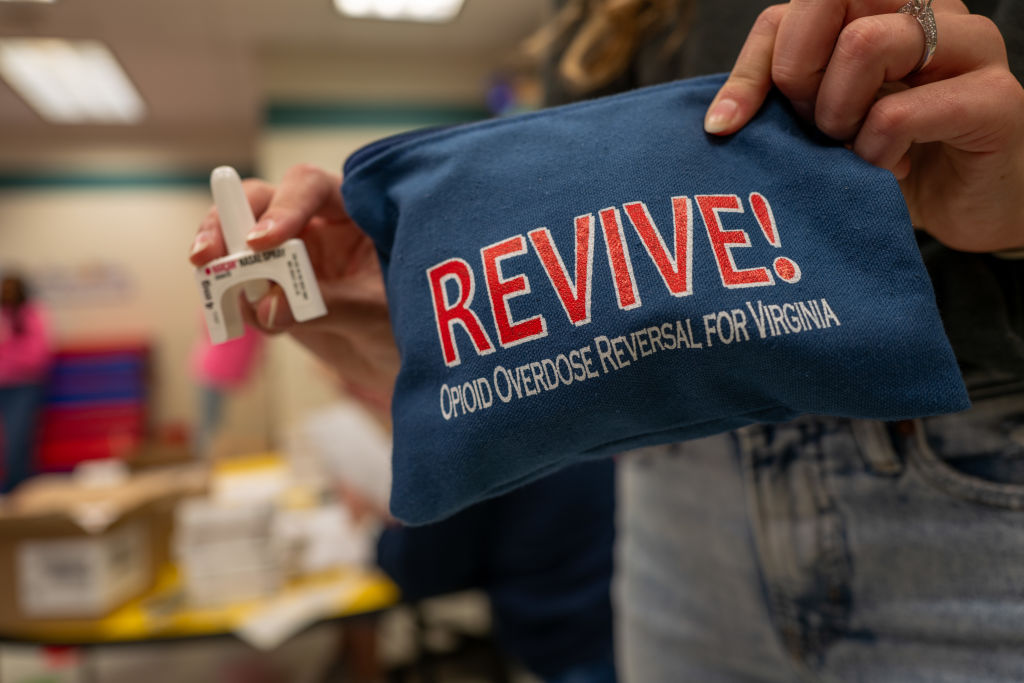
Illness should not be criminalized and access should not depend on geography. Every woman, in every state, should have access to MOUD during pregnancy and beyond. Medicaid must extend at least twelve months postpartum, ensuring that care does not end precisely when overdose risk peaks. Prescribed treatment should be shielded from child protective services, so that lifesaving medicine is not distorted into evidence of neglect.
3. Decriminalize Survival
Women across this nation face insurmountable reminders of their past when they are arrested for possession, punished for sex work and condemned for doing what was necessary to endure poverty, abuse or exploitation. We must decriminalize drug use and sex work and expand safe harbor laws so survivors of trafficking and domestic violence are not further victimized by the state. To criminalize survival is to criminalize being a woman in the margins.
4. Build Systems That Heal
In treatment and in prison, women often encounter predation instead of protection. The stories are chillingly familiar: harassment by staff, assaults behind locked doors, ridicule from providers who should be healers. Require trauma-informed training and cultural humility across hospitals, programs and correctional facilities. Offer women-only groups and courts where needed, recognize caregiving in diversion programs, fund women’s programming on par with men’s and guarantee MOUD in every jail and prison.
5. Remove Barriers to Stability
Recovery is not only about the cessation of substance use, but about dignity and the means to live. Yet women are barred from food, housing and financial assistance through drug-testing requirements that serve no public good. This disproportionately impacts women attempting to leave domestic violence situations, because it is nearly impossible to sustain recovery while in the relationship and leaving can be life threatening without support. End punitive drug-testing for social support; and build vocational pipelines that value caregiving, lived expertise and peer leadership.
*
My sister’s story is not unique. It is the story of countless women whose lives have been diminished not only by illness, but by the policies meant to mitigate it. To speak of democracy is to speak of who is granted dignity, whose families are preserved, whose lives are deemed worthy of investment. Women with substance use disorder deserve nothing less than justice, care and the chance to recover without fear.
Until our policies reflect that truth, the numbers will keep rising. The stories will keep repeating.