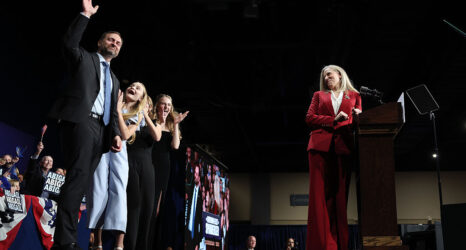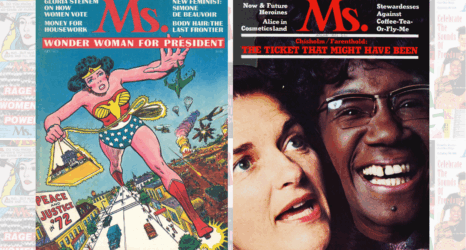


Moseley Braun became the first Black woman elected to the Senate after her involvement in the movement to ratify the Equal Rights Amendment. In the final episode of Looking Back, Moving Forward, more than 40 years later, she asked a simple question: “Why haven’t we gotten this right yet?”
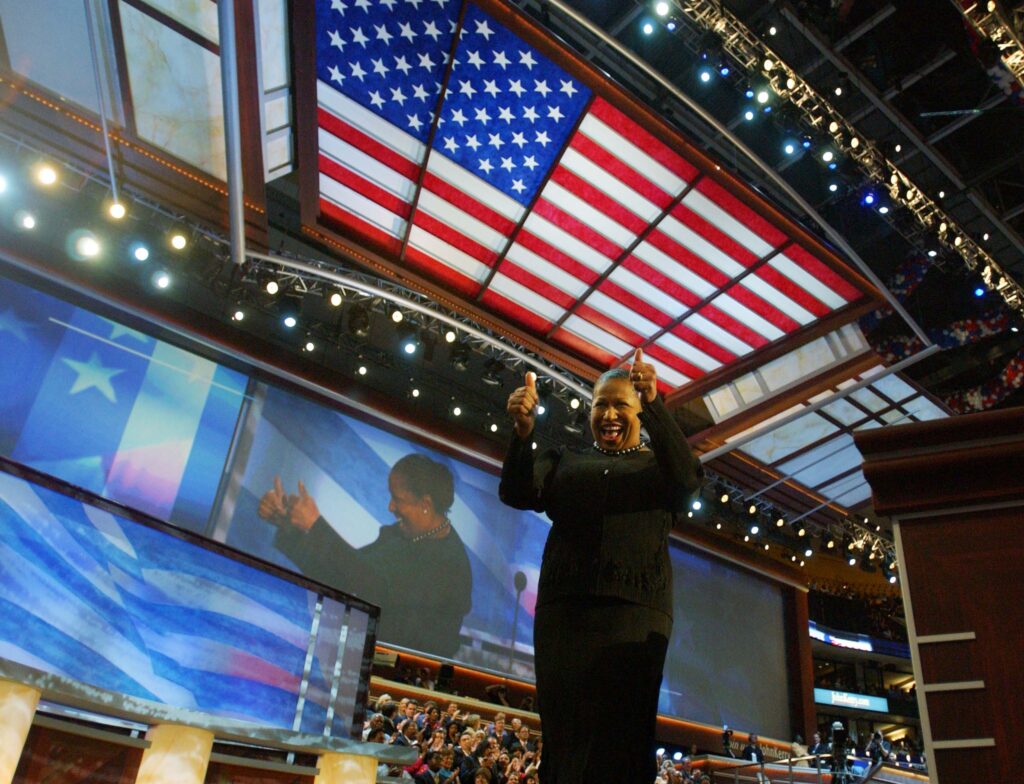
Before Carol Moseley Braun made history—as the first Black woman elected to the Senate, the first Black Democrat senator, the first woman elected to represent Illinois in the Senate, the first woman on the Senate Finance Committee, and the first woman and African American person ever appointed to serve as the United States ambassador to New Zealand and Samoa—she helped set it in motion by working in coalition with feminist activists to ratify the Equal Rights Amendment in Illinois.
Moseley Braun worked until the deadline imposed on ERA ratification by Congress in 1982 to win constitutional equality in the state. More than 40 years later, the movement she helped seed in Illinois led to another historic victory: In 2018, Illinois became the 37th state to ratify the ERA, inching it toward the finish line. (Virginia pushed it over that line in 2020.)
As part of the fifth and final episode of the Ms. Studios podcast Looking Back, Moving Forward, I talked to Moseley Braun about her involvement in the ERA ratification efforts of the 1970s and early 1980s—and why she still believes constitutional equality is a critical goal for the feminist movement.
Moseley Braun is joined in this episode by former Nevada state senator and ERA champion Pat Spearman, Feminist Majority Foundation president and ERA movement leader Ellie Smeal, Ms. executive editor Kathy Spillar and ERA Project director Ting Ting Cheng.
Together, we reflected on more than 50 years of activism to ratify the ERA—and the power that would come from women’s constitutional equality to redefine our democracy, protect our fundamental rights and change the stories of women’s lives.
This interview has been edited and re-organized for clarity and length.
Carmen Rios: How did you first learn about the ERA and get involved in the movement to ratify it?
Carol Moseley Braun: I was breathing! It was hard not to know about the ERA at that stage of history. If you were alive and you paid any attention at all, you knew that it was a big battle, particularly here in Illinois.
This is the home of Phyllis Schlafly—who, frankly, I did not pay as much attention to as I should have. She’s from Southern Illinois, and she put up a tough fight.
If you were breathing and you read any newspaper anywhere, you knew there was a big battle around ERA across the country, and I feel privileged to have been part of it—but at the same time, it was a very heartbreaking situation. We all thought it was going to pass. It was like, ‘How could it not pass?’ I was very crestfallen when it didn’t work out.
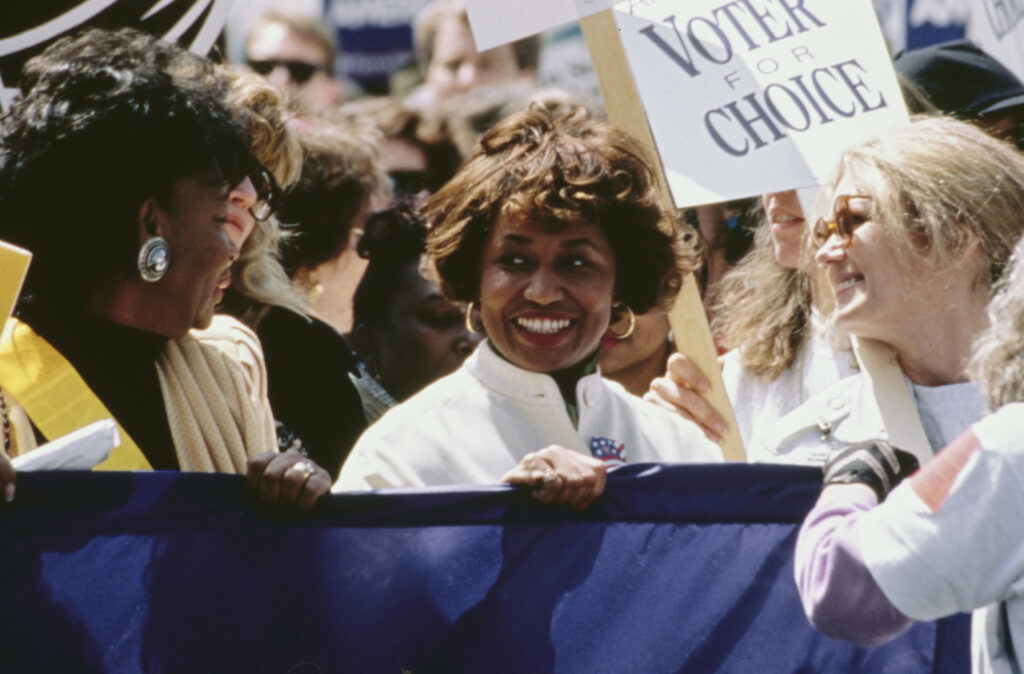
Rios: I know you worked really closely with Ellie Smeal to ratify the ERA as a state legislator. I would love to hear your version of the tale, of what it was like when you were waging that fight in Illinois.
Moseley Braun: I had an apartment right across the street from the Capitol, and my roommate was also a state legislator. It was just kind of natural that we would go over to my place to work together to try to figure out how we handle this situation. It all happened in my apartment across the street from the Capitol.
We were fortunate in that the speaker was not against the ERA. He wasn’t going to push it, either, but he wasn’t against it, and so, in some regards, the opposition was really kind of scattered and disparate. It was hard for me to understand. I didn’t know the state as well as I do now, as you can imagine, but it was hard to really reconcile these people’s districts and where they were from and why they were so opposed to the Equal Rights Amendment. It didn’t make any sense to me.
If you were breathing and you read any newspaper anywhere, you knew there was a big battle around ERA across the country.
Carol Moseley Braun
Rios: What did the strategy look like? What was your approach to trying to get the ERA past the finish line?
Moseley Braun: You have to count one vote at a time. You can’t make any assumptions about things like this, and so, we went around and really surveyed all the different members in terms of where they were on the Equal Rights Amendment.
I thought we had the votes. That’s the only reason I was so crestfallen—I thought we had the votes.
Rios: Illinois has since ratified the amendment in 2018, one of the last three states to push the ratification over the finish line. What was it like for you to see that long-delayed victory finally come to pass?
Moseley Braun: It was really encouraging, and I was glad to see it. It was like déjà vu all over again. How could you not pass this? Particularly in this day and time, I’m glad they finally got around to doing it. It made sense to me, and so, now we just have to get it into the U.S. Constitution. That’s the next battle.
The expectation of equality is the most important cultural thing that we can achieve, and we have to keep holding up that light.
Carol Moseley Braun
Rios: What do you think is the promise of the ERA? How do you think it’s going to change women’s lives, and why is it so important that women have constitutional equality?
Moseley Braun: It’s not what Phyllis Schlafly had to say about anything. She went around talking about how this is going to mandate women using the men’s bathrooms, et cetera, just really stupid stuff.
There’s a movie by Matt Damon, of all people, called ‘The Last Duel,’ and the thing about that movie is that it’s about the 13th century and the status of women in the 13th century, and it was really shocking to me. They talked about all these attitudes about women that, frankly, unfortunately, have not entirely gone away. It was a discussion about the status of women in the 13th century, and we’re still living with it. That’s the really distressing part: Why haven’t we gotten this right yet? That’s what the ERA will eventually do—it’ll help straighten out the Constitution and make sure we’re on an even keel with men, that gender no longer is a liability.
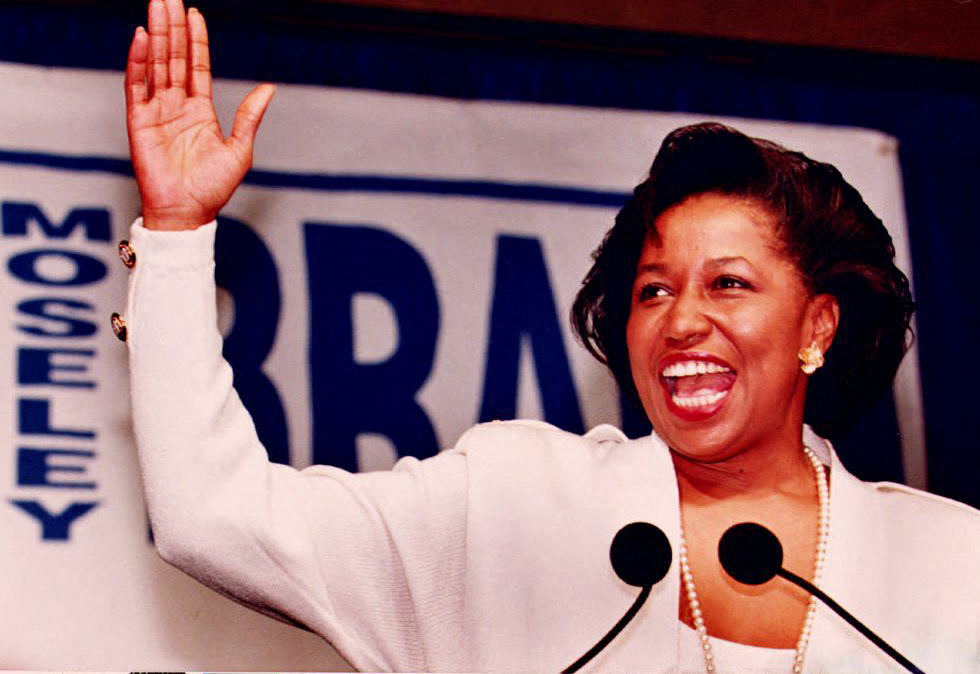
Rios: You’re a trailblazer. You were the first Black woman elected to the Senate, the first Black Democrat int he Senate, the first woman on the Senate Finance Committee and the first woman elected to represent Illinois.
When you think about the lessons you’ve learned—not only fighting for gender equality, but fighting for your own ambitions in a system that was not built for any of us—what do you think feminists continuing this fight need to know?
Moseley Braun: The lesson, number one, is don’t give up. Continue fighting, because without raising the issues, they will get lost in the noise, and I just hope that women are not discouraged, particularly in these times. That we continue to recognize the importance of our voices and how important it is that we continue to press for equality and the law. I mean, that’s all the ERA ever was, and it’s like, we have to have equality and the law. This is crazy that we don’t have it yet. Stay engaged, and don’t give up.
I’ve seen political seasons come and go, and this is a bad one we’re in now, but at the same time, it will change. We just have to hang on for another four years, and this guy will be gone, and I hope that’ll be turning the corner.
Rios: You referenced Phyllis Schlafly and wishing you’d paid more attention to what was happening there. I felt very similarly in 2016; I didn’t pay attention to these people, because what they were saying was—
Moseley Braun: Nonsense.
Rios: And yet, here they are, empowered and emboldened. What we should be paying more attention to right now that we might be quick to think, ‘That’s so silly? How could anyone take that seriously?’
Moseley Braun: The whole MAGA thing is important for us to pay attention to, and frankly, if you look around, and if you notice, all of the ladies who support that, they’re blondes with long hair, and they’re wearing short skirts and all of that. The reason I recommended the Matt Damon movie to you is that it impressed me that the whole subjugation of women starts as a cultural matter, and moves out from there into politics. We have to be very mindful of what’s going on around us in the culture, because that’s where all of this starts. That’s the only way we’re going to be able to combat it, is to make sure that we don’t lose any ground on the cultural front.
I’ve seen political seasons come and go, and this is a bad one we’re in now, but at the same time, it will change. … Don’t give up. Continue fighting—because without raising the issues, they will get lost in the noise.
Carol Moseley Braun
Rios: We do see all this sexism, but then we’re also seeing a big resurgence in very open and flagrant racism, a lot of hate and discrimination across the board. As not just a trailblazing woman or feminist, but a trailblazing Black woman, what is it about the fight for equality, the fight for the ERA, that matters so much to you? When you think about the fight for gender equality for women at the intersections, why is this so critical?
Moseley Braun: Because I’m a girl. Let’s start with that. Because I’m a girl, I’m not going to tolerate being treated as a second-class citizen. I wouldn’t do it because I’m a Black person, I’m not going to do it because I’m a woman.
We just have to be focused on the realities of what’s going on, and, frankly, we’re obliged to continue this battle, continue this fight, because it’s our future that’s in the balance, our present as well as our future. Not just our kids, but our generation, as well, has to take responsibility for the environment in which we have to function. It’s important that we not let people get away with sending us back to the 13th century. We have to continue pressing forward so that we continue to make the changes that are necessary in our society that will give us true equality.
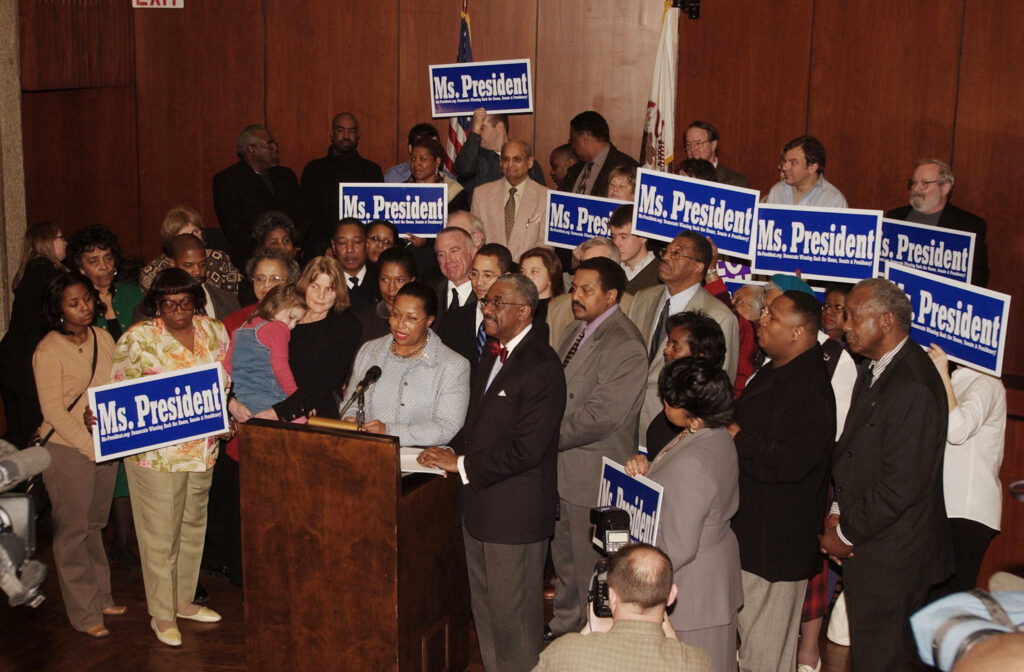
Rios: This podcast is looking back on 50-plus years of Ms., of feminist organizing, of ERA activism. A lot has changed. A lot still needs to change. What do you hope, 50 years from now, is different for women, for feminism?
Moseley Braun: When I ran for president, my niece was 10, and she was sitting at her desk. She called,’ Auntie Carol, Auntie Carol, come here quick.’ I went in her room terrified, because it sounded like an emergency, and she was looking at her social studies book. ‘She said, ‘But Auntie Carol, all the presidents are boys.’
I said, ‘Oh, sweetie, girls can be president, too,’ and when I went back to the kitchen, my brother said, ‘What’s the matter?’
I said, ‘I just lied to Claire,’ because I had. ‘Oh, girls can be president, too.’ We haven’t gotten there yet.
Your generation and beyond starts out with an expectation of equality, whereas mine did not, and the expectation of equality is the most important cultural thing that we can achieve. We have to keep holding up that light so that people don’t get discouraged, and so that people understand that there is hope, that gender becomes irrelevant when it comes to our rights. That’s the direction I hope we will continue to take.
My little niece is now in her 20s, and she still says, ‘Auntie Carol, all the presidents are boys.’ I hope we get to the point that they stop believing it, that that’s no longer the case. That we can say, ‘Oh, no, we’ve had girls as president, too.’
You can listen to every episode of Looking Back, Moving Forward on Spotify, Apple Podcasts, iHeart Radio or wherever you get your podcasts. If you like what you hear, please rate, review and share the show with your co-conspirators! You can also explore more bonus footage from every episode in the Ms. archives.